Craft · From the studio

If the film is about lipstick, draw it with lipstick.

A friend of mine, years ago, said something I have never stopped thinking about.

If you want to make a film about makeup, he said, you might as well draw it with lipstick.

It landed with me as a rule.

Most animated films for institutions are made in the studio's default medium. 2D, mostly. Drawn in Illustrator, moved in After Effects. The style is chosen for reasons that have almost nothing to do with the subject: the illustrator is available, the deadline is short, the studio's team has always worked this way. The medium of the film and the subject of the film sit on separate desks.

That is a workable way to make short films. It is not the way we make them.

At Moofa we hold ourselves to a rule that is easier to state than to keep. The film's physical medium should be a version of the thing the film is about.


Two examples of what that has meant in practice.

Daniel Jütte is a historian of materiality at NYU. His work has followed a single substance across centuries, glass, and asked what different societies believed a piece of it was for. In seventeenth-century England the same object that a Catholic reverence had bought and installed was the object a Puritan iconoclast climbed a ladder to shatter with a hammer.

Jütte's film was the precursor to the material-first thinking we are describing here. We did not make the film out of glass. We made it in dialogue with glass, in a visual vocabulary that took the material seriously as a substance with weight and history rather than as a symbol we could substitute for anything. That was as far as the project's budget and pipeline would let us go at the time. But it was the first project where the film's medium was chosen against the material at the film's centre, rather than at the studio's convenience. Everything that followed took that decision further.

Film still from Daniel Jütte's film: an iconoclast on a ladder before a stained-glass window
From the film for Daniel Jütte — the iconoclast at the window, glass as a substance with weight and history.

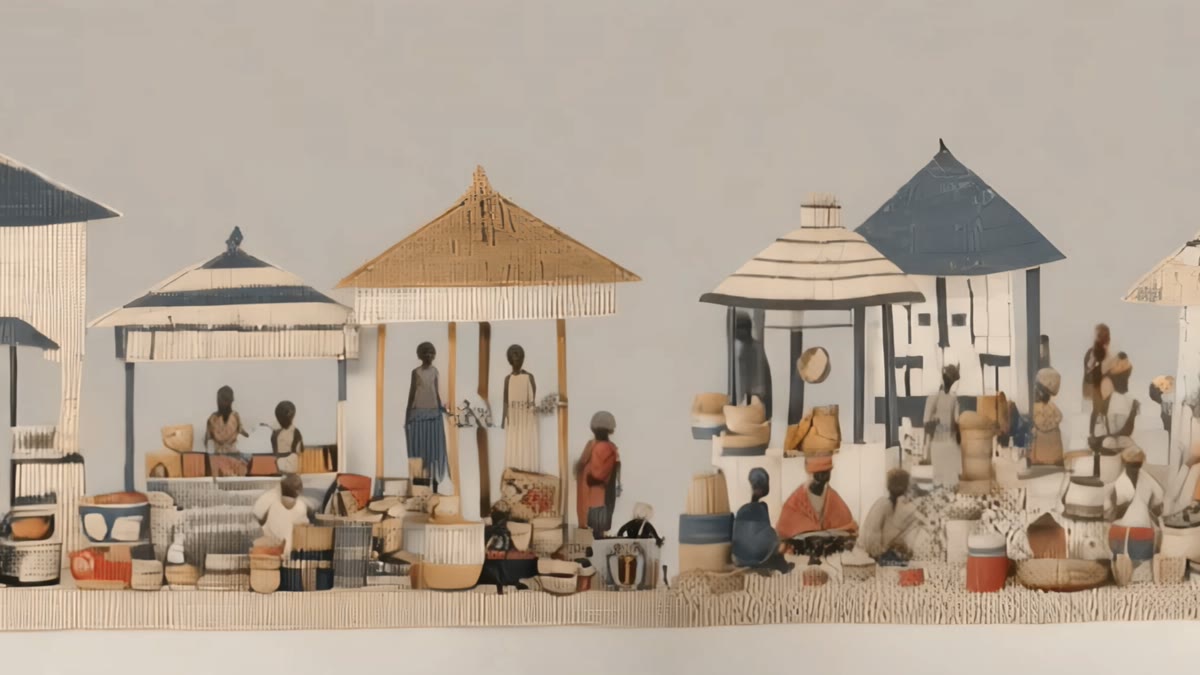
Abidemi Babalola is an archaeologist whose work has redrawn the map of glassmaking in Africa. The received view was that the manufacture of glass, and specifically of glass beads, had arrived in West Africa from elsewhere. Babalola's excavations at Ile-Ife have shown, decisively, that Yoruba beadmakers were producing their own glass, and their own beads, from local materials, centuries earlier than the older histories allowed.

When we read his work we already knew how to answer the question. This film would not be drawn. It would be made from beads. The world of the film, the landscape, the figures, the movement itself, would be built out of the material the research was about.

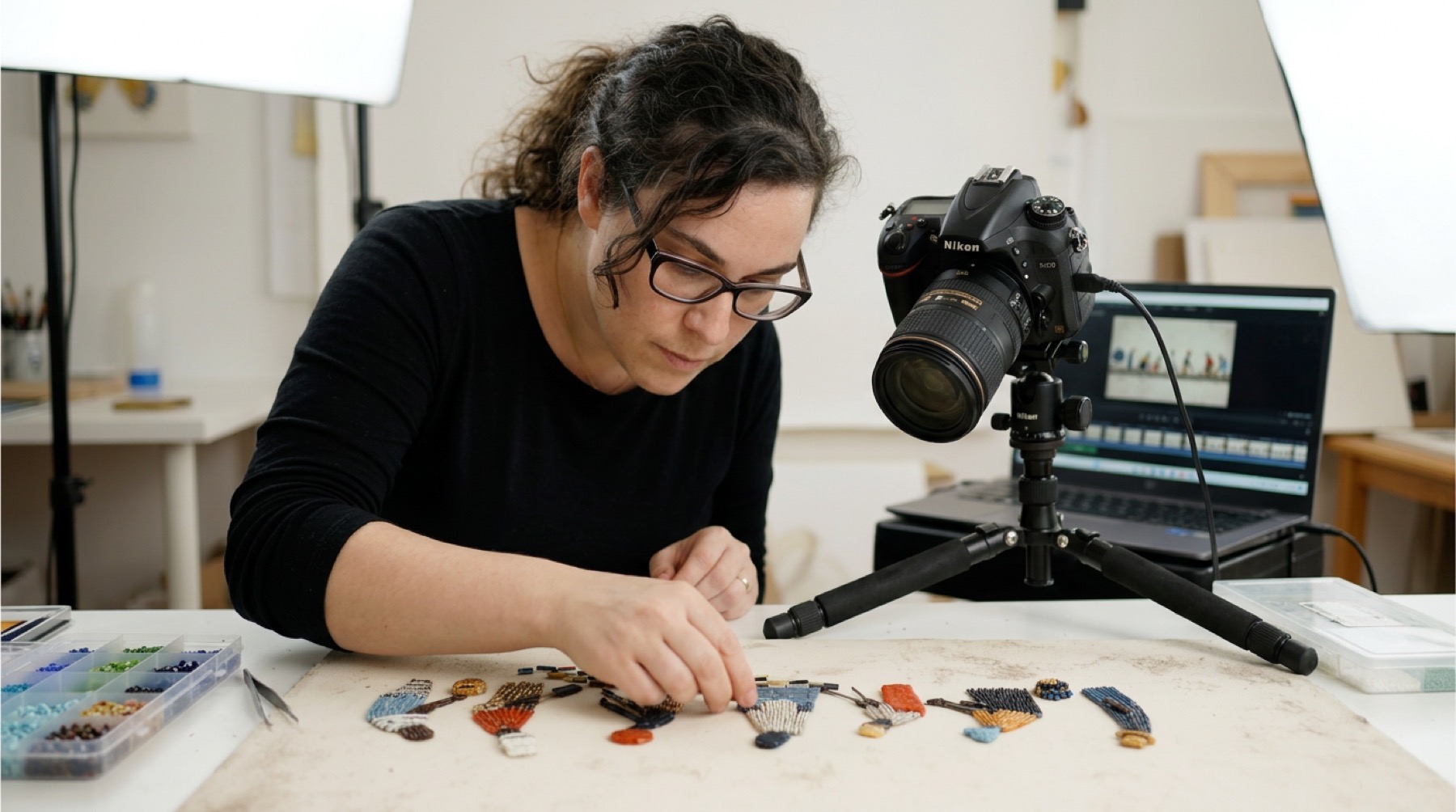
We made it in a stop-motion style. Every frame was set with beads. The characters wear beads because they are made of beads. The material Babalola argued the Yoruba had mastered is the material the film that honors his work is composed from.
Film still from Abidemi Babalola's film: a marketplace rendered entirely in beads
From the film for Abidemi Babalola — a world built out of beads, the material his research is about.

It took months. It changed the film's register in a way that no other choice would have. It is one of the clearest expressions of a way of working we return to across the slate: several of the films we make are built from a material, or a technique, the scholar's own research is about. It has become how we think.


This is a claim we take seriously across the studio, and it is the reason our slate takes as long as it takes. It is why the film we make for a scholar of glass is not made in the same medium as the film we make for a scholar of manuscripts, or a scholar of bead-technology, or a scholar of the human bone. We cannot always reach the ideal. But the pursuit of it is what we are doing when we start each project by reading the source, and asking what the source is made of.


Moofa Production House makes animated films for foundations, museums, research institutions, and the event producers who serve them. On every project we commit to a physical craft that meets the intellectual weight of the subject.

Start a conversation →