What animating a peer-reviewed paper actually involves.
There is a moment, early in every project, when we ask the client for the source material and discover what we are actually being asked to animate. A forty-page paper. Three boxes of testimony. A catalogue essay written for twelve specialists. This is the moment most explainer studios fail: they take the one-page brief and start drawing.
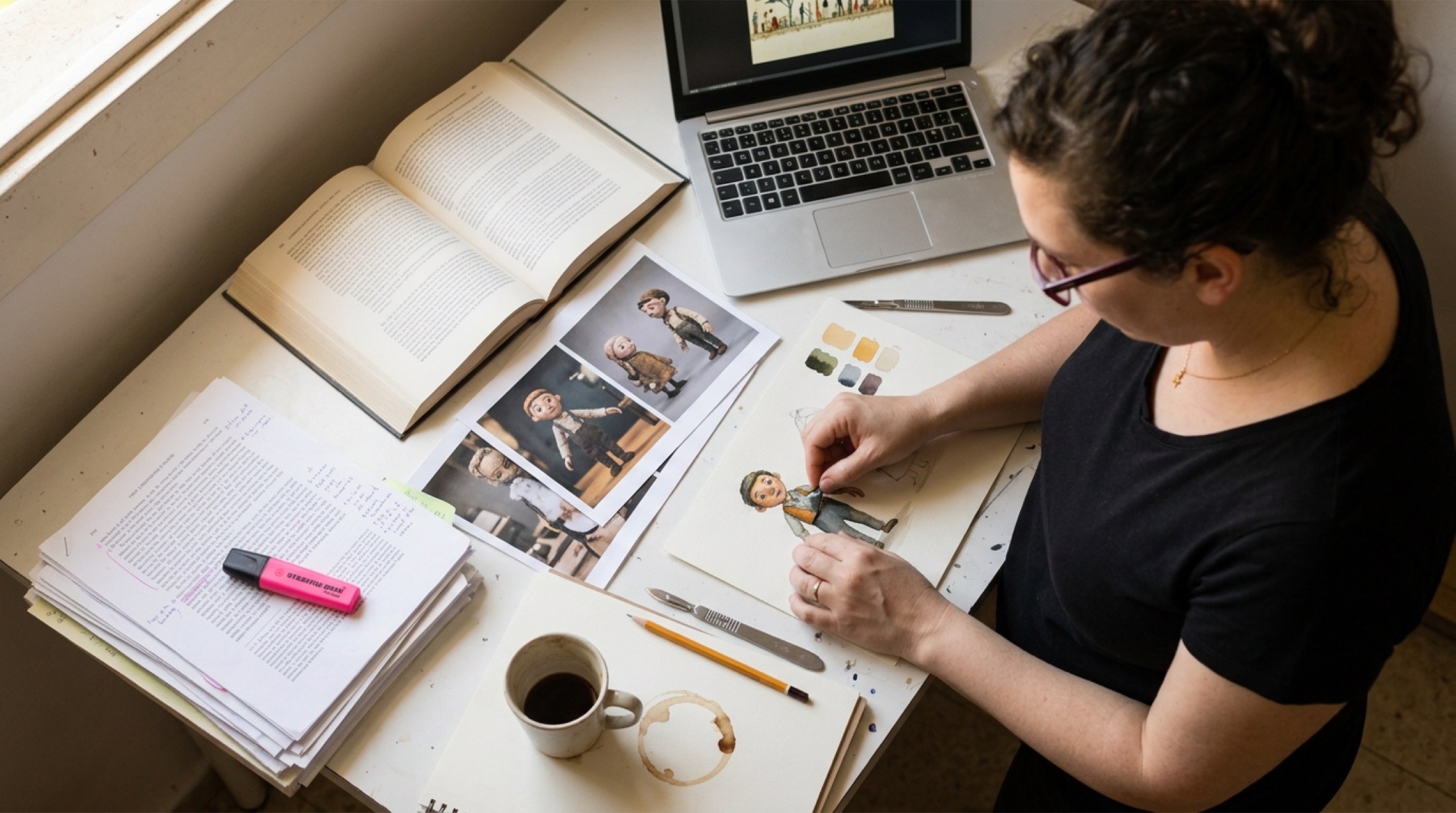
We read the source. All of it.
The brief was written to be easy to act on, not to be true to the source. By the time it reaches a studio, the scholar’s hedges have been smoothed out: “this may indicate” has become “this indicates.” We read the whole paper the way you would read something you intended to cite — for the claims, the qualifications, the places the author is careful. It takes about a week. It is the most important week of the project, and by some distance the cheapest.
We decide what the film cannot say.
A four-minute film carries roughly five hundred words. A forty-page paper has twelve thousand. The temptation is to fit everything in, and a film that tries is unwatchable. So we settle, on the page and with the client, what the one thing the film is for — and defend that against scope creep for the rest of the project.
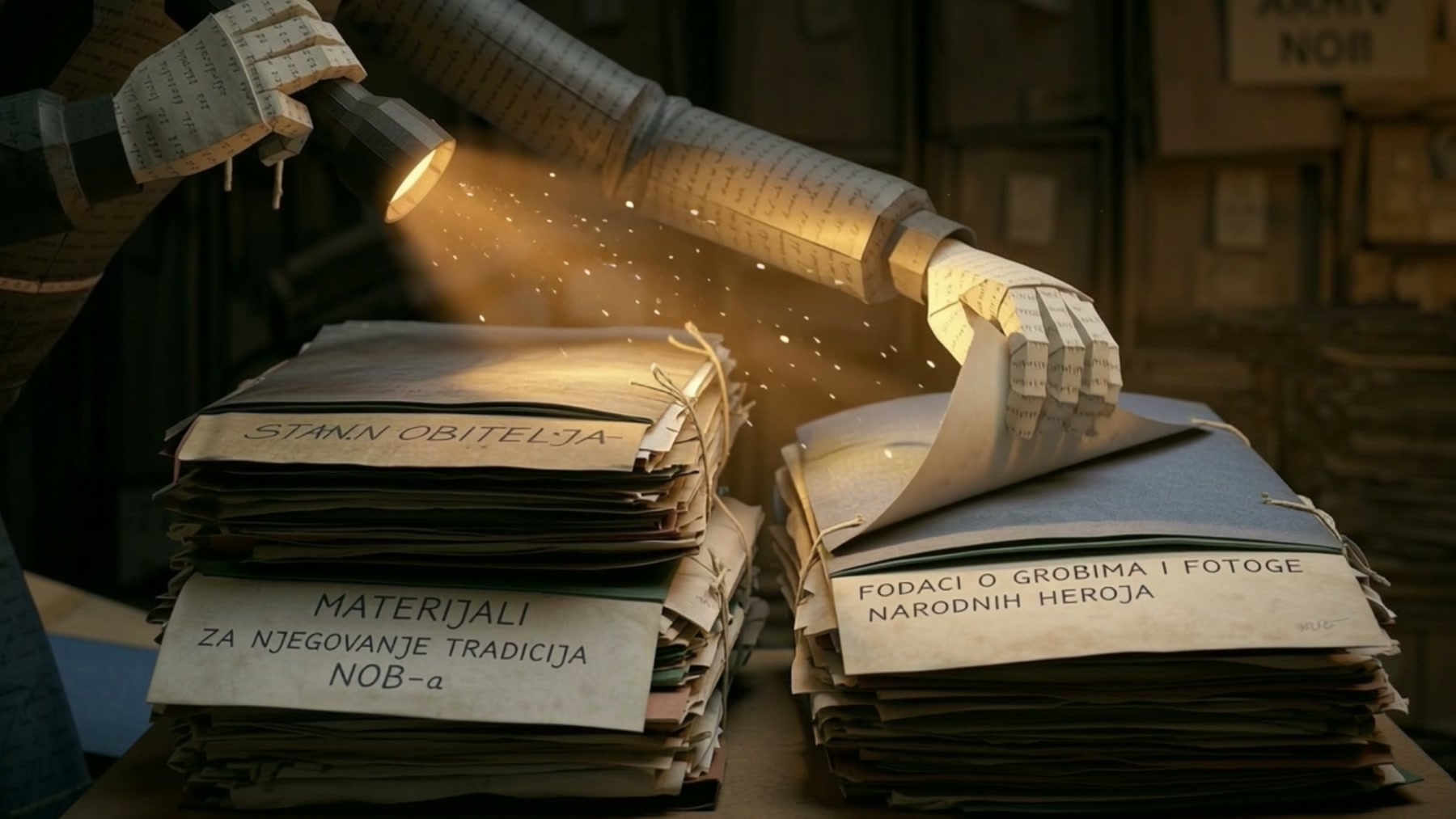
We write the script next to a scholar, not after them.
Most projects go wrong at the script, because that is where the studio is alone with the material. We send a structural outline first — three paragraphs on what the film does, in what order, with what omissions — and get notes on the structure before a line of voiceover exists. Scholars are extraordinarily good at this when asked properly. The script does not lock until the scholar says it does.
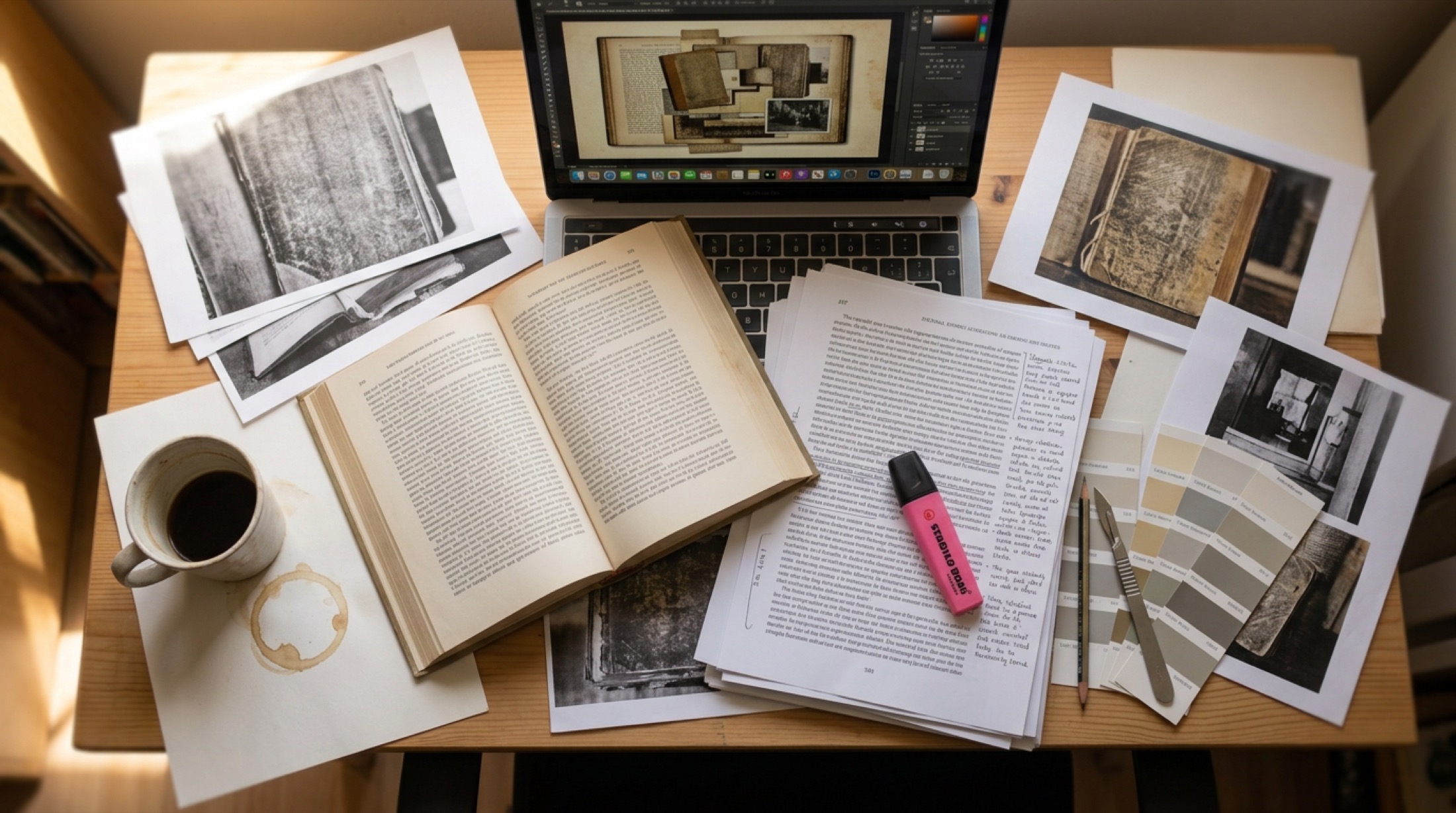
We design from the source, not from a moodboard.
Only with a script the scholar trusts do we start thinking visually — and we start with the source again. What does this material actually look like: the archive photographs, the document scans, the manuscripts, the microscope images? The people drawing the frames are the people who read the paper.
Moofa Production House makes animated films for foundations, museums and research institutions that take their subjects seriously.