Elka Burnstein was orphaned before the war and survived Auschwitz, forced labour and the death marches because, in every one of those places, somebody was good to her. The last of them was a German nurse.
Elka was orphaned shortly before the war. She survived Auschwitz, forced labour at a camp called Hockweiler, and the death marches — and in her own account she survived because in every one of those places somebody was good to her. A kapo at Auschwitz who grew fond of her. An SS officer at the labour camp who let her keep the fire and gave her extra food. Friends who hid her, unconscious, in the straw during a death march, and by doing so saved her life.
And finally a German nurse in a displaced persons camp, Hildegard Neugebauer, who took her in and was a mother to her for several years. The bond between them was fierce and not simple. When we met Elka the first impression was of a woman of enormous charm, and of an exceptional sharpness — both of which are visible everywhere in how she survived.
The German Nurse · 5:07 · English subtitles
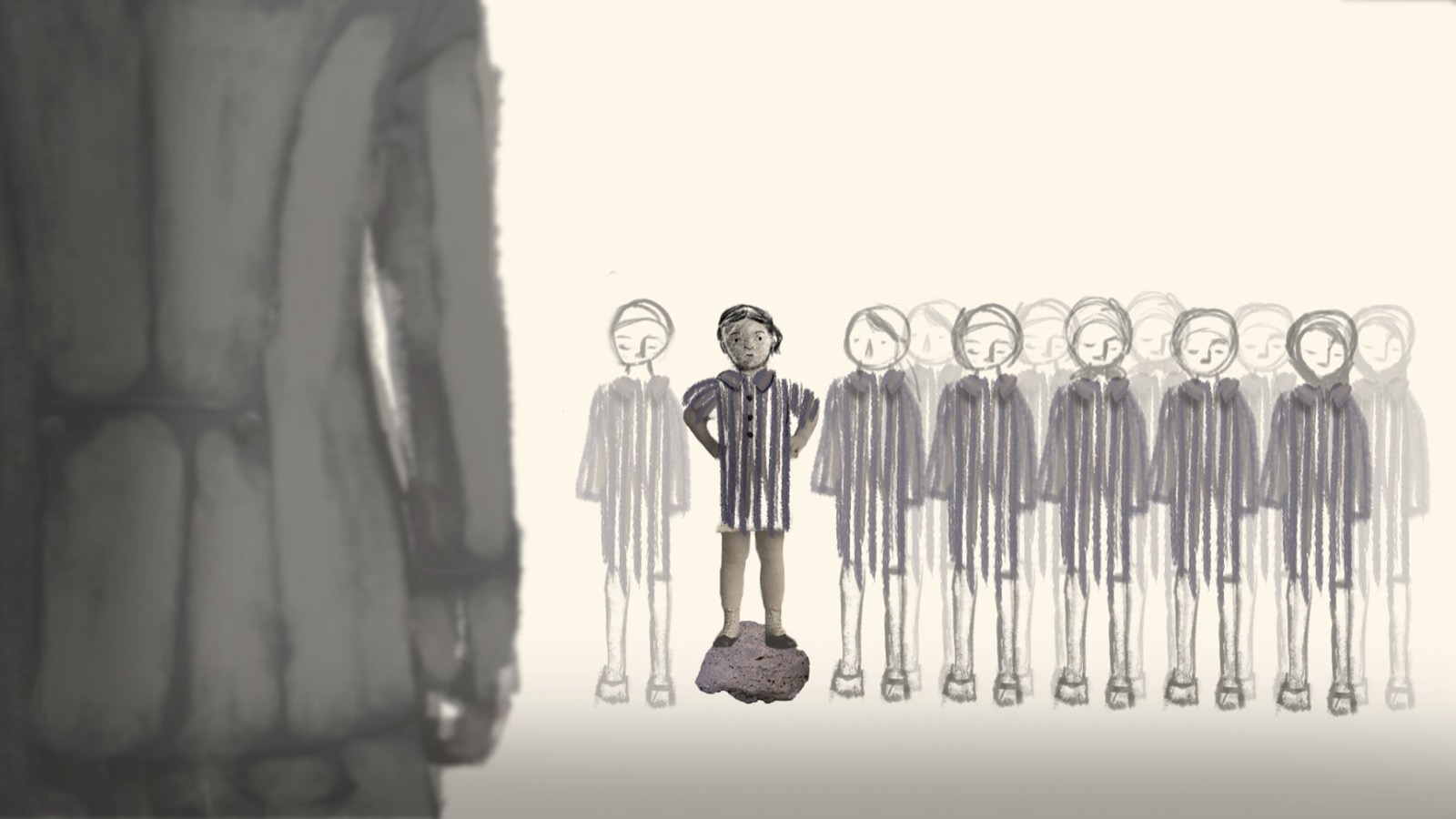
At roll call, being small was dangerous. Elka stood on a stone so she would not be noticed as a child. Her film is led by the physical materials present at the decisive moments in her account, rendered as photographic elements against the drawing — her resourcefulness made literal.
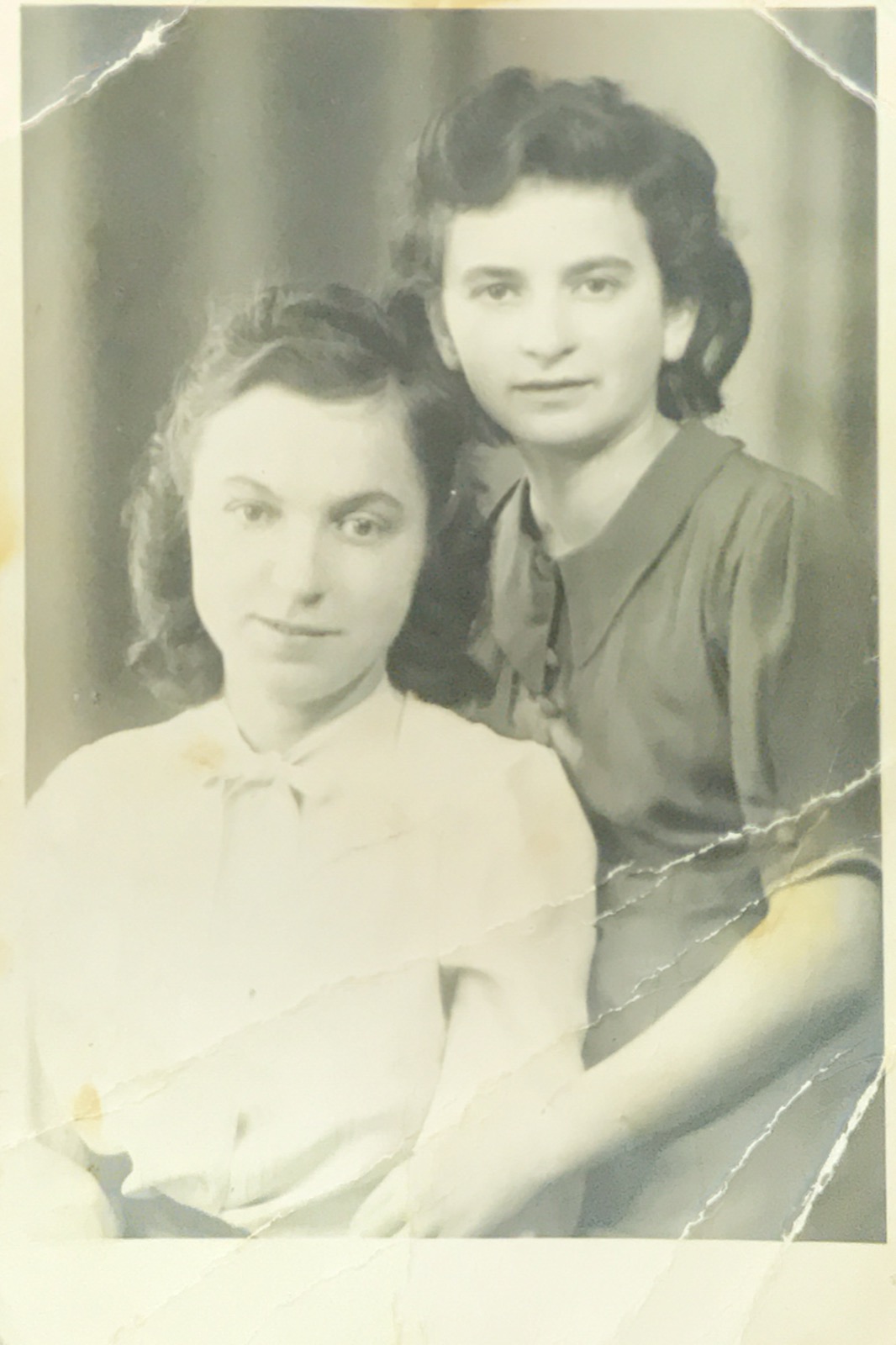
They had this taken together, as a keepsake. It is the object the film’s central relationship comes from.
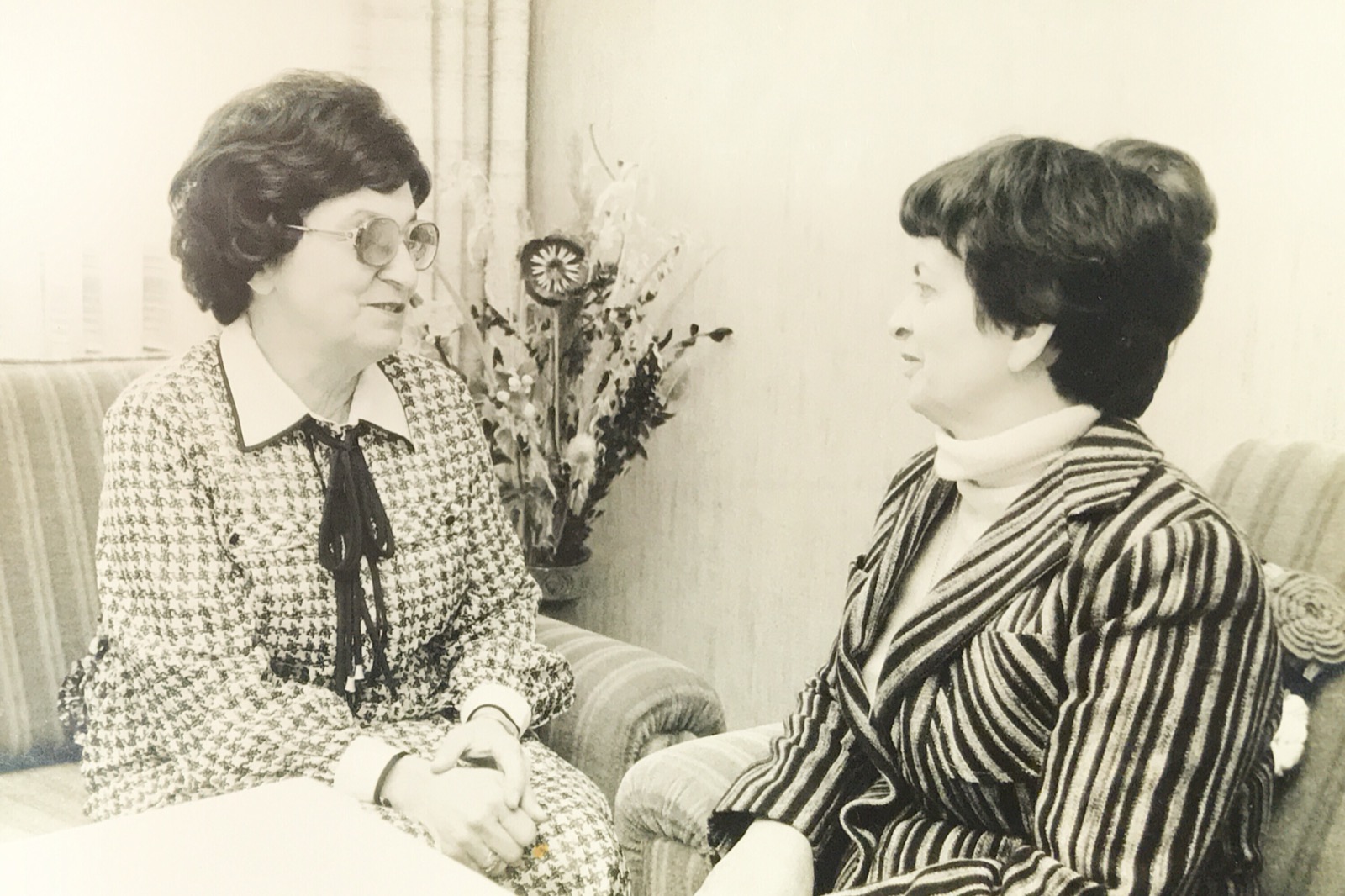
Elka with Hildegard at their reunion. Two photographs, decades apart, of the same two people.