Saul Oren persuaded a German officer at Auschwitz to strike his younger brother's name from a list — and then learned what the list was. Fourteen years passed before he knew Moshe was alive.
Saul came from a warm Hasidic family that managed to stay together until 1942. He and his younger brother Moshe reached Auschwitz. When a selection was made, Saul persuaded a German officer to strike his brother’s name from the list of boys — and then learned what he had done: the list was a transfer out. The choice he had made to protect Moshe left him behind.
Fourteen years passed before Saul found his cousin in Israel, one Friday evening at the start of Shabbat, and was told his brother was alive. When we met him he was a gentle man who told his testimony carefully, with particular attention to the Hasidic household he came from. The film is about the parting and the search.
By the Sea exists in its Hebrew original; an English version is in preparation.
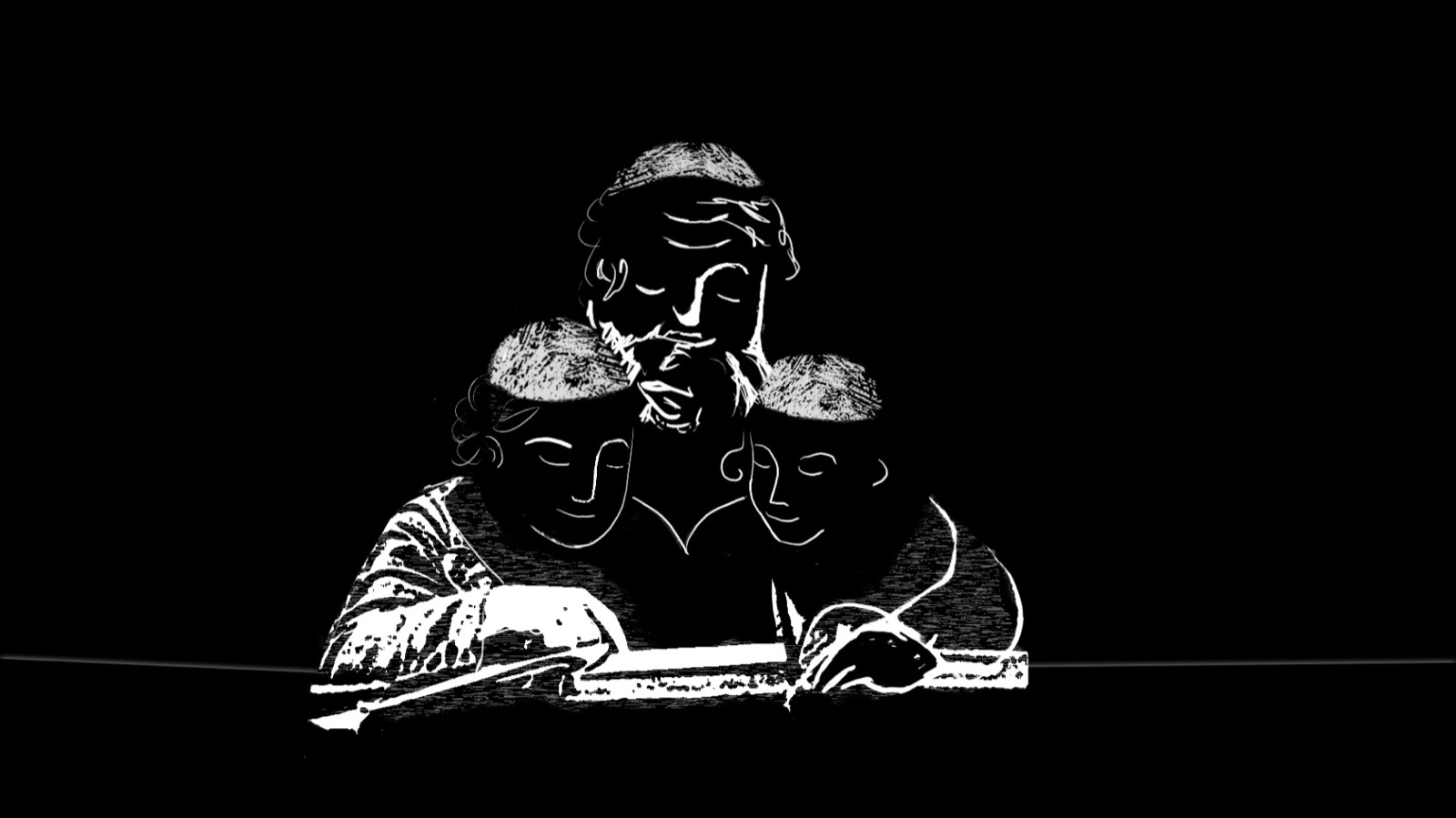
Saul’s story is told in a visual language taken from engraving — black and white, with touches of colour. It begins in the family home, with Saul, his father and his younger brother Moshe at the daf yomi, the day’s page of Talmud.
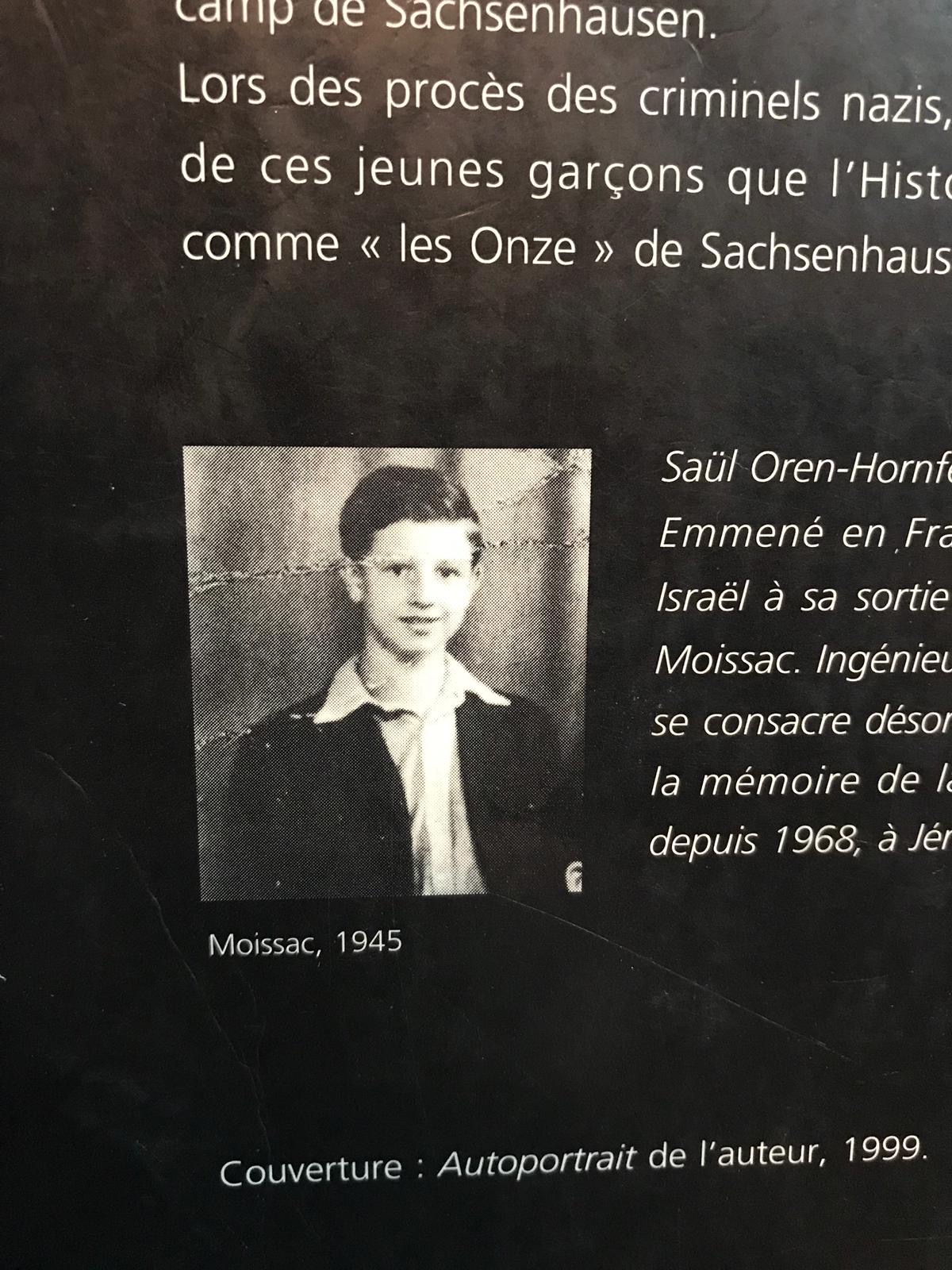
Saul Oren-Hornfeld’s own account, published in French. The portrait is captioned Moissac, 1945; the cover is a self-portrait he drew in 1999.