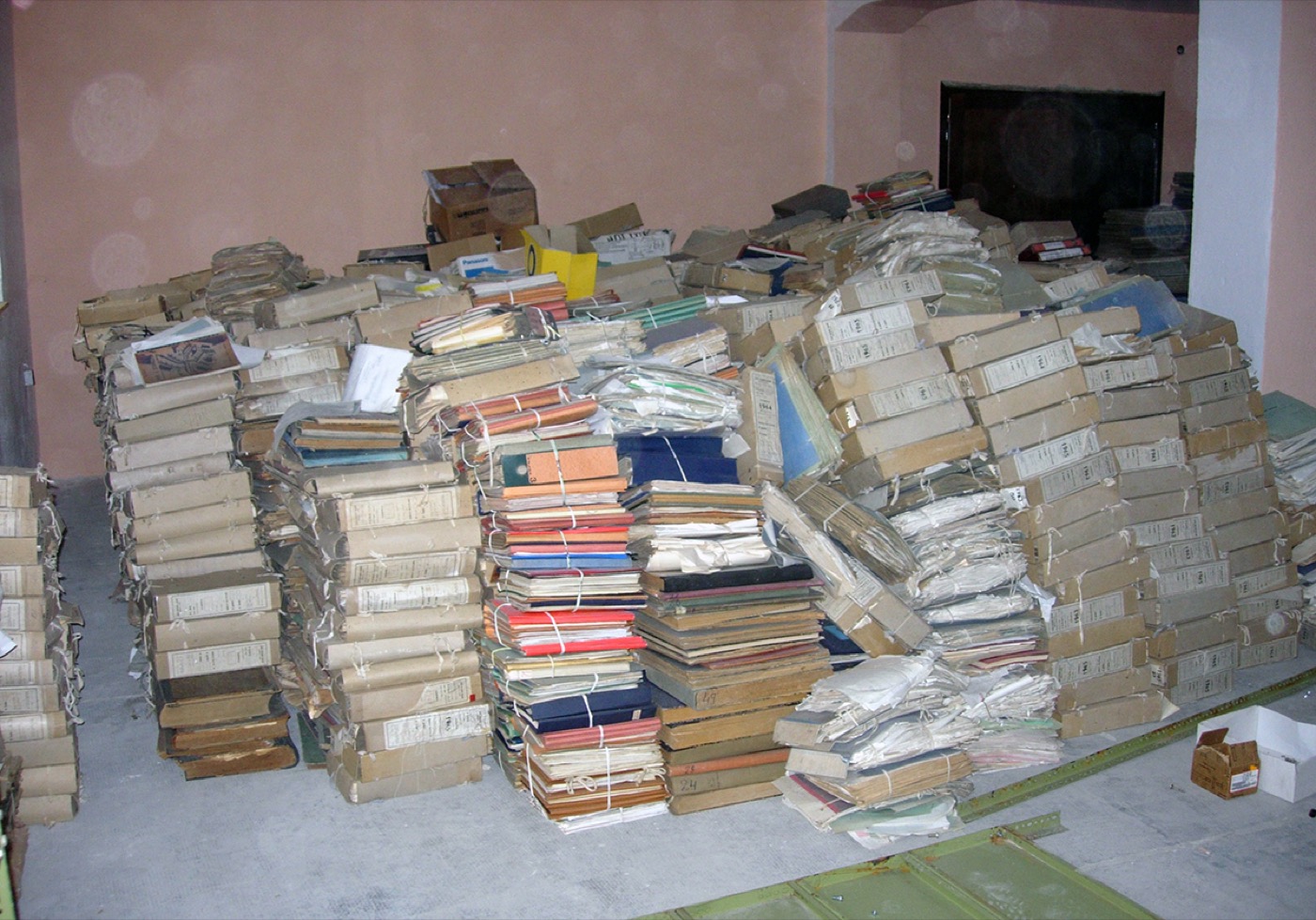
Source material
What we did with it
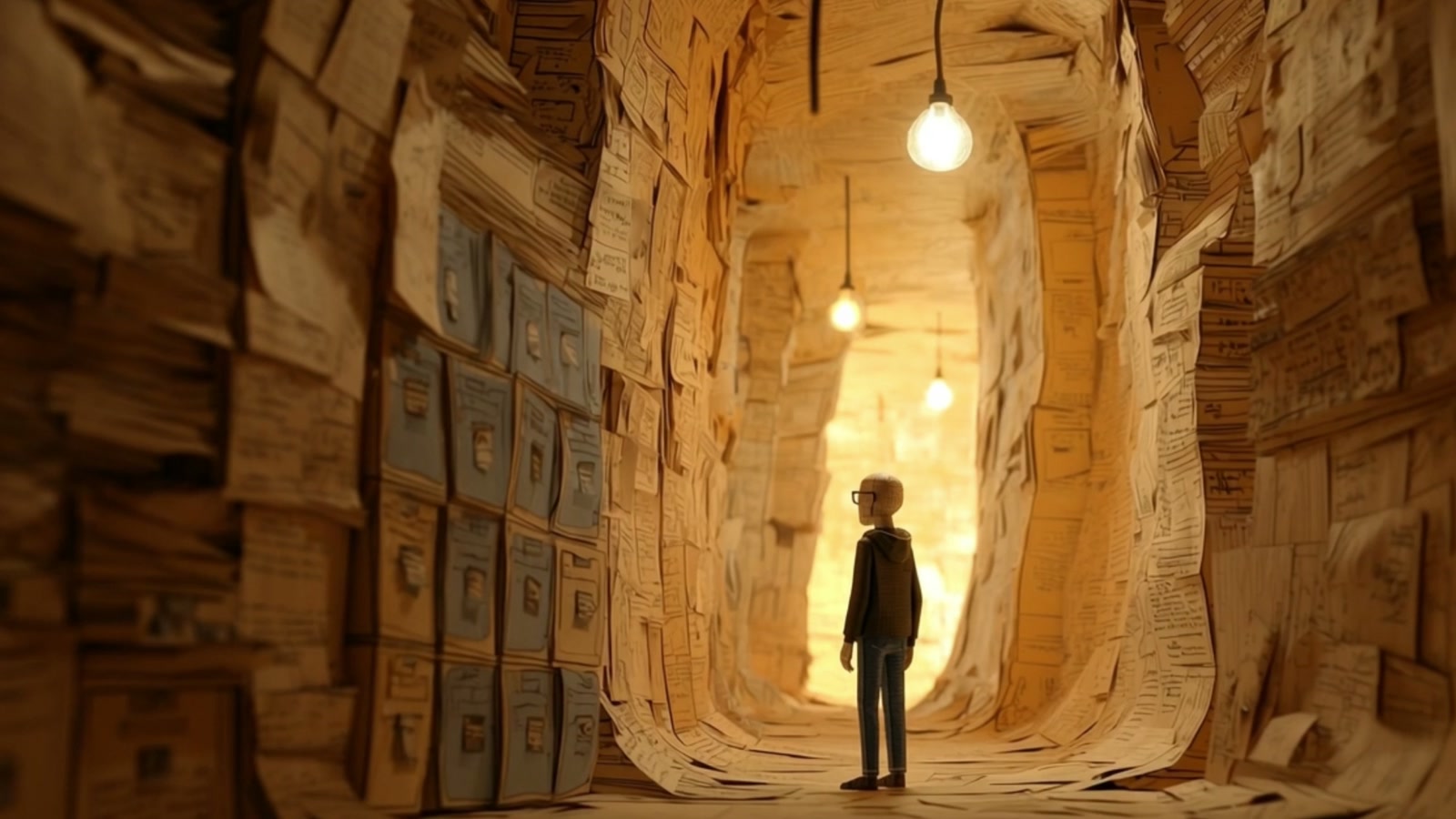
A three-minute detective story. A researcher is handed a flashlight and a quarter of an hour in an unlit Bosnian archive, and finds a folder that had been sitting in the dark for sixty-five years. We built the entire film out of documents, because the archive is the subject.
It is a September afternoon in 2006, in a basement depot in Bosnia-Herzegovina. An archivist gives a foreign researcher fifteen minutes. Most of the bulbs have burned out, so she hands him a flashlight, points him down a dark row of shelves, and says the thing that makes the whole story tick: God save me if someone found out I let a foreigner down here. Then she goes for coffee with her colleagues.
He has been working on this question for years. He has fifteen minutes. He strains to read handwriting on filthy, uncatalogued stacks of blue folders by torchlight — and his eyes stop on four words: Sites of Mass Executions.
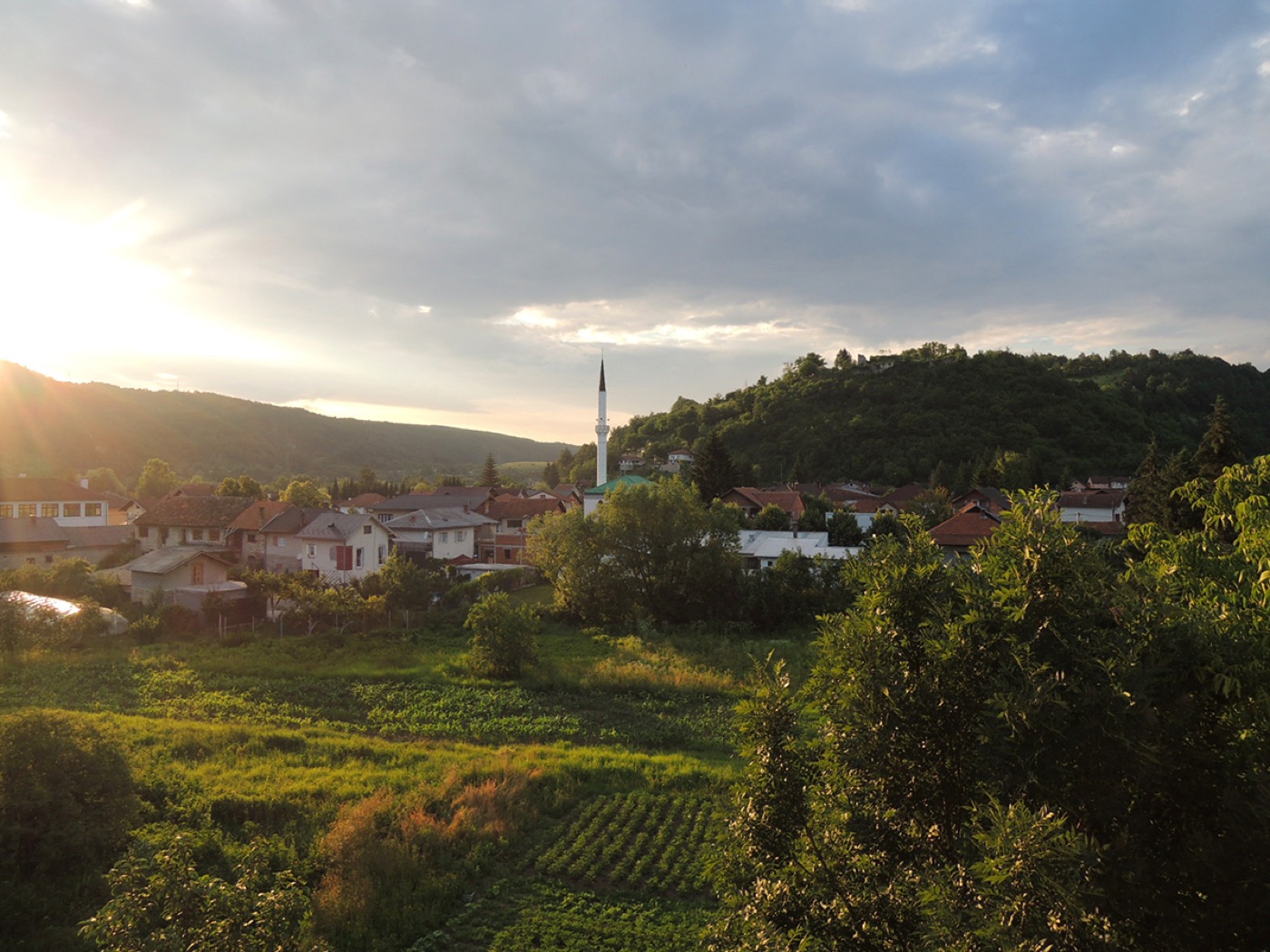
Inside is the record of Kulen Vakuf, where in the summer of 1941 much of a multi-ethnic town became both perpetrator and victim in a series of massacres that killed thousands. It had been sitting in the dark, uncatalogued, for sixty-five years. This is a detective story in which the evidence was never hidden, only unlit.
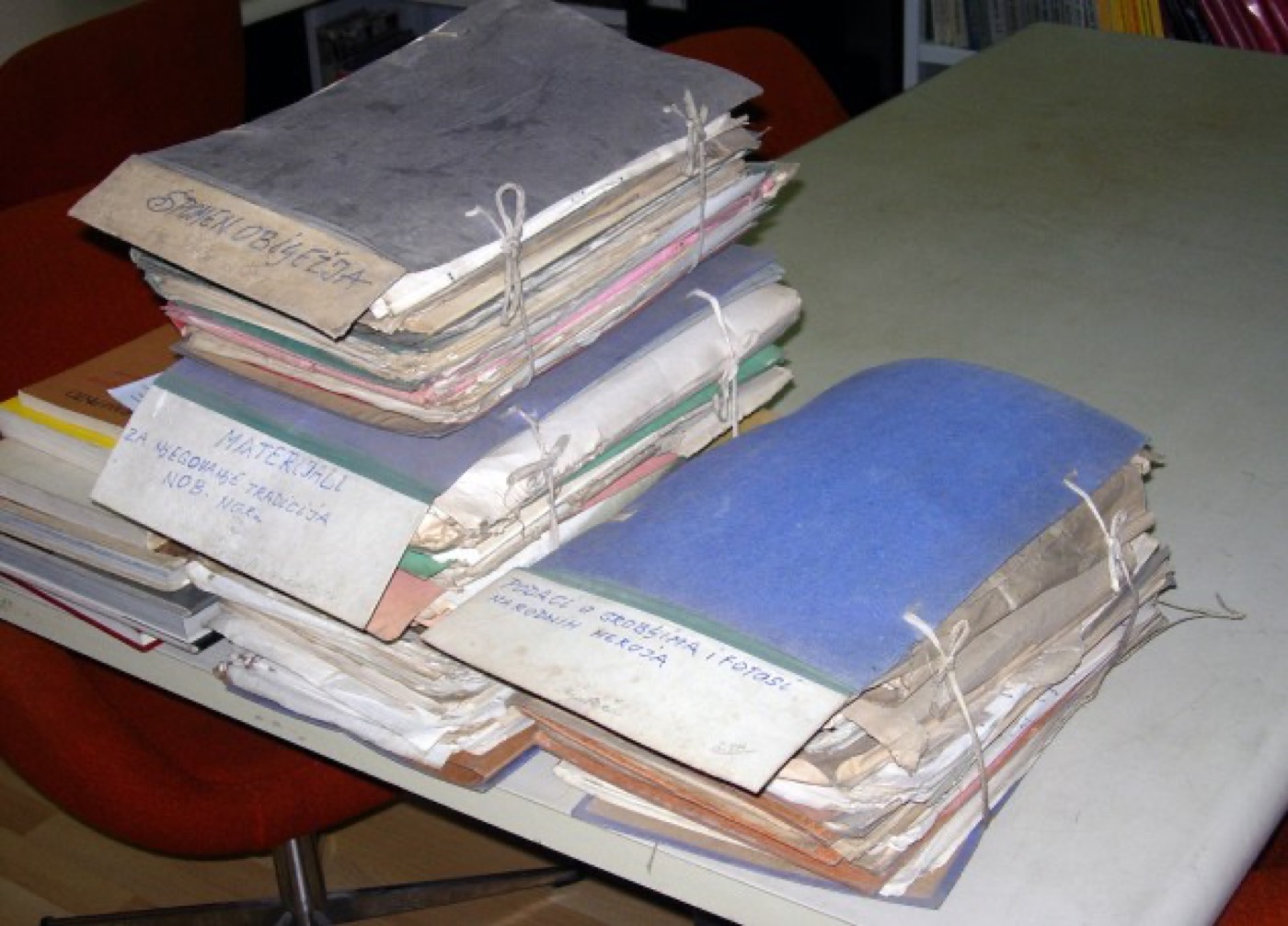
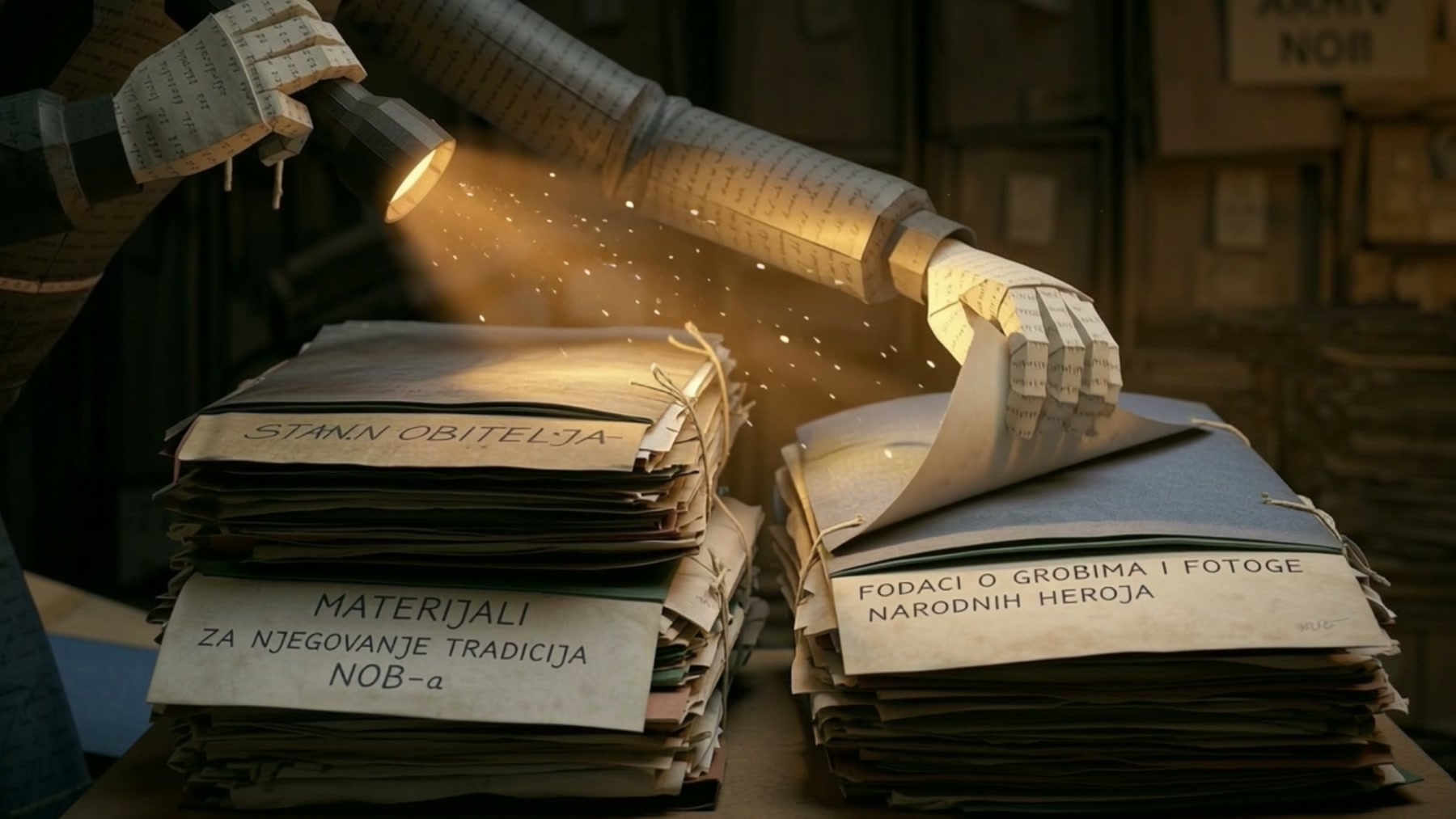
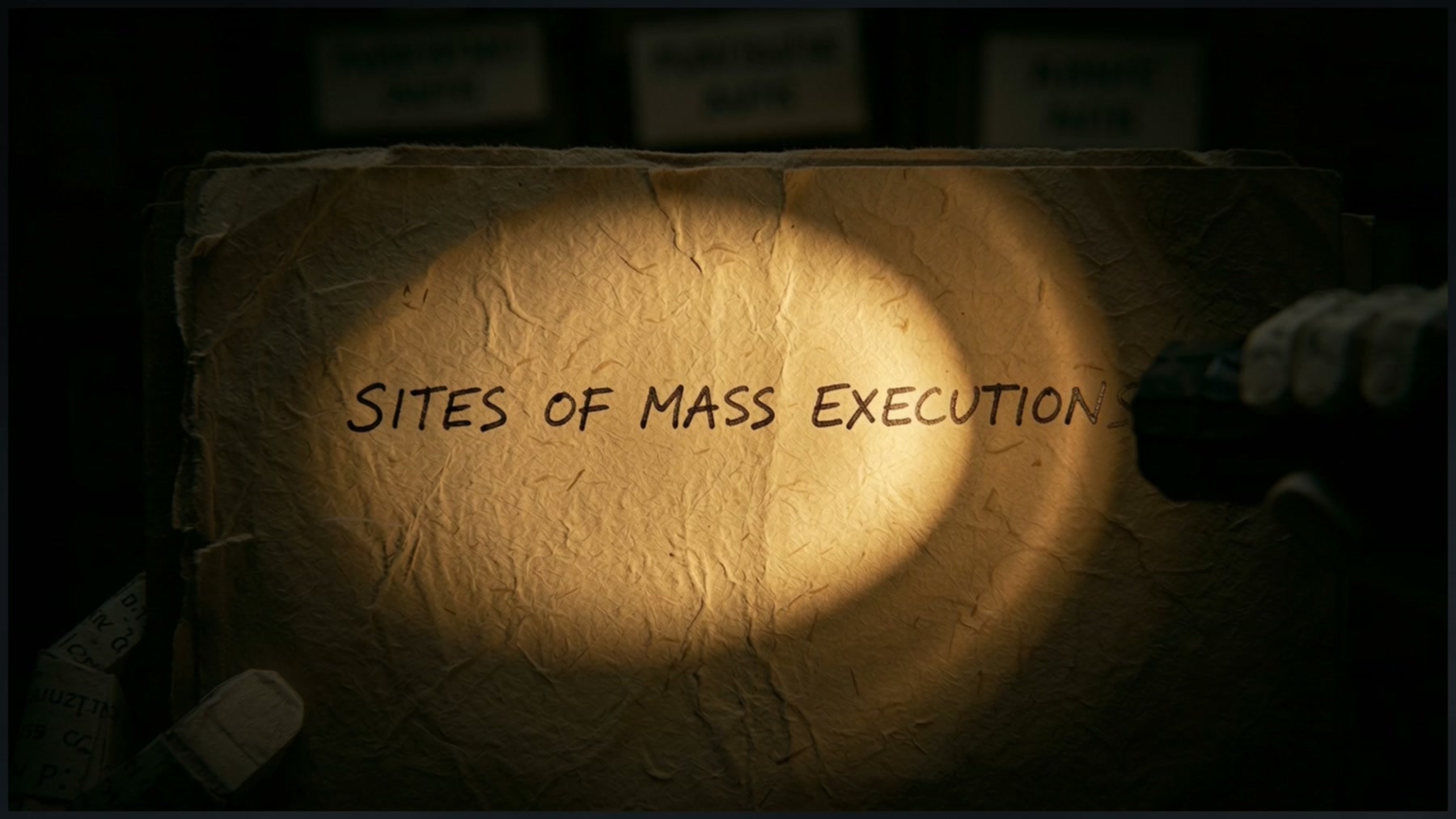
Four words in a period hand, on a folder that had been sitting uncatalogued since 1945. There is no music cue and no camera move here. The film’s pivot is given as an act of reading.
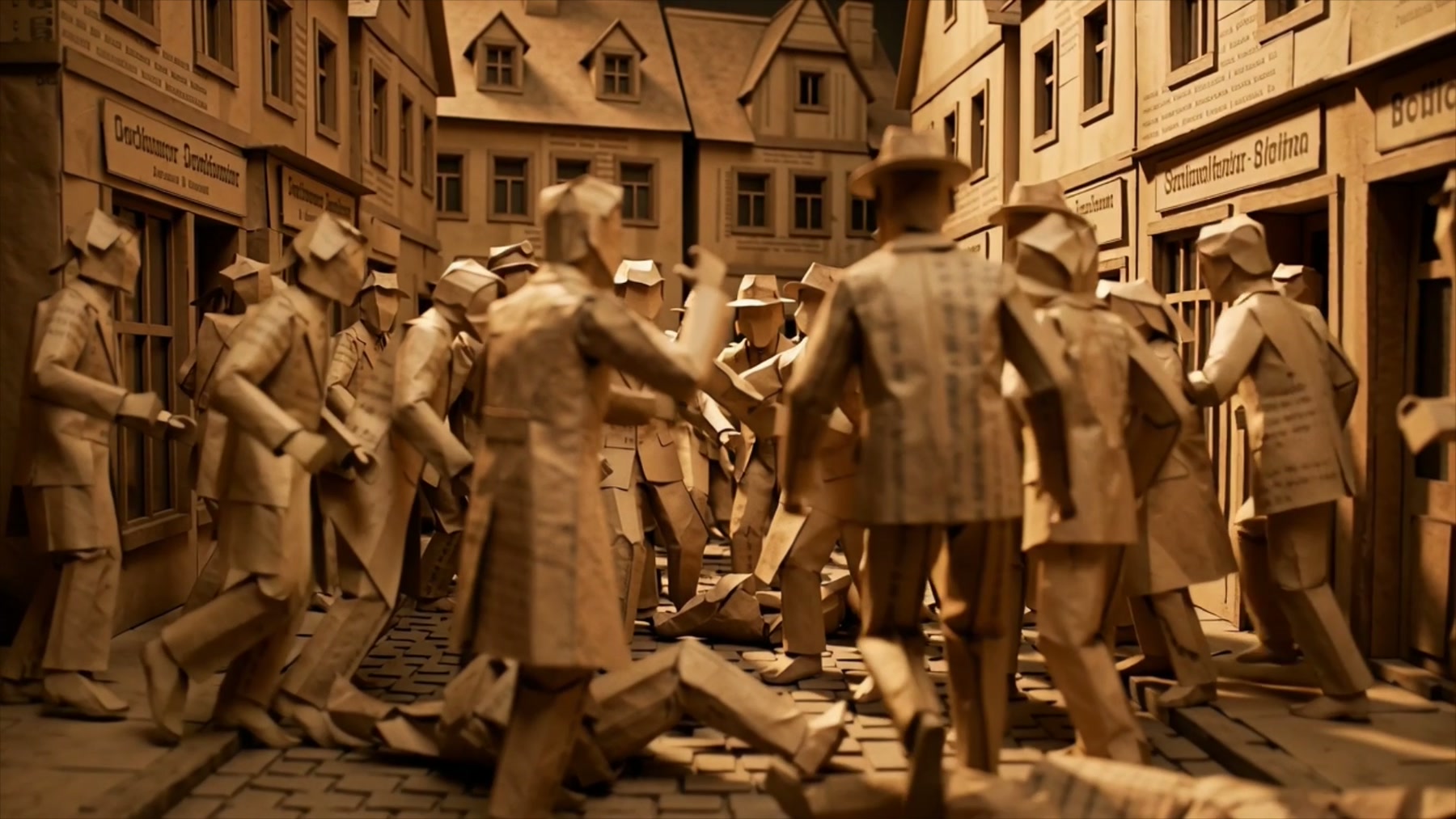
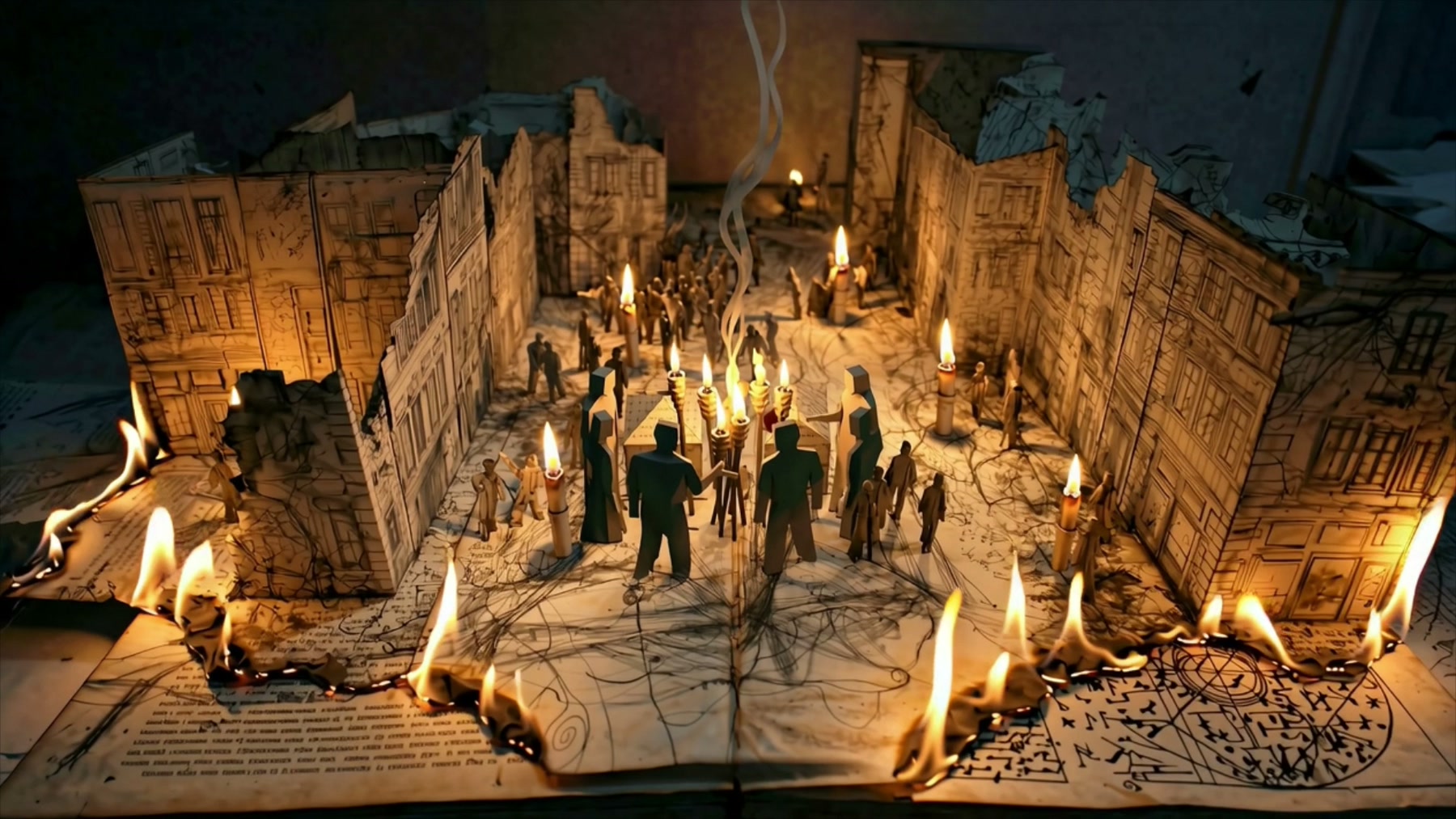
The town burns the way paper burns. Having built the film from the record, we could let the record’s own fragility carry the sequence without narration.
The subject of this film is an archive: what it holds, who is permitted into it, how long they are given, and what becomes of a town’s history while it sits uncatalogued in an unlit basement for sixty-five years.
The archive is therefore not the setting of the film but its material. Every figure and every surface is constructed from archival documents. The corridors are stacked paper. The researcher is covered in handwriting. The archivist’s coat is patterned document stock and her dress is lined with a page of music. The massacre in the street is a paper crowd on a paper street.
The reasoning is straightforward to state and difficult to hold to. What survived of Kulen Vakuf is the record. A film about that record should not be made of anything the record is not.
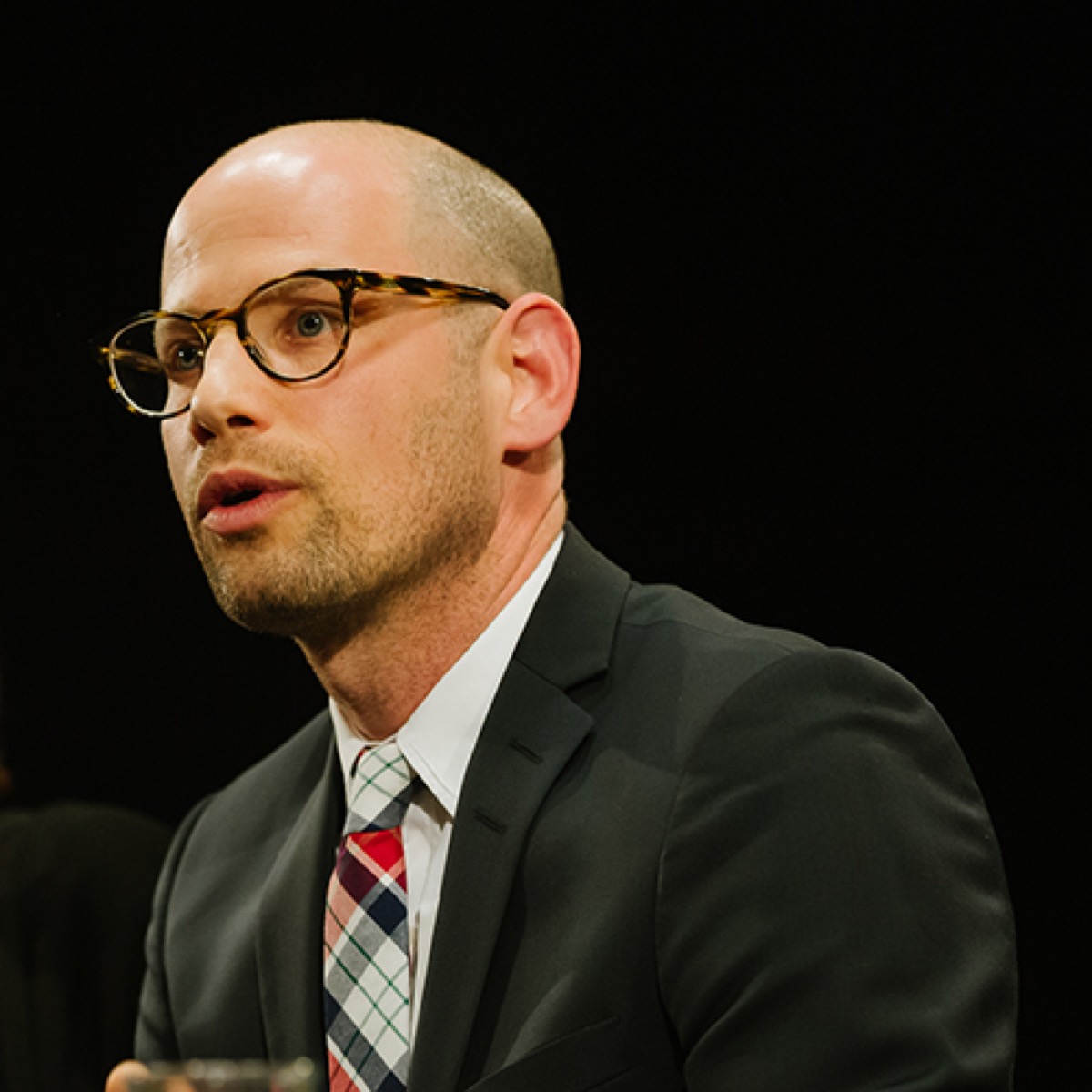
It starts from the researcher himself.
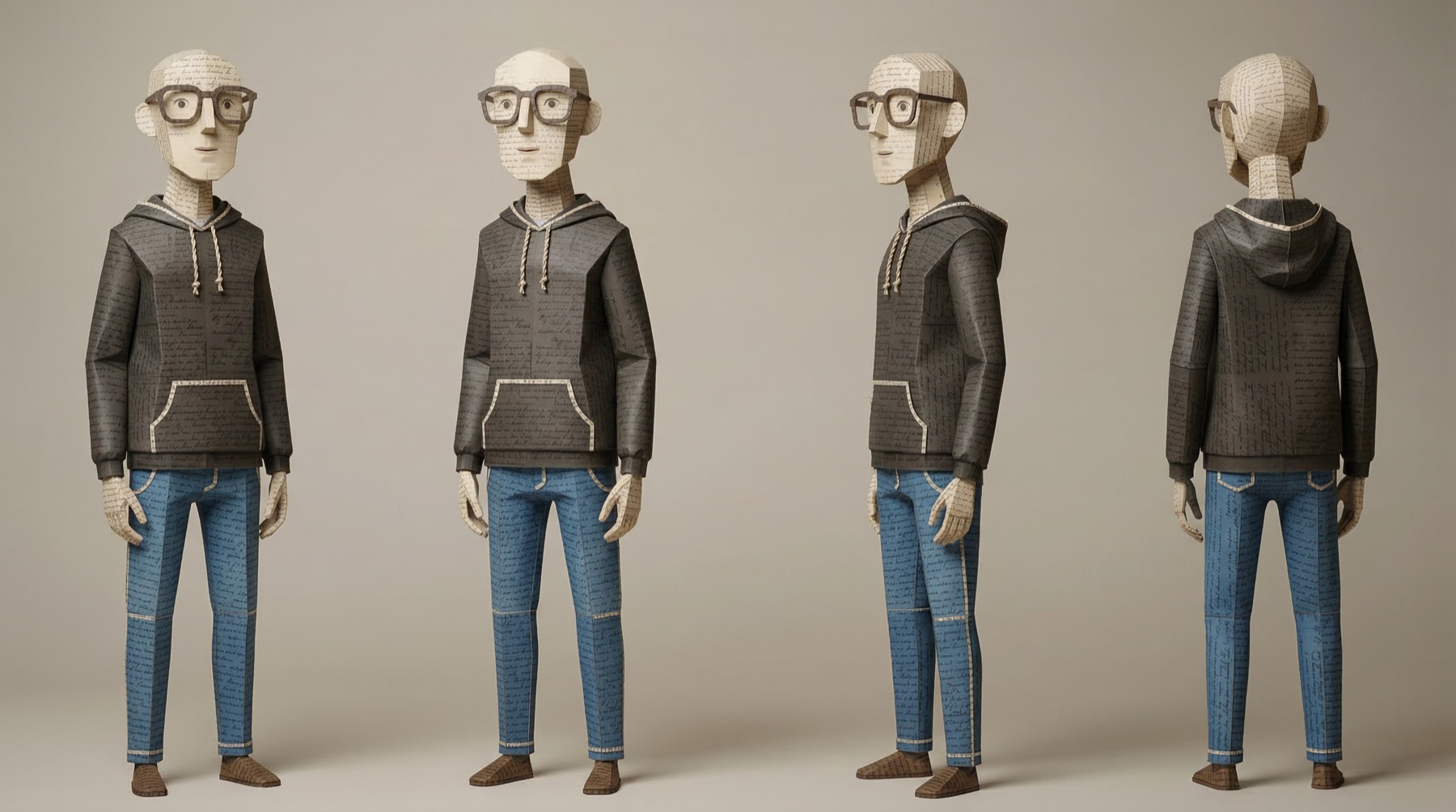
The turnaround built for production, in four views. Face, hands, hoodie and jeans are all rendered in document paper.
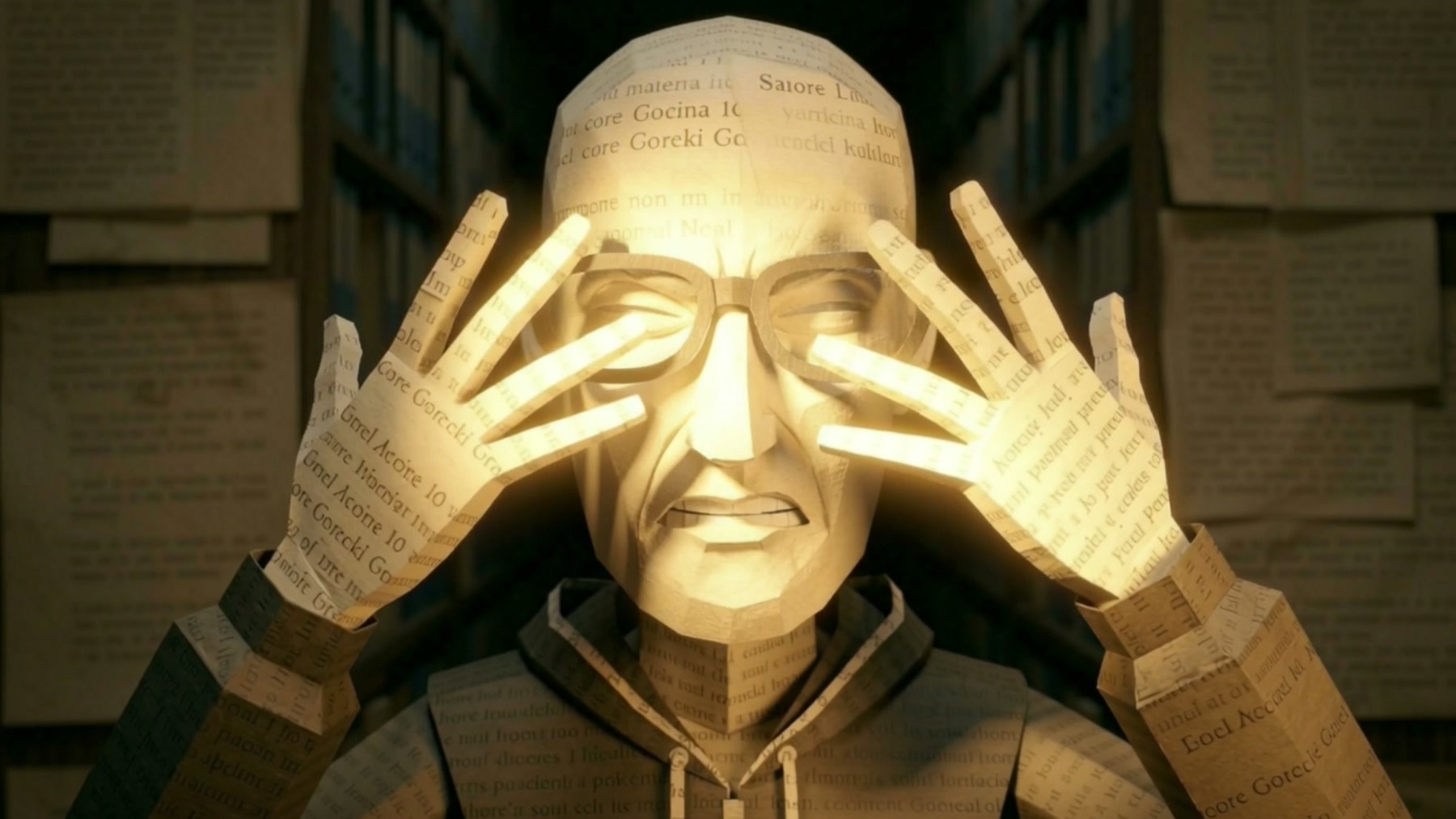
At close range the construction is explicit: printed and handwritten lines run across the fingers and the forehead. It is the clearest statement the film makes of its own method.
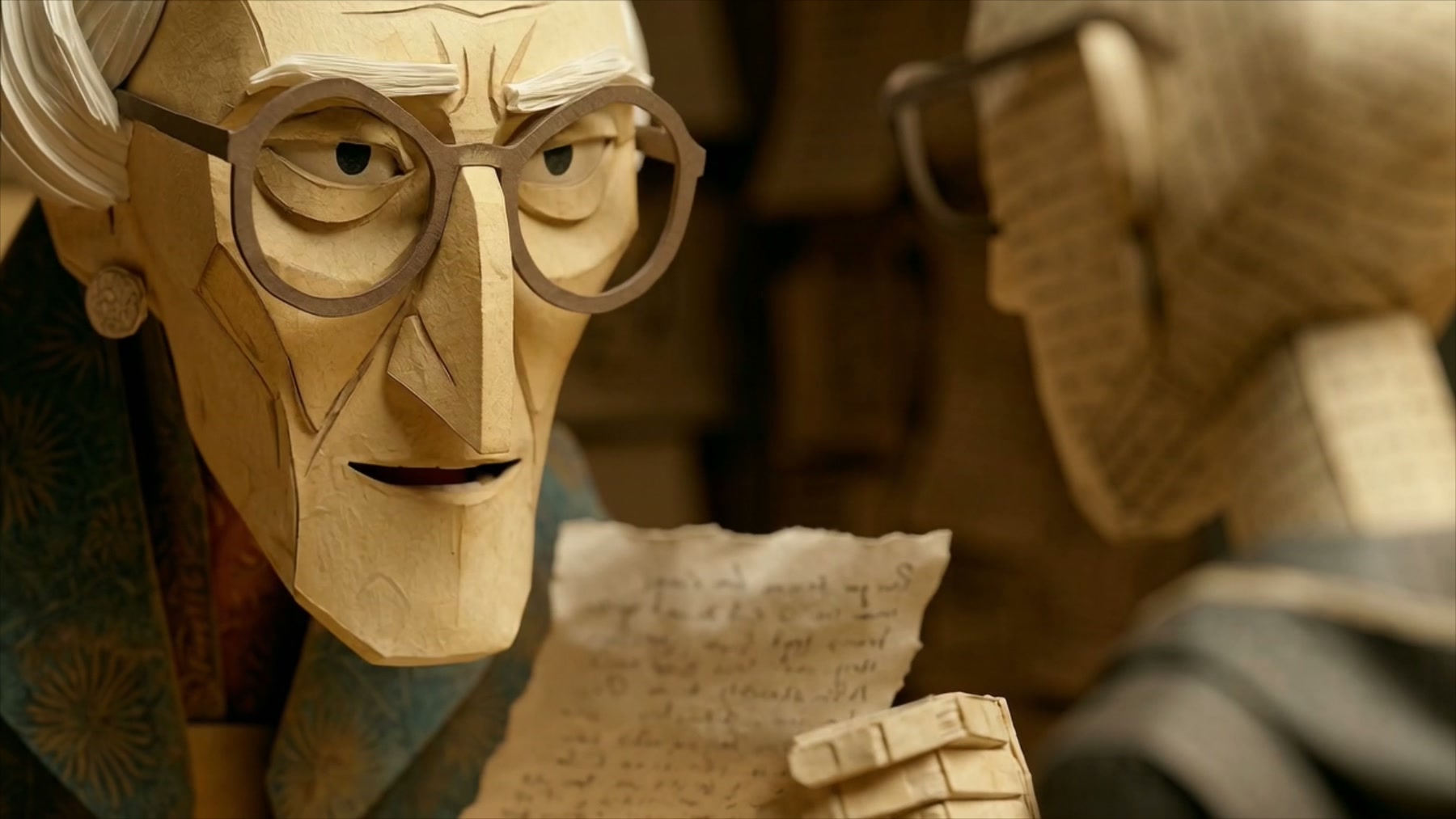
No photograph of her exists, so the character is a construction rather than a portrait — the one figure in the film who decides what may be seen, and for how long.
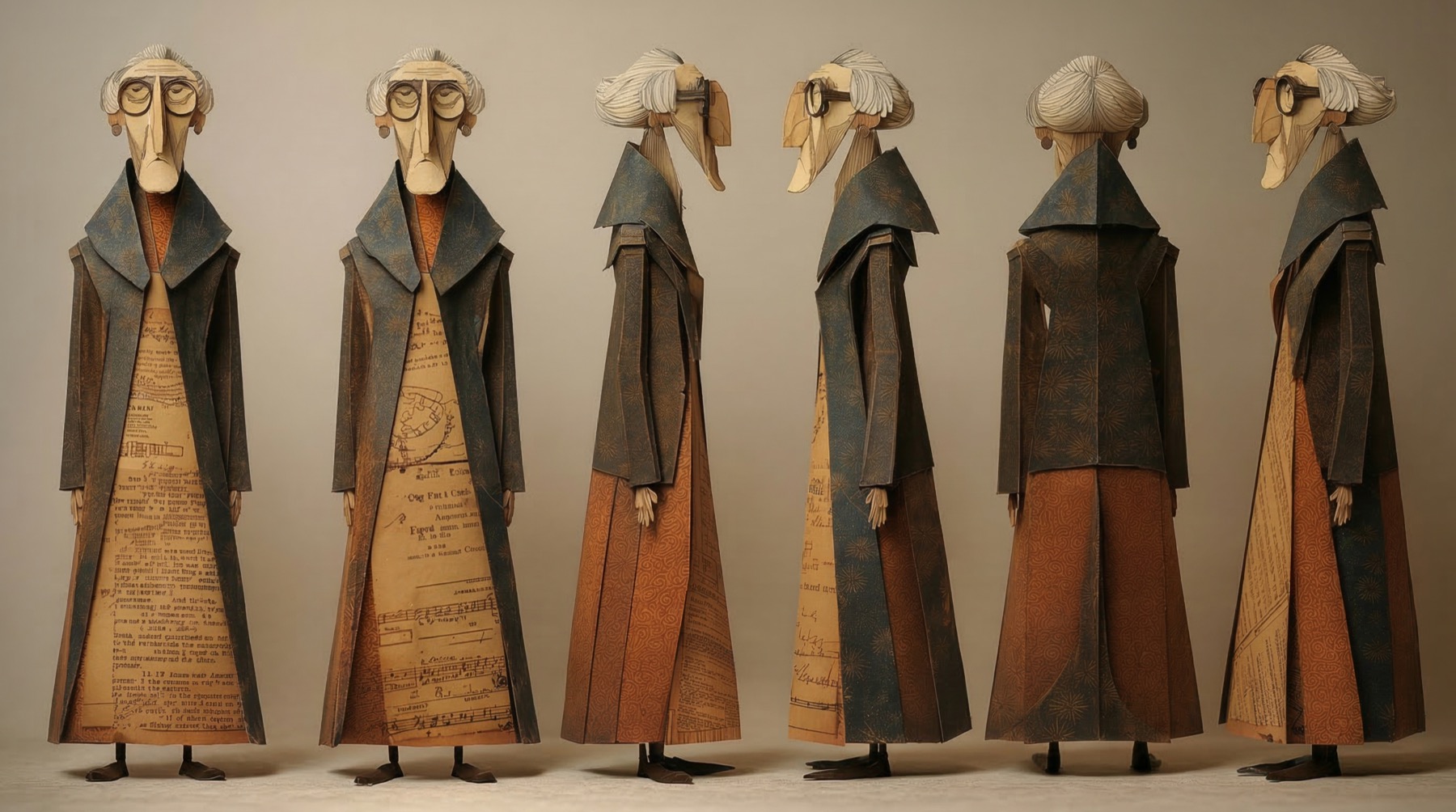
Her coat is patterned document stock; the lining of her dress is a page of musical notation. She is assembled from the holdings she controls.
Max Bergholz is a Professor of History at Concordia University in Montreal. The folders he found became Violence as a Generative Force: Identity, Nationalism, and Memory in a Balkan Community (Cornell University Press, 2016), which won the American Historical Association’s Herbert Baxter Adams Prize and the Laura Shannon Prize in Contemporary European Studies. The Dan David Prize selection committee lauded his “original and fundamental insight into the history of intercommunal violence and warfare in the Balkan and his use of microhistory to decode a specific historical situation in ways that shed light on comparable situations around the world.”
Each year the Foundation selects its winners and, with the help of the laureate, chooses the subject of the film they are being honored for. The Foundation’s team, who know that work intimately, help bring it to the page, and we turn it into script, image, register, and motion.
The one thing we keep from them is the film itself. It is made in their honor but held back, so that the first time Max Bergholz meets it, in animated form, is the evening of the prize — the very moment they are being celebrated for the work it depicts. That is the part of the project we love: a film that is also a gift, a surprise, revealed in the room where it does its work.
The Dan David films don’t end their life on the evening of the prize. After the ceremony they travel to YouTube and to the Foundation’s own website, where each one sits alongside the committee’s reasoning for choosing the laureate and further material on the research. The winners are interviewed once the films are public, and those interviews are woven into the published versions.
You care about your subject.
So do we.
Client: Dan David Foundation
Subject: Prof. Max Bergholz, Concordia University
Direction: Daniella Koffler
Animation: Moofa Animation Team
Year: 2026