Source material
What we did with it
A two-and-a-half-minute tribute on a historian of Chinese Buddhism whose scholarship follows a pilgrim's afterlife more closely than his life, how the seventh-century monk Xuanzang became, across thirteen hundred years, a symbol that meant something different to everyone who invoked him.
Benjamin Brose is Professor of Buddhist and Chinese Studies at the University of Michigan, Ann Arbor, where he chairs the Department of Asian Languages and Cultures. His scholarship works across the cultural history of religion in China, and, at its centre for more than a decade, the afterlife of the seventh-century pilgrim Xuanzang.
His book Embodying Xuanzang: The Postmortem Travels of a Buddhist Pilgrim (University of Hawaii Press) follows what happened to Xuanzang after his death, how his relics travelled, how his story was rewritten, how his image was carried into places he had never been. The Dan David Prize honored Brose for scholarship that spans the early history of Buddhism in China and the transmission of ancient religious narratives into contemporary religious practice, for the power of stories to change people's understandings, experiences, and lives.
Brose's work is not about Xuanzang the man. It is about what happened after Xuanzang died. The pilgrim's journey from Chang'an to India in the seventh century became a story later generations rewrote, over and over, until the man himself was almost invisible under his own symbol. Brose is interested in that afterlife: how one historical figure becomes a religious tradition, and how the tradition keeps changing the figure. Different people, across thirteen hundred years, have seen Xuanzang differently.
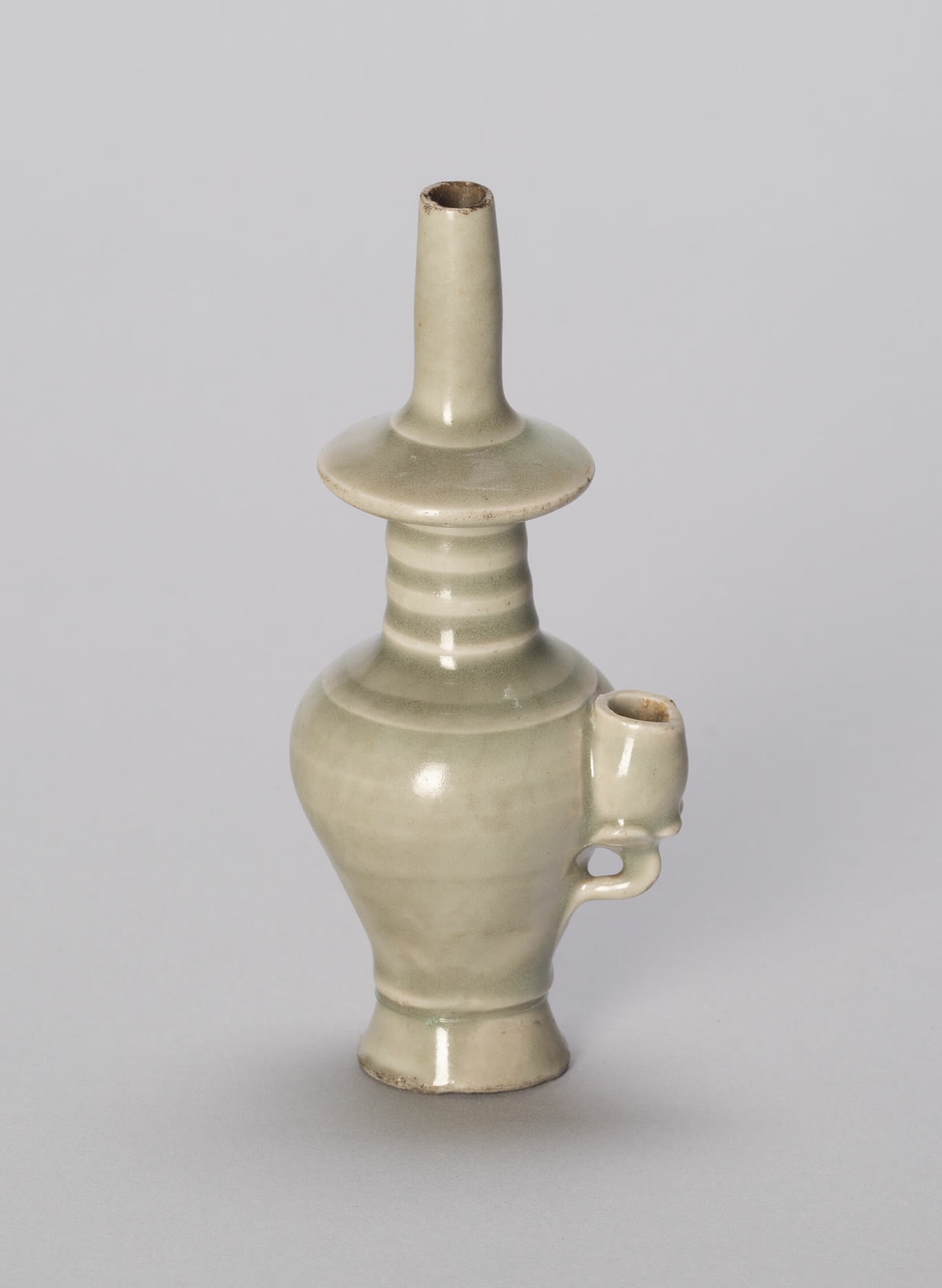
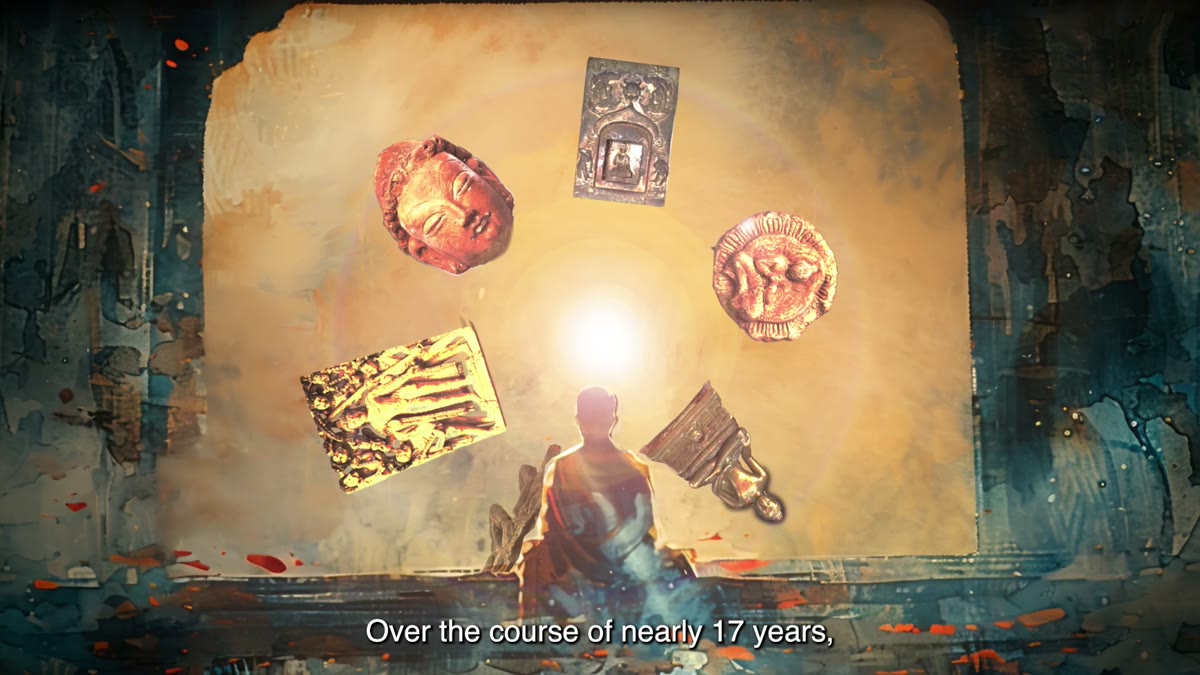
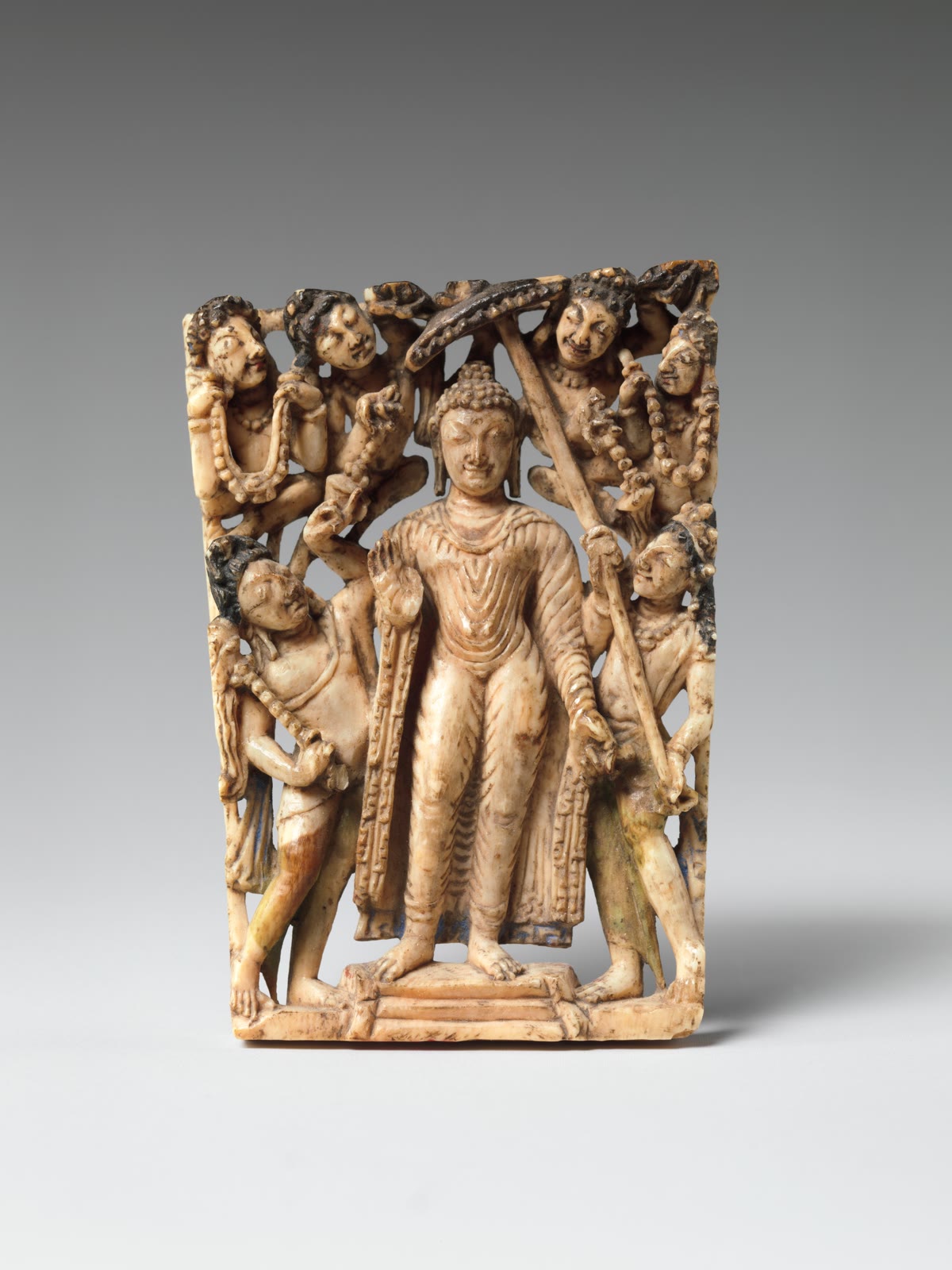
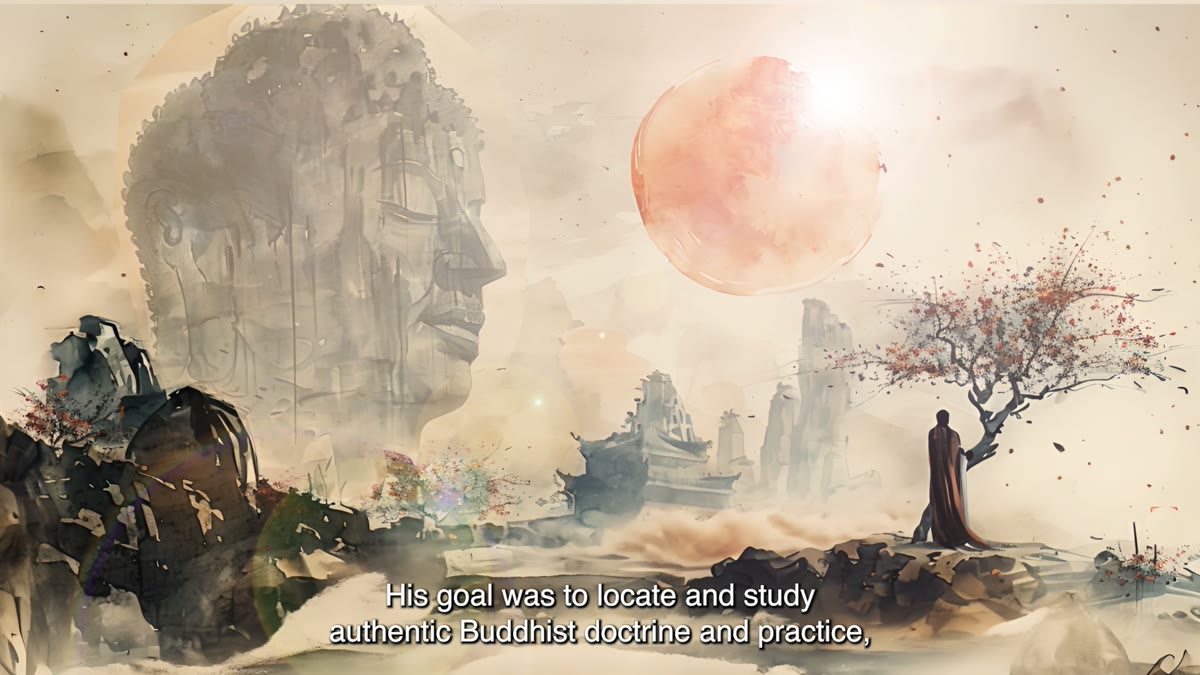
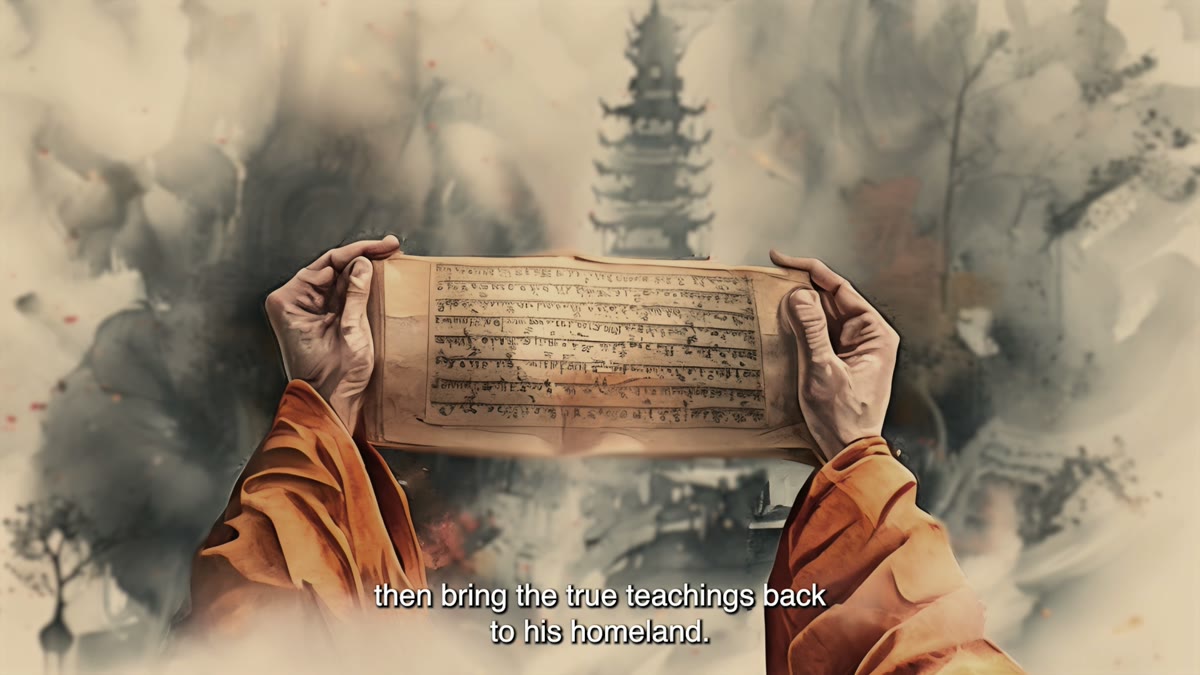
The film's task was to give the viewer the feeling of the journey itself, not the pilgrim who made it. We chose not to show Xuanzang, because Xuanzang, now, belongs to everyone who has ever needed him. Instead, the film moves through the landscape a Chinese Buddhist scholar would have crossed to reach India, the deserts, the mountains, the pagodas glimpsed in mist, the small ritual objects a monk would have carried, the mindful gestures of the practice itself. Buddhism as encounter, not as biography. What it might have felt like to walk that far, and why the walking mattered.
Each year the Foundation selects its winners and, with the help of the laureate, chooses the subject of the film they are being honored for. The Foundation’s team, who know that work intimately, help bring it to the page, and we turn it into script, image, register, and motion.
The one thing we keep from them is the film itself. It is made in their honor but held back, so that the first time Benjamin Brose meets it, in animated form, is the evening of the prize — the very moment they are being celebrated for the work it depicts. That is the part of the project we love: a film that is also a gift, a surprise, revealed in the room where it does its work.
The Dan David films don't end their life on the evening of the prize. After the ceremony they travel to YouTube and to the Foundation's own website, where each one sits alongside the committee's reasoning for choosing the laureate and further material on the research. The winners are interviewed once the films are public, and those interviews are woven into the published versions. Several laureates carry the films further still, into their teaching, playing them for graduate seminars, public lectures, and visiting audiences as a way of explaining, in two and a half minutes, what they have spent careers on.
You care about your subject.
So do we.
Client: Dan David Foundation
Subject: Prof. Benjamin Brose, University of Michigan, Ann Arbor
Direction: Daniella Koffler
Animation: Moofa Animation Team
Year: 2024