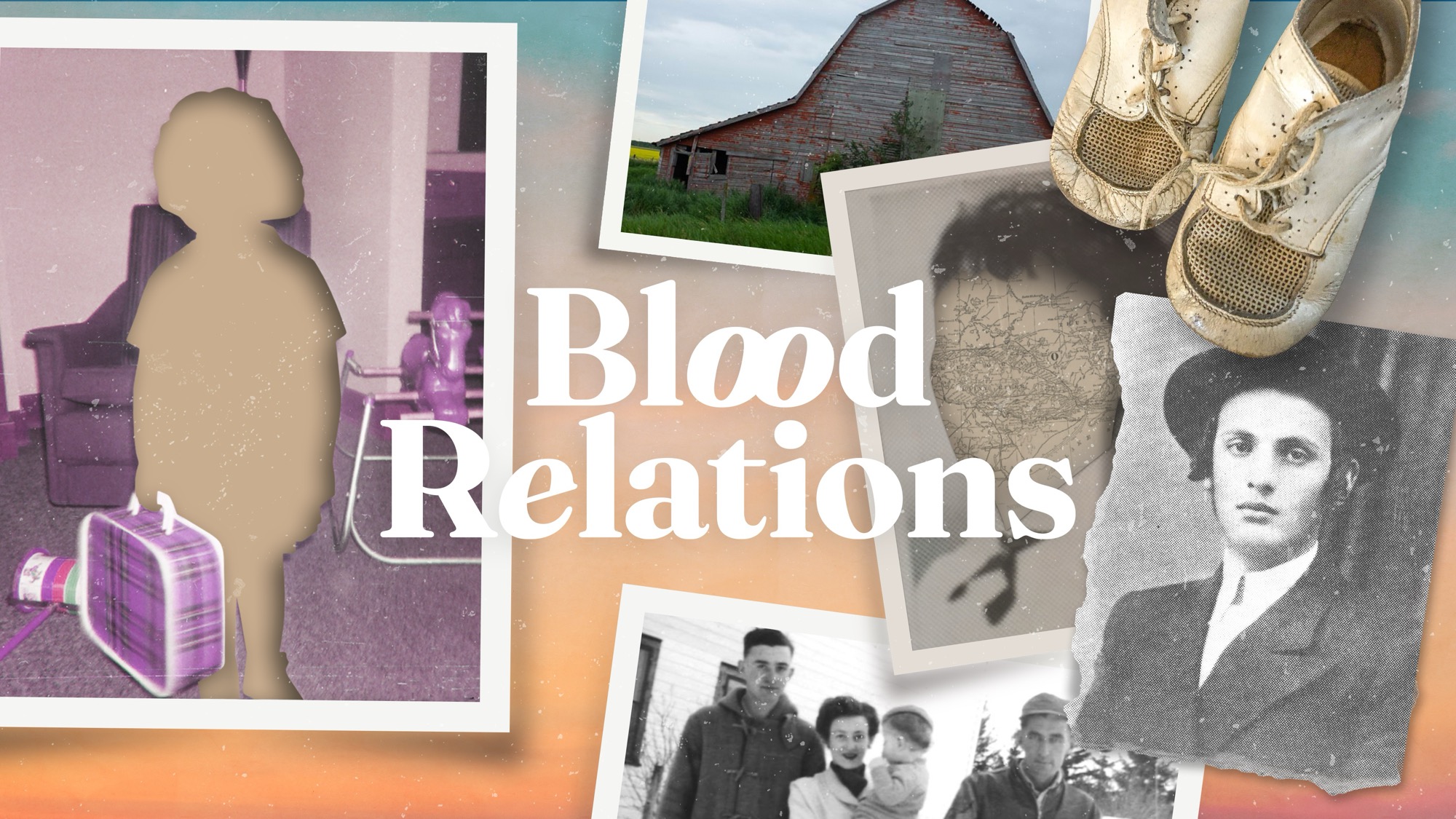
An eighteen-minute interactive documentary in virtual reality: one adopted woman, and the three lives she might have lived.
Analee Weinberger was adopted as an infant by a Jewish couple in Vancouver. Her father was a Holocaust survivor whose surviving close relatives had settled in Bnei Brak, and she grew up Jewish — much of her childhood spent in the salvage yard her father had founded. Her birth mother, the adoption file said, had presented herself as Jewish and insisted the child go to a Jewish home.
After her parents died, Analee opened the file. The contradictions in it did not resolve, and when she went looking she found that her birth mother had not been Jewish at all: a summer romance in rural Manitoba, and a set of grandparents on her birth father’s side who had wanted to raise her on their farm. A Haredi aunt in Bnei Brak, meanwhile, had been named her legal guardian should anything happen to her parents.
So the piece is not a search for origins. It is a question asked three times: what would she have been, in each of the lives that nearly happened?
The viewer does not watch; they search. Three environments are built to be handled — the yard she grew up in, the Bnei Brak street where the aunt lives, the Manitoba farm — and in each, the objects release fragments of the story when picked up. The narrative is assembled by the person in the headset, in the order they find things, which is more or less how anyone reconstructs a family.
Moofa produced the Israeli chapter, worked closely with Analee on the art throughout, and Eitan Shefer composed the score.
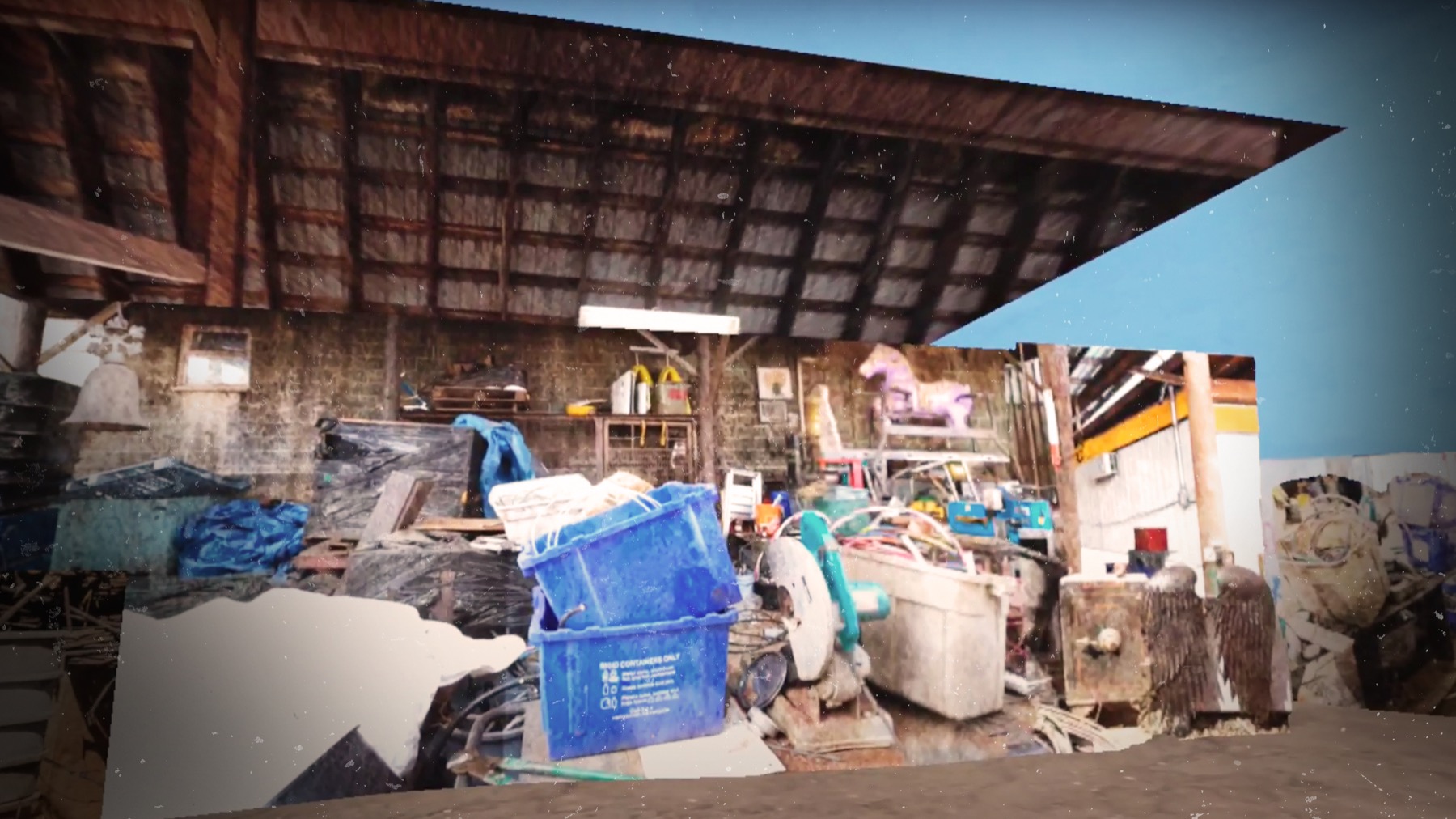
The business her adoptive father built in Vancouver, and the place she grew up. The floor is covered in what other people discarded, and the viewer goes through it — which is what a childhood there was.
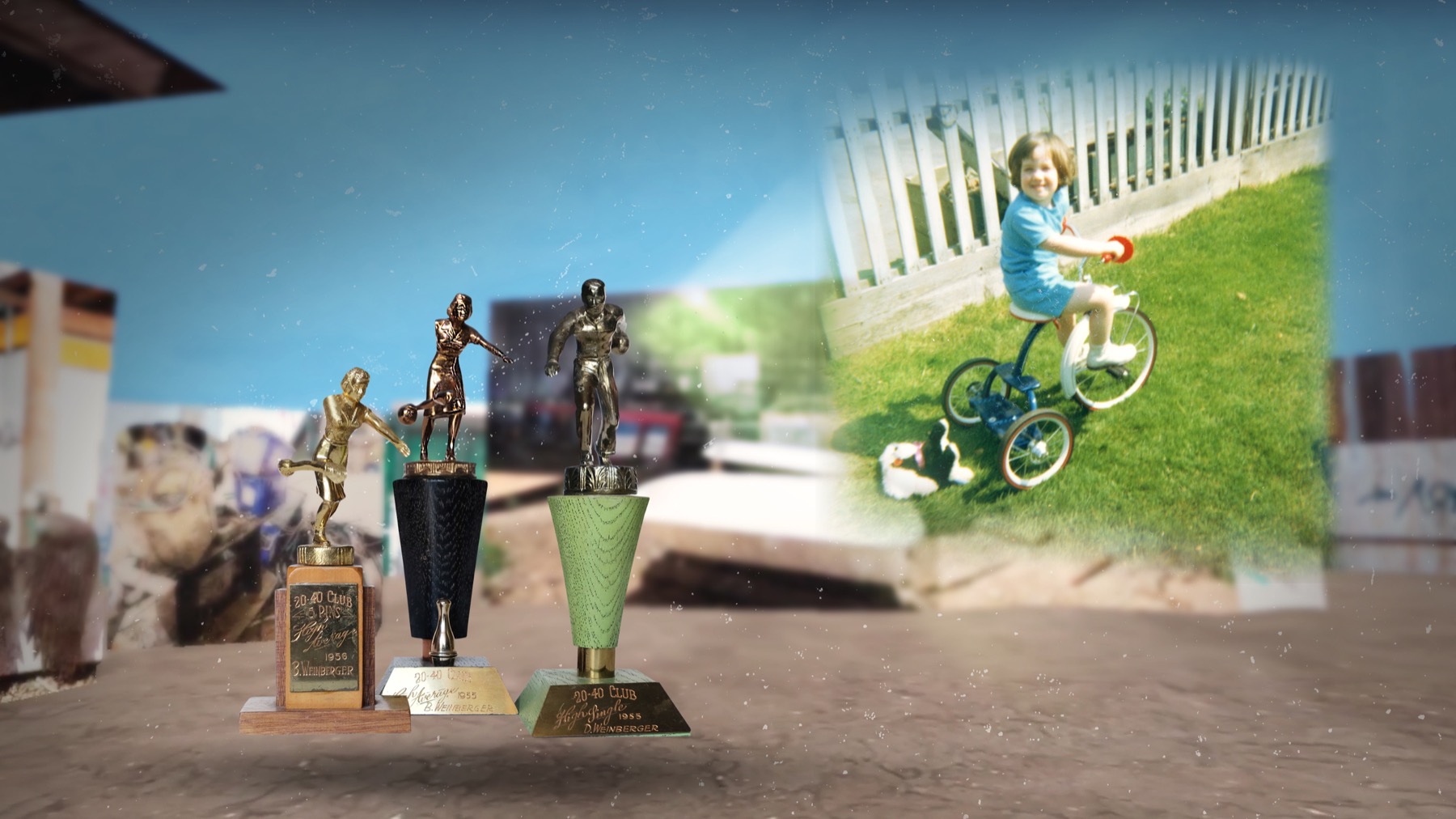
Picking up a trophy opens what it belonged to. The objects are not illustrations placed in the scene; they are how the story is released, and the home-movie footage of the child arrives through them.
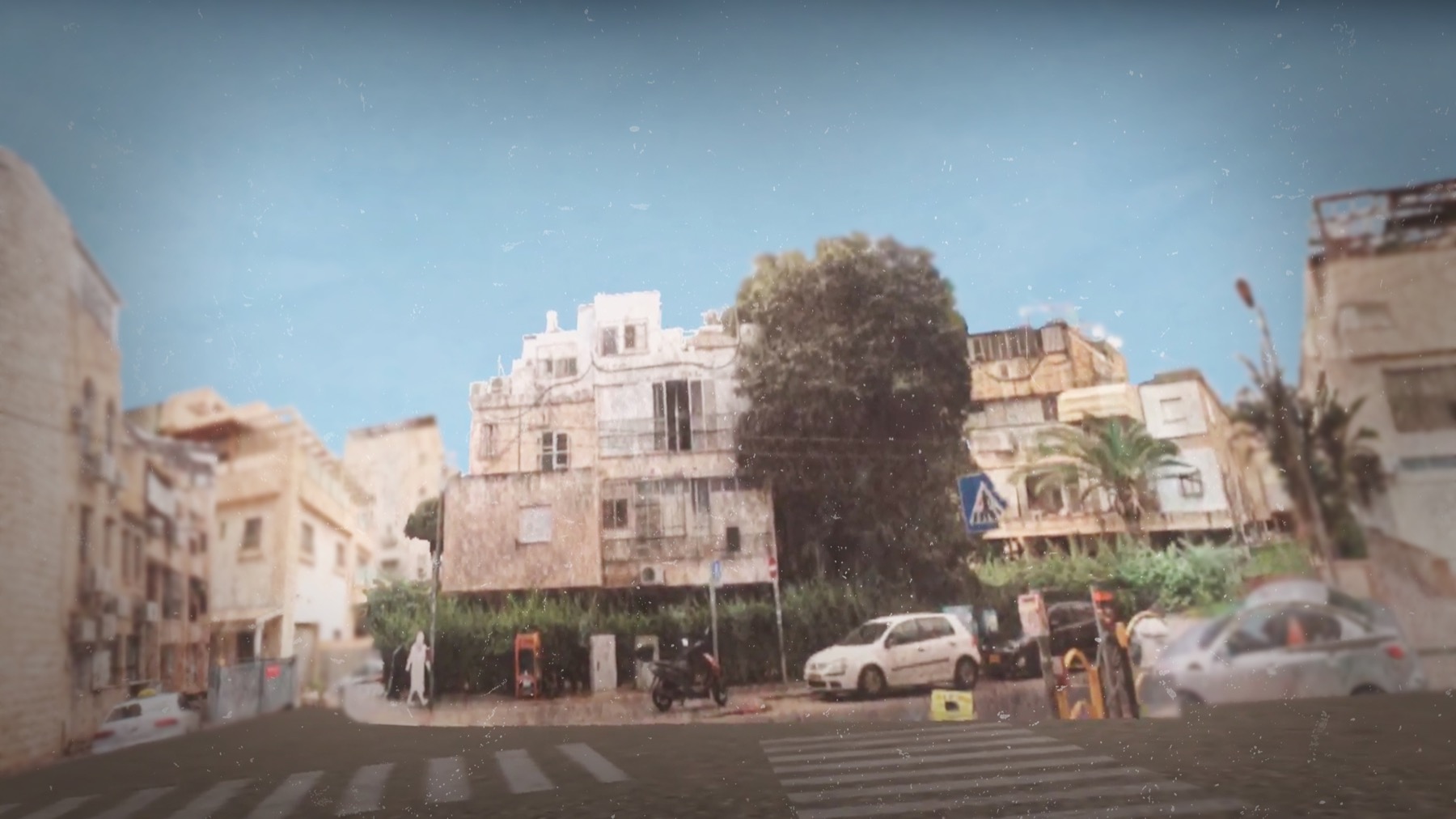
The Haredi aunt named as her guardian lives here. Had her parents died sooner, this street is where she would have grown up. It is rendered photographically and at full scale, and nothing in it announces its significance; the viewer has to look.
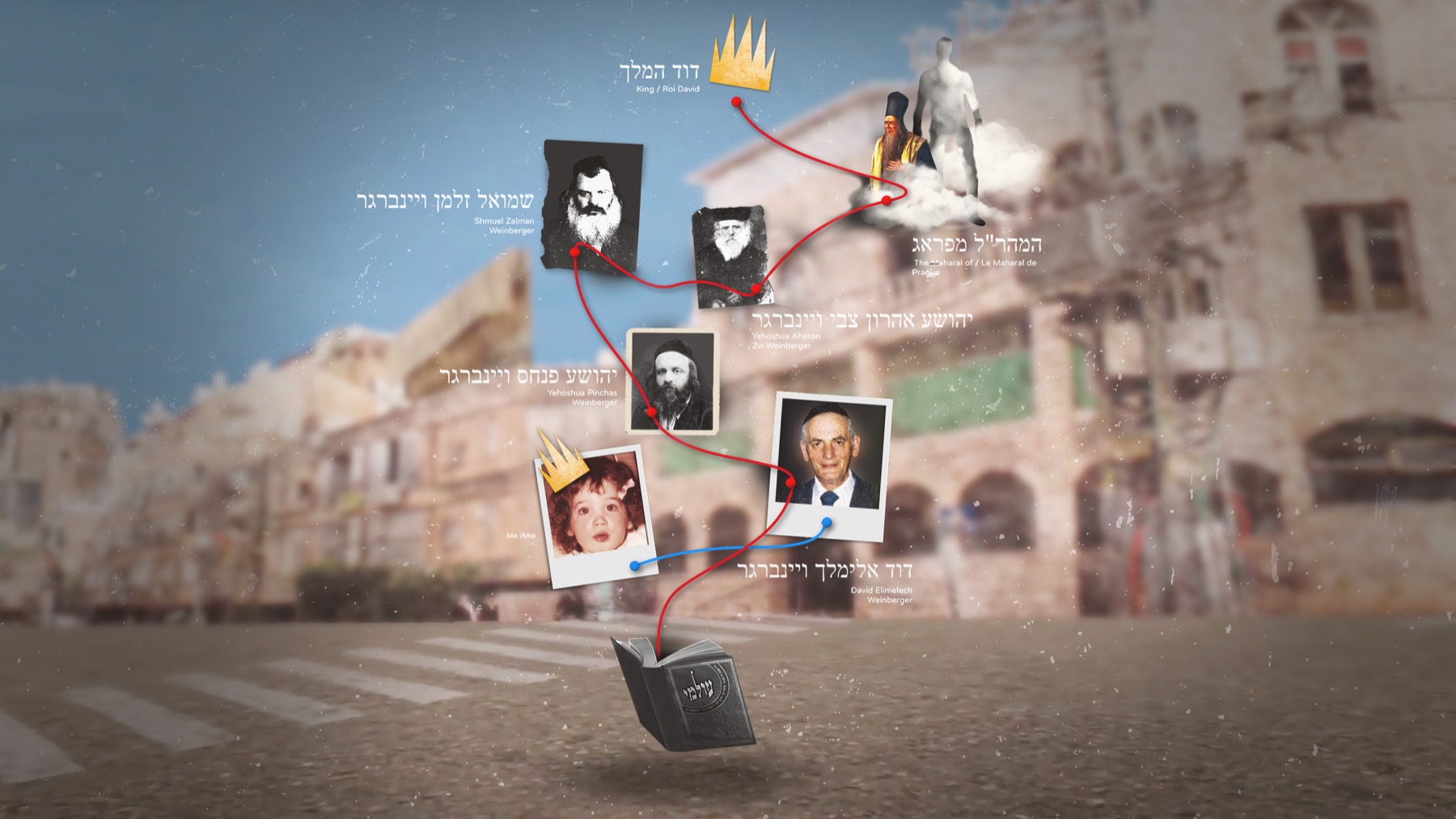
Her father’s family assembles in the air above the street — photographs joined by red thread, each labelled in Hebrew, climbing through generations of rabbis to a crowned figure at the top. It is the lineage she was raised inside, and the film lets it stand as what it is: something a family says about itself.
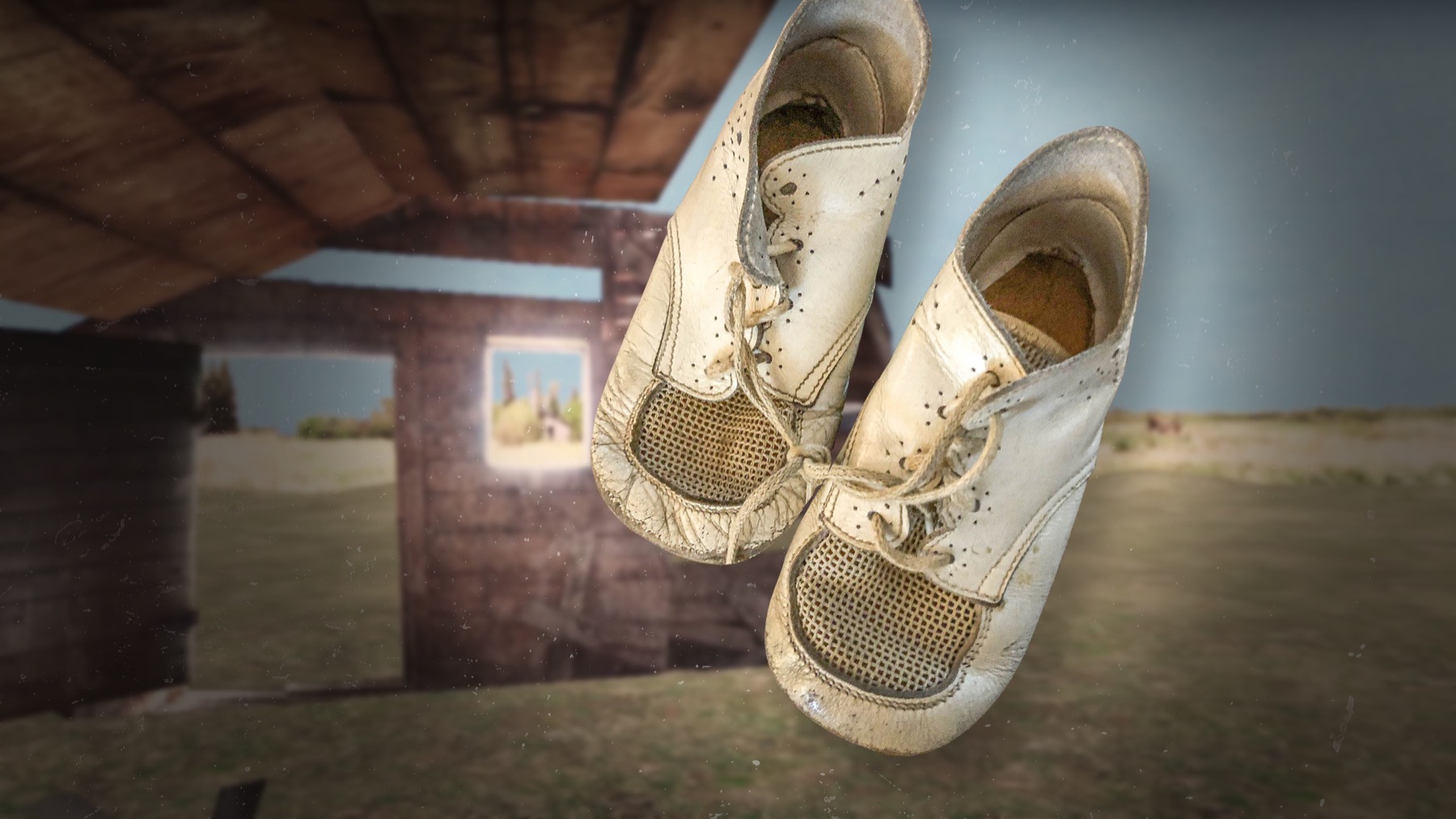
Her birth father’s parents wanted to raise her here. The object at the centre of the barn is a pair of baby shoes, held in the air at eye level. The piece ends with the life that did not happen, and hands the question back to whoever is wearing the headset.
Images courtesy of the National Film Board of Canada. Press kit →