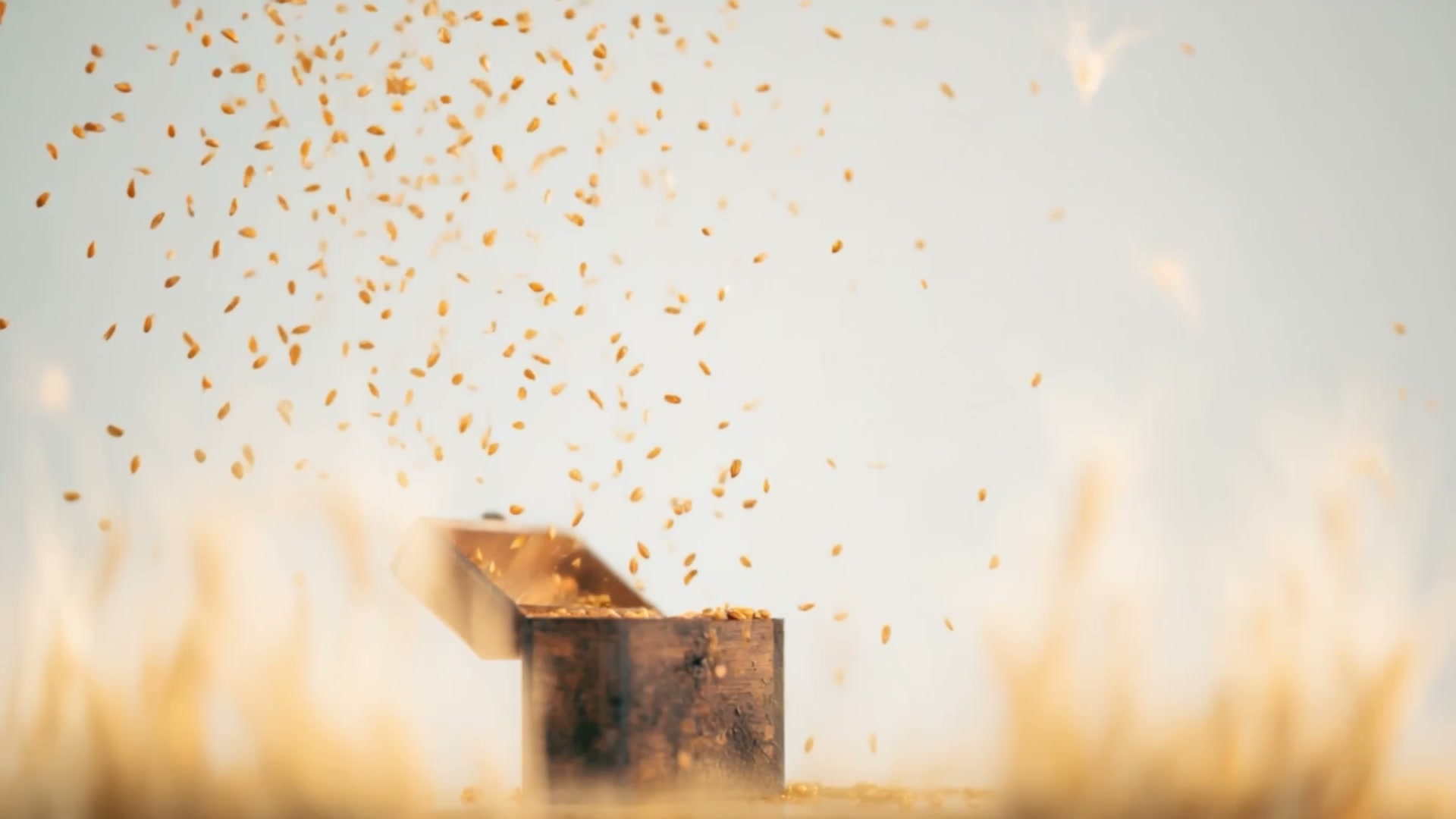
An animated film for Voice of the People, on a sovereign-style endowment conceived by Serge Touati to sustain Jewish life across generations. The film opens with Joseph storing grain, and asks whether ours might learn to store something else.
Otzera is a sovereign-style endowment within Voice of the People, conceived by Serge Touati. Its proposal: Jewish communities raise more than eighteen billion dollars every year and consume almost all of it in the same year, against responsibilities, education, security, identity, community, that are intergenerational. Otzera answers with permanent capital that compounds across generations, distributing only the yield.
Voice of the People is the global platform launched in January 2025 by Israeli President Isaac Herzog to convene Jewish thought and action across the diaspora. Otzera was presented publicly at "From Blueprints to Life" on June 4, 2026, alongside six other Voice of the People initiatives.
The name is a compound. Otzar, treasure. Zera, seed. Preservation of value, planted for the future. The film opens on a single seed and ends, three minutes later, with the line "to build for generations we will never meet."
Serge came to us with a brief and a constraint: render a financial idea about generations in a form a single screening could deliver, without him on stage. He wanted the idea to land before it was argued, to be felt by the room before it was sold to it.
Our question was where to start. A film that opened on the financial model, on yield and on compounding, would have lost most of the room before the second cut. The architecture of the idea had to be the architecture of the film. The financial proposal had to arrive last, not first. Something older and shared had to carry the first minute.
We opened on Joseph. Not on the financial method, not on the year 2026, not on Serge. A single seed, soil, a granary that slowly fills. The voiceover names what Joseph understood and most societies forget: resilience is built before it is needed. He stored grain, the film says, for people he would never meet. That sentence is the spine of the film.
From Joseph the film cuts to the present, to eighteen billion dollars flowing through institutions every year and disappearing within twelve months. Only then do the icons arrive, education, security, identity, community, and only then is the difficult question named: can permanent needs continue relying primarily on temporary capital? The financial model is introduced as the answer to a question the film has already made the audience ask.
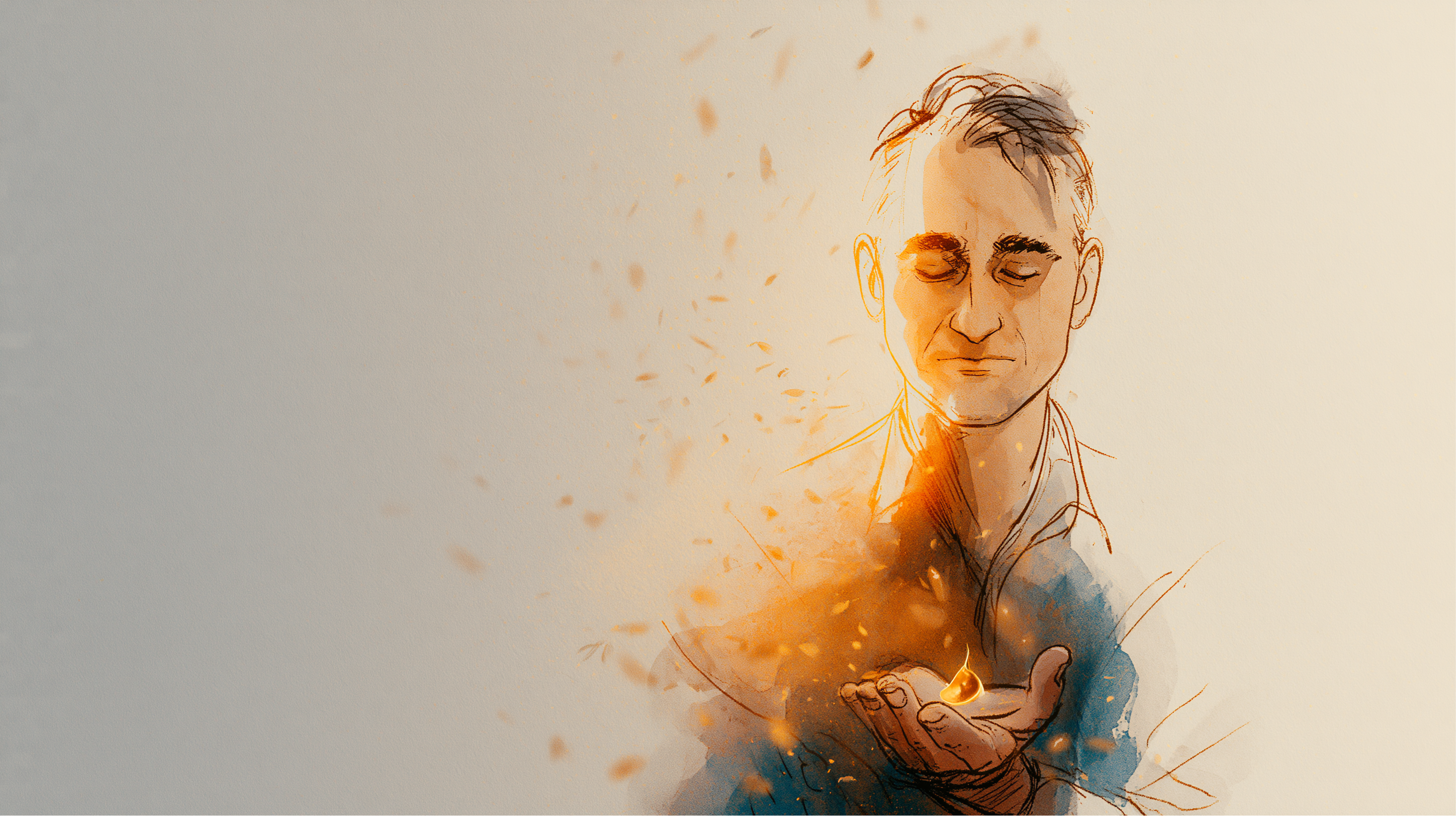
Serge appears, briefly, near the centre. Not as a talking head, but as an illustration: minimal, eyes closed, calm, holding the seed of the idea in cupped hands. He speaks three short sentences about a question that arrives at a certain point in a life spent raising and investing capital: what am I building, and who am I building it for. He does not explain the fund. The film already has.
Serge brought a financial concept. He did not bring the vocabulary the film would use to make it visible. That was ours.
Three motifs entered the film by our choice, not by the script's command. Each one carries part of what the financial proposal could not say out loud.
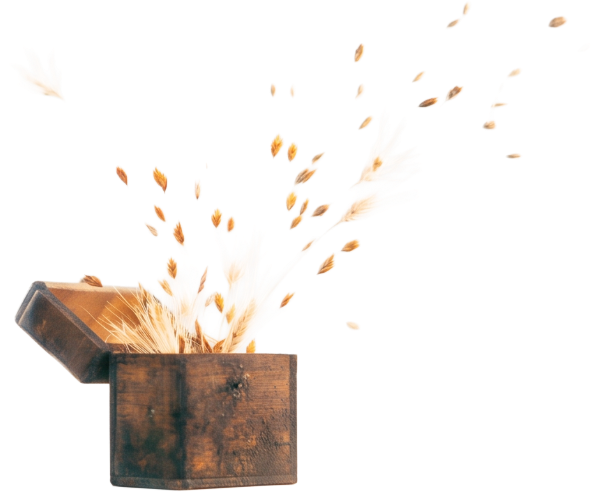
The etymology was in the brief; the image was not. We placed the treasure chest and the wheat ear side by side, on the same ground, so that the compound that gives the initiative its name could be seen as well as said. Old form, and new growth, holding the same impulse.

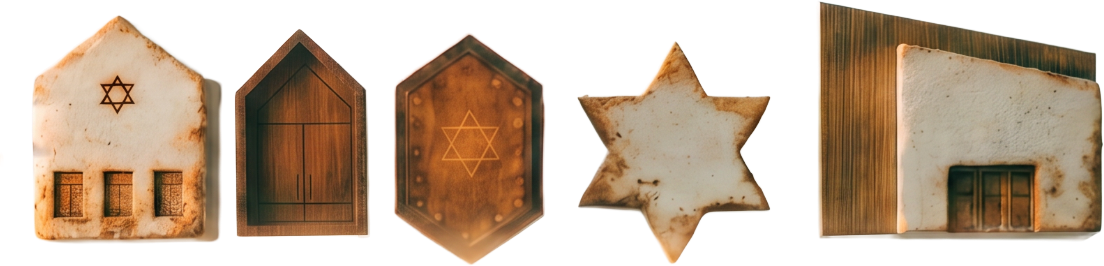
"The Jewish story has often been a story of preparing for uncertainty. Building. Rebuilding." Two words in the script. We took the moment to introduce a small line of five buildings, walked across history: a wooden synagogue, a star-marked house, a hexagonal repository, a structural Star of David, an arcaded prayer hall. The same impulse, the same act, repeated across millennia. We thought this was the right place in the film to introduce, as visual vocabulary, what the line was carrying as language.
We brought the Tree of Life into the closing minute. The script does not name it. It carries, in a single image, what the line "to build for generations we will never meet" is reaching for: the tree, the dispersal of its leaves into a long swirling arc. The symbol does, in image, what the language cannot.

The project came to us through Tami Tish, who brought it shaped by long conversations with Serge about the room the film would screen in and the work it had to do there. The script went through several rounds before lock. We pushed the financial vocabulary further down the page each time; we pulled Joseph and the seed further up. Roughly thirty percent of the budget sat in pre-production, where it always does for us. Eitan Shefer scored the film, with the score asked to do the load-bearing emotional work a presenter's voice would otherwise have done.
Otzera was presented as part of "From Blueprints to Life," the June 4 2026 virtual event that gathered seven of the first Voice of the People initiatives for public unveiling. The film was the introduction to Otzera in that room and remains its primary introduction in conversations with the philanthropic ecosystem, investment partners, governance experts, and cornerstone capital partners the initiative is now convening. Like all of our event films, this one will keep working long after the screening it was made for: a financial idea that, having been made visible once, can be made visible again.
Client: Voice of the People, an initiative of the Israeli President's House
Initiative founder: Serge Touati
Brought to Moofa by: Tami Tish (final credit to be confirmed with Tami)
Direction: Daniella Koffler
Animation: Moofa Animation Team
Original score: Eitan Shefer
Year: 2026 (work in progress)