The archive
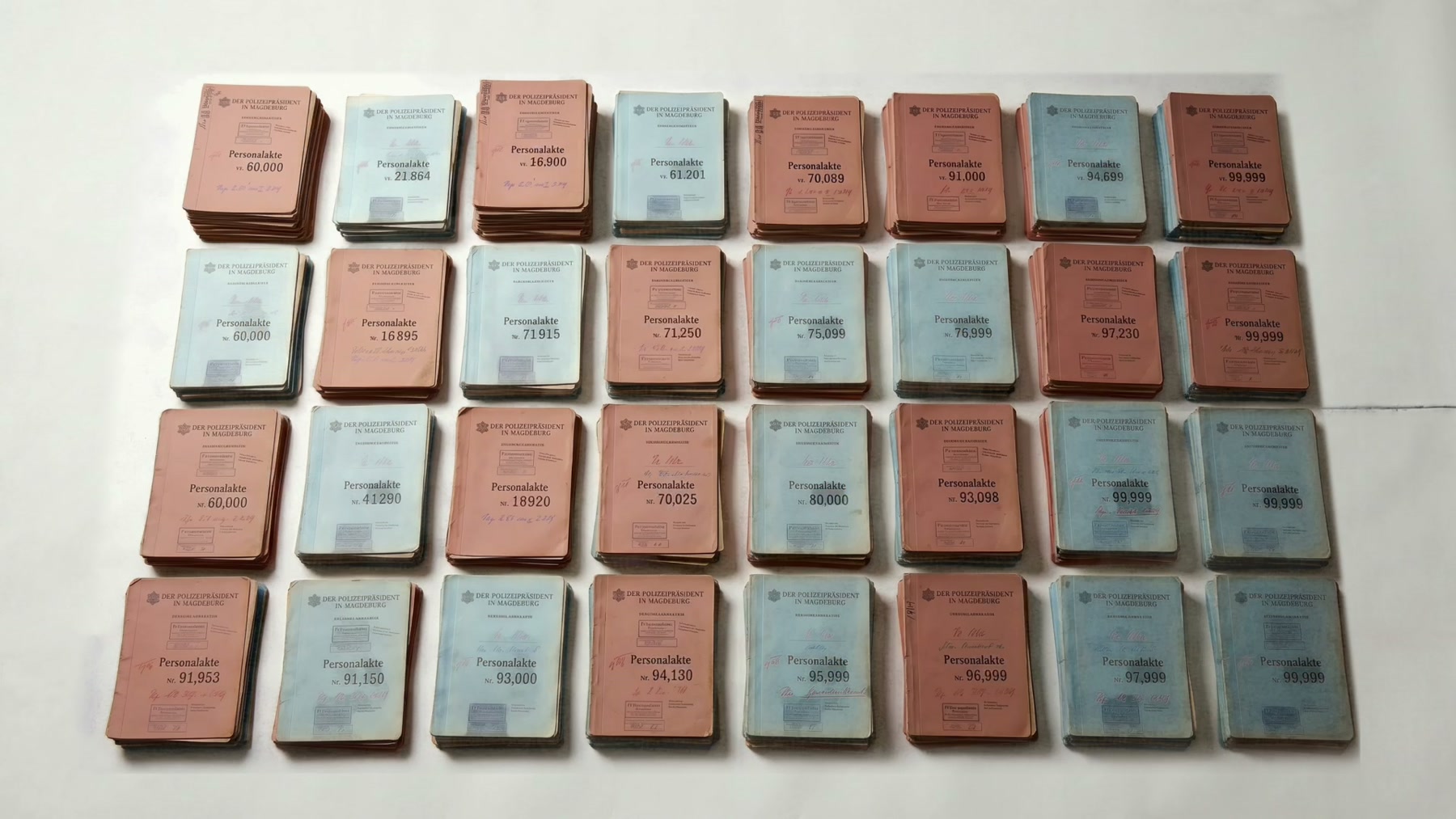
Five hundred and eighty-seven files.
The film opens on the quantity: rank after rank of personal files laid out like a field. Each one is a person the police registered. The number stays with the film to the end.
A film made out of fingerprints, because that is what the archive is made of. Female police officers processed the deportations; Sinti and Roma women wrote back to the same office by hand. And from inside the paperwork, someone is looking out.
Meier works in the criminal police archive in Magdeburg, on the registration and deportation of Sinti and Roma. What her research surfaces is a fact that almost never frames Holocaust perpetration: the people processing this were women, and so were the people resisting it.
Female criminal police officers — among them Officer Ladage, whose photograph survives in the file — handled the paperwork that moved families to the camps. And Sinti and Roma women wrote handwritten petitions back into the very same system, addressing the office that was deporting them. Women on both sides of the document.
The Dan David Prize selection committee described her as “a rigorous scholar whose work gives voice to those who have been silenced, while also tackling the challenge of understanding how a social system can enable extermination” — and singled out her exploration of the long history of Roma and Sinti persecution in Europe.
The film’s material is the fingerprint, because the fingerprint is the archive’s material. It appears as the bureaucratic mark, as the ground you walk across, as the texture of the world, as the instrument of erasure — and finally as the thing that survives when everything else has been taken. A fingerprint is how the system reduced a person to a record. It is also the proof that the person could not be reduced: every print is singular, and singularity is what classification cannot hold.
We ruled out the obvious vocabulary early — no barbed wire, no stars, no typewriter effects, no invented face for a child we know nothing about. The documents already happened; the film does not perform them.
The film opens on the quantity: rank after rank of personal files laid out like a field. Each one is a person the police registered. The number stays with the film to the end.
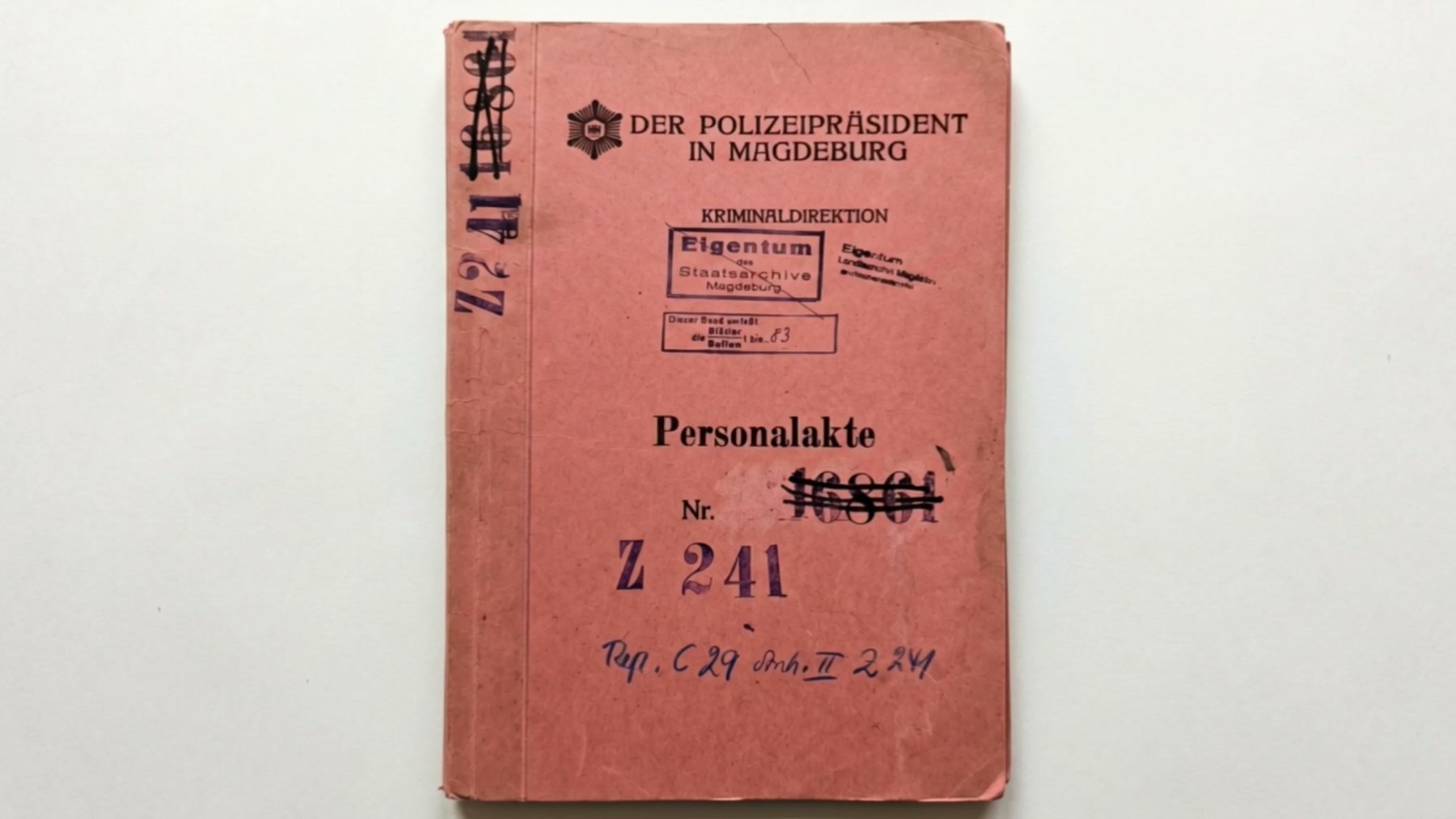
A file from the office of the Police President in Magdeburg. The “Z” is the classification the system used for Sinti and Roma. This is the object Meier works with, and the film shows it as it is — opened, handled, read.
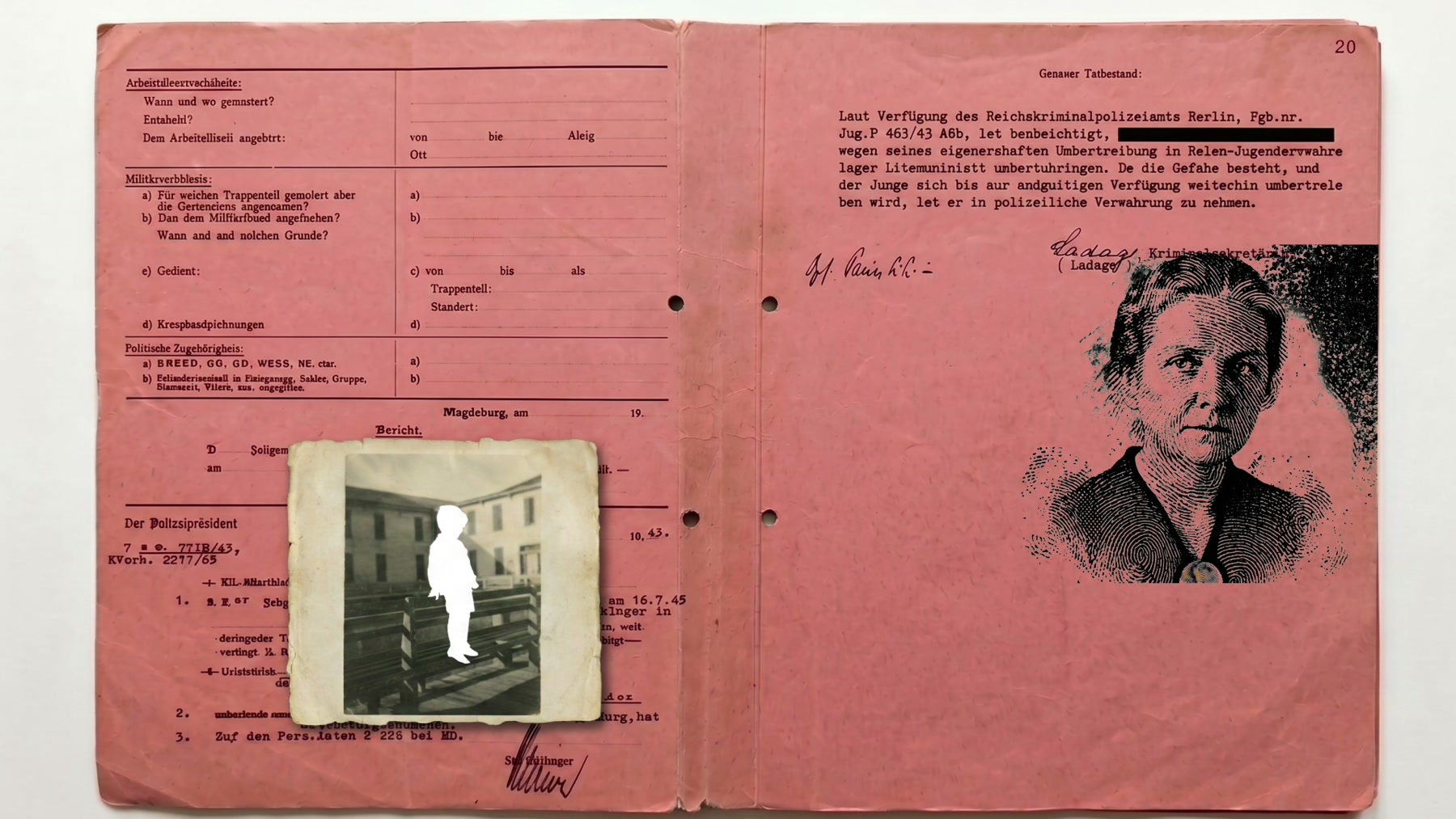
Officer Ladage’s photograph exists, so we placed her where she belongs — inside the document she helped produce. This is the part of the history that is almost never told this way: the administration of the deportations ran through women, and here is one of them.
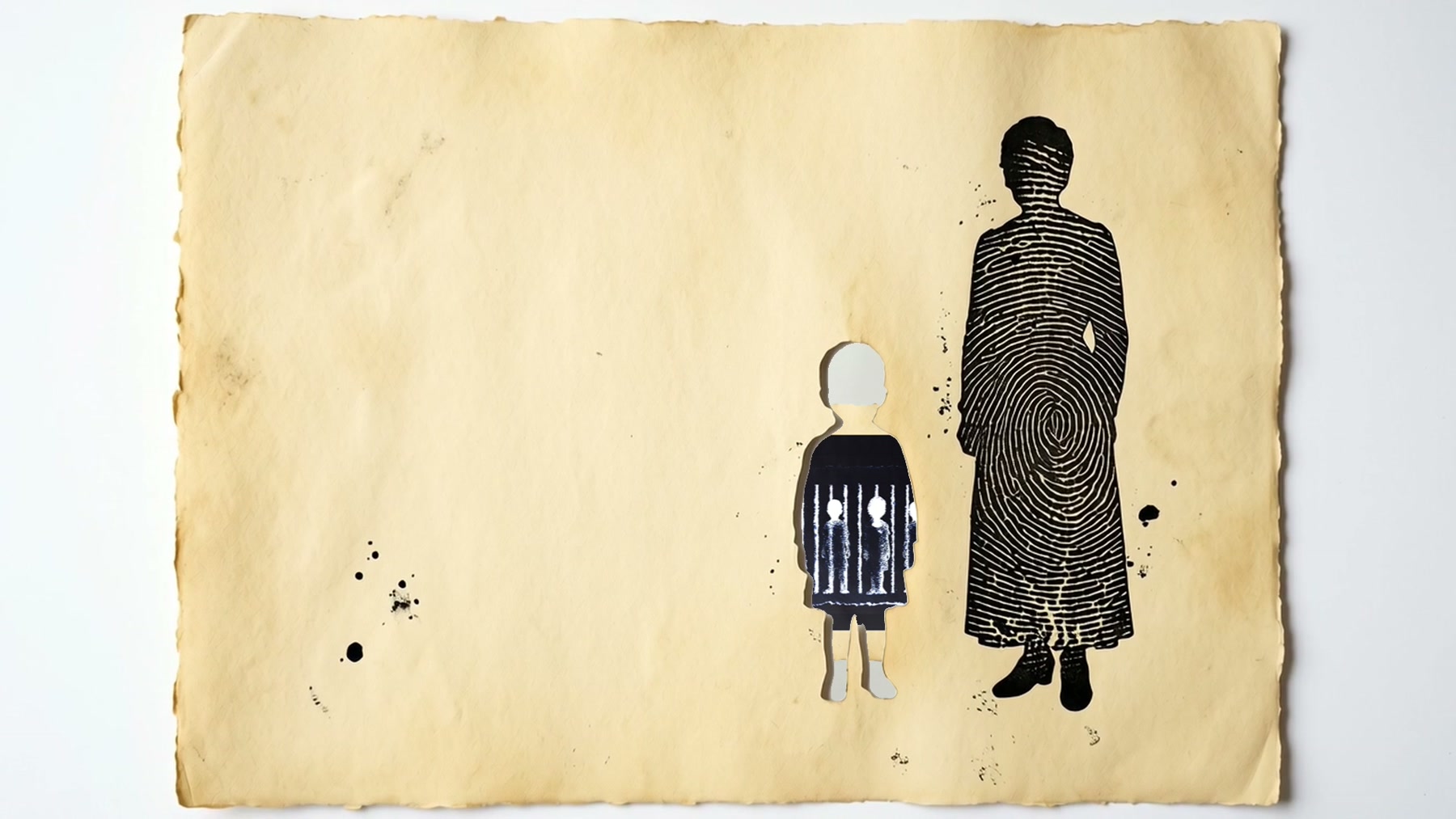
The people come back as paper cut-outs on the page they were recorded on. The child’s face is blank because we do not know it — and inventing a face for a specific child we know nothing about was not something we were willing to do.
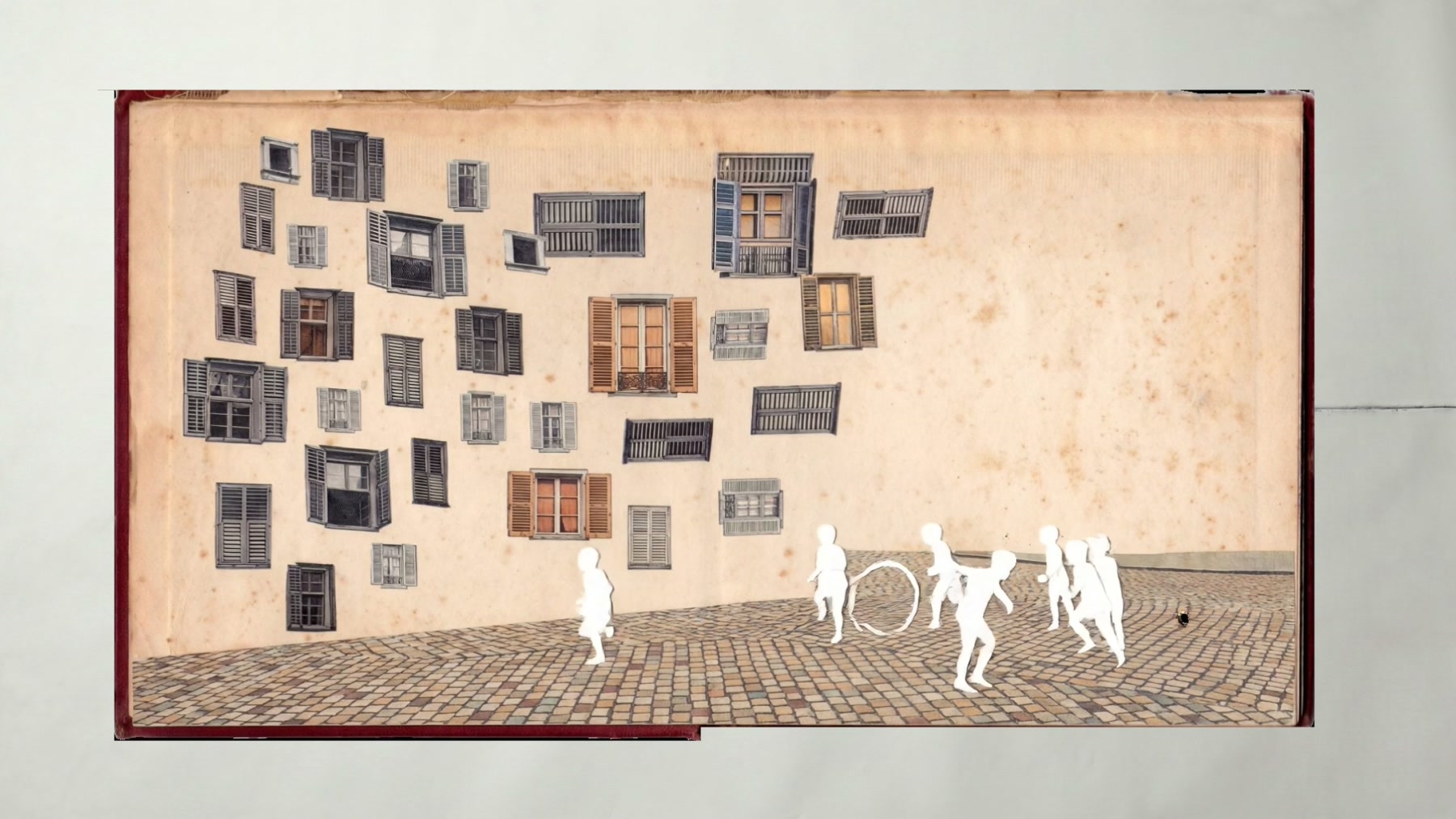
Windows and doors lift away from the houses as the figures walk. Nothing is stated. The film keeps the register of the archive: what remains is the trace of an administrative act, and the act was the removal of families.
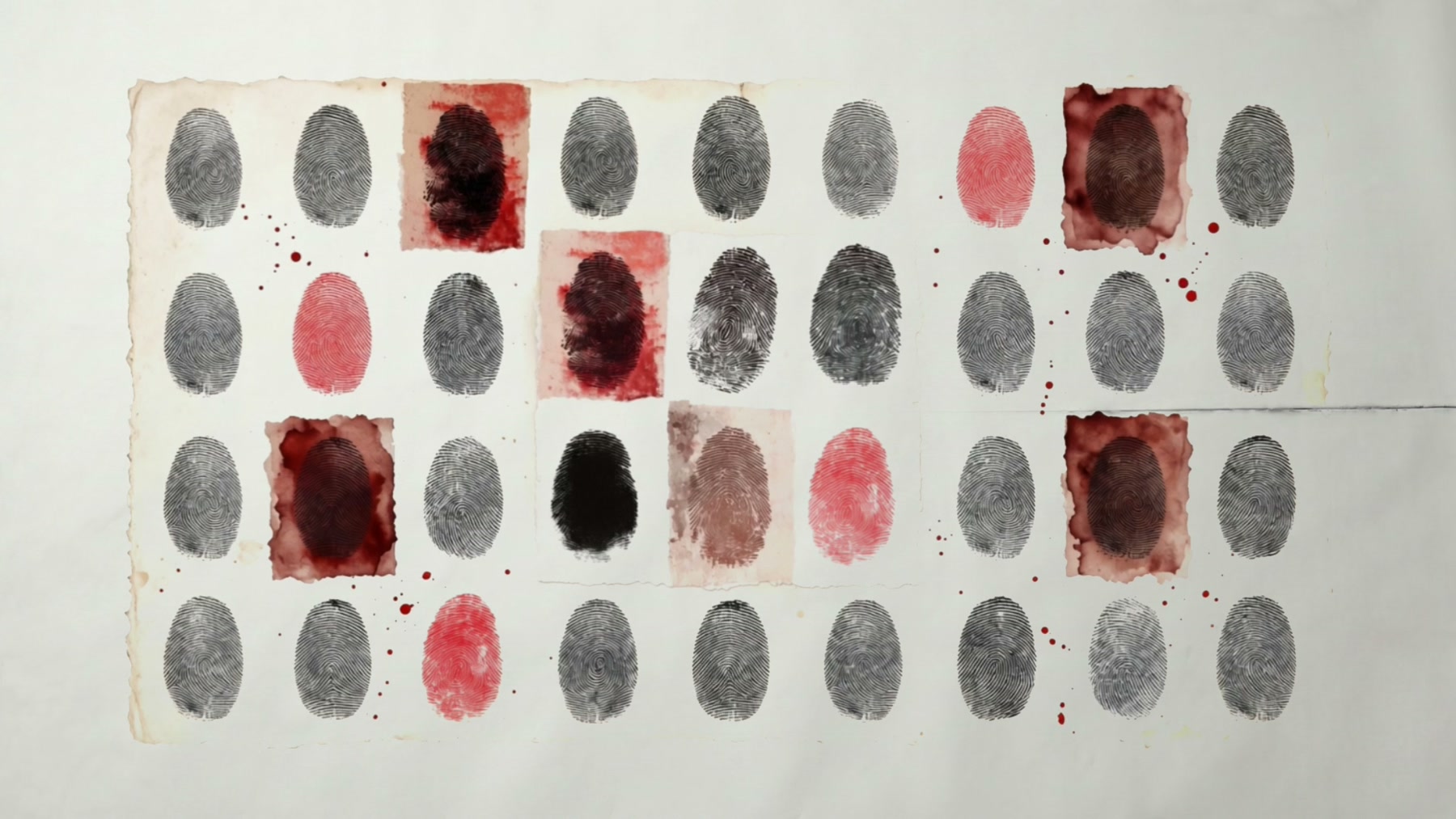
A grid of prints, some inked red. This is how the system fixed identity: press the thumb, file the card, assign the number. The film sits with that grid long enough for it to stop looking neutral.
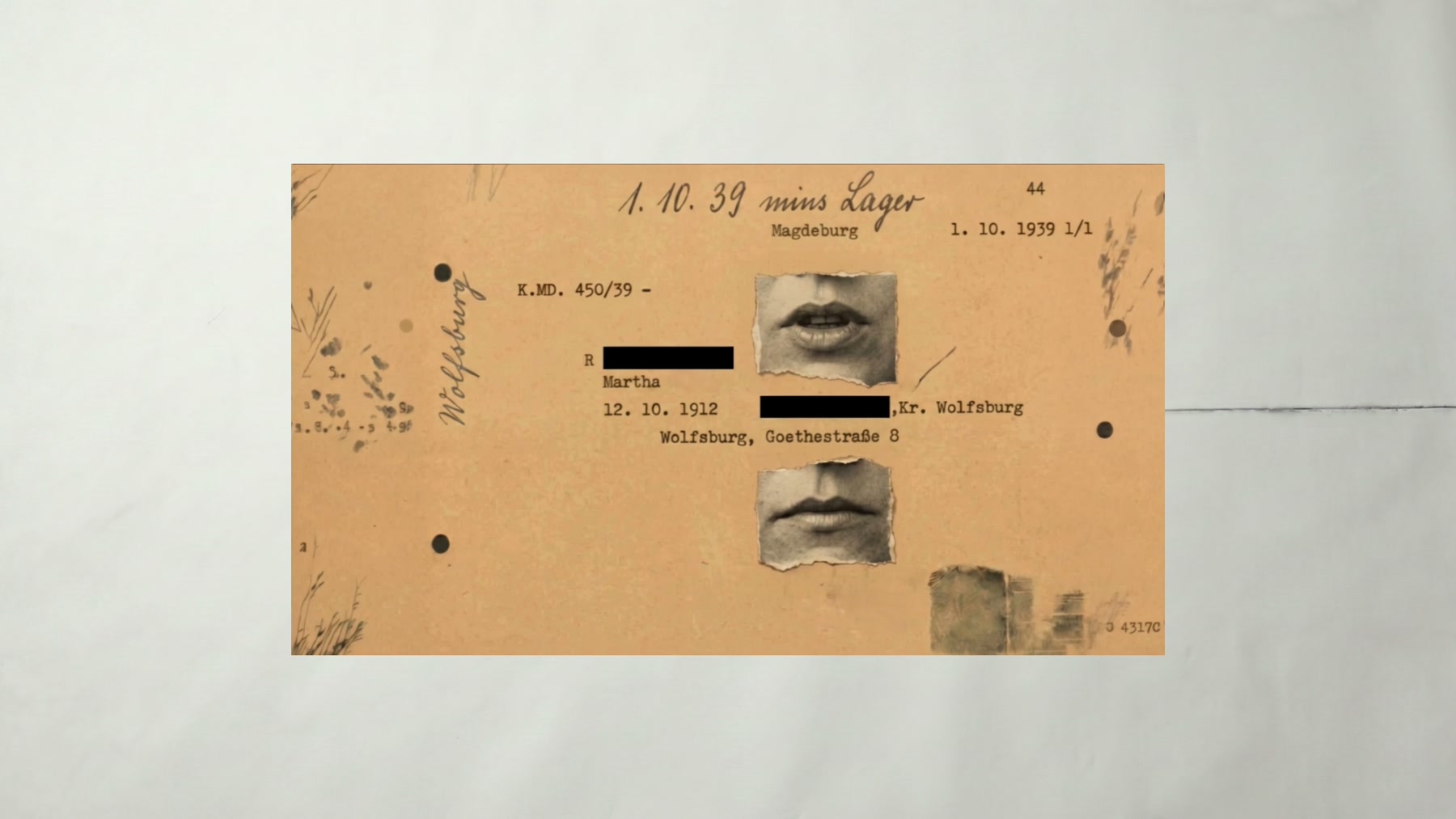
Adele R.’s transport certificate to Auschwitz-Birkenau, with her thumbprint on it — the last physical trace she left in the world. Into the document’s data fields we set a pair of eyes, torn from a photograph. Meier goes into the archive to look at them; from inside the documents, they look back. This is the gaze the system had no field for.
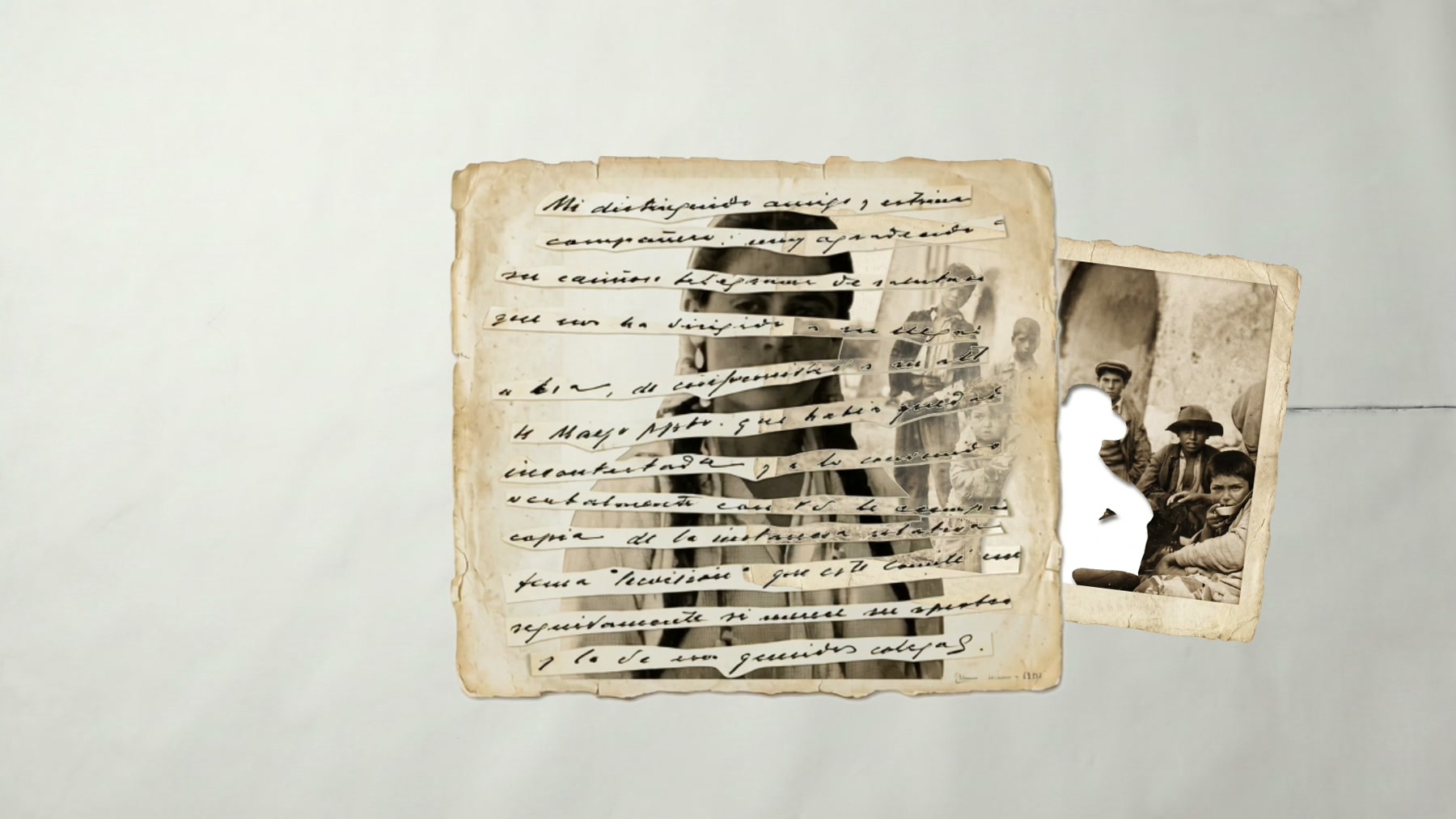
Sinti and Roma women wrote by hand to the same office that was deporting them. Their handwriting gathers here into the form of a print — the voice and the identity made of the same material. They were writing back into the machine, in their own hand, and the film gives that its own image.
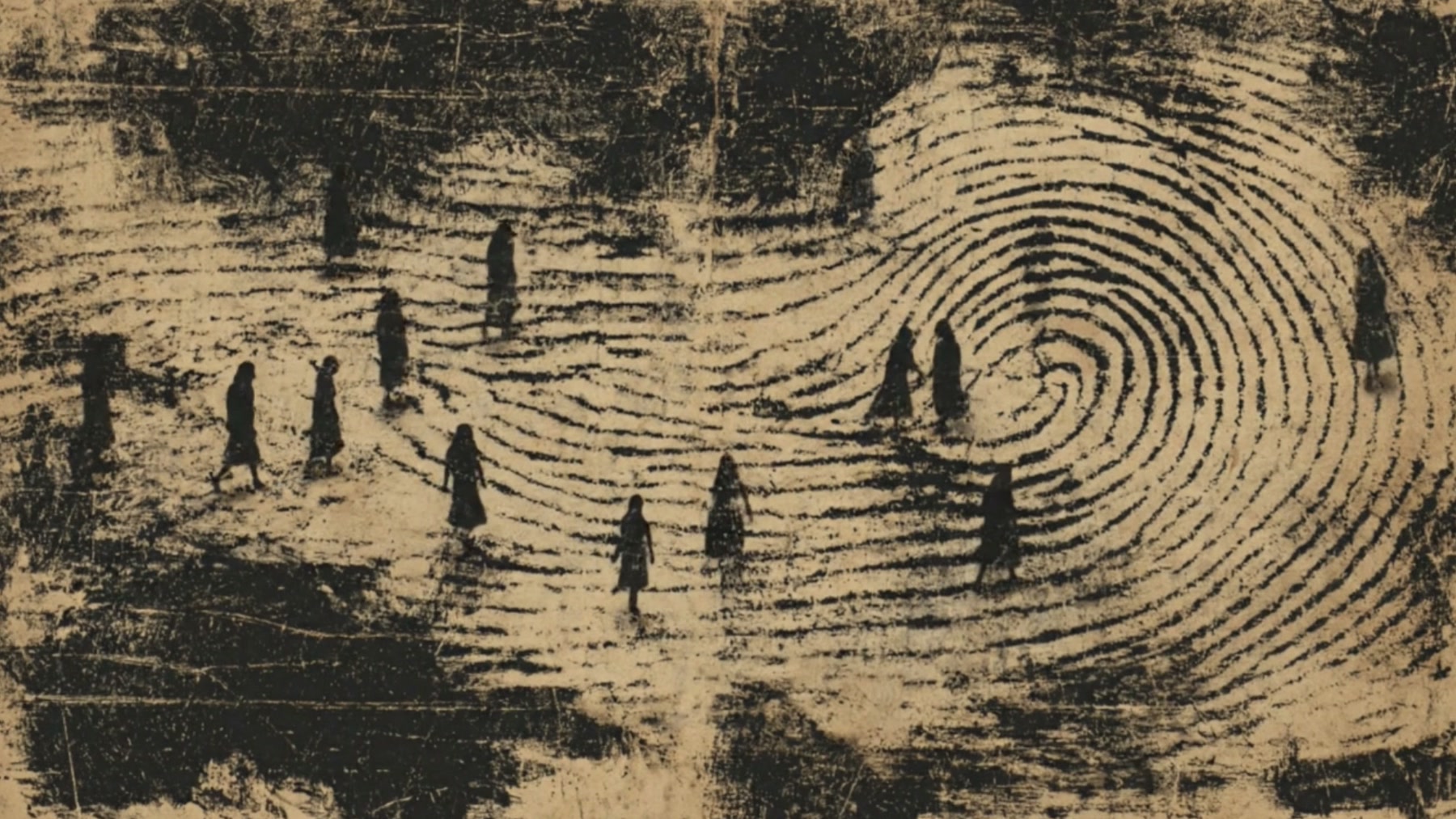
The ridges open out into a landscape and people walk across it. The mark that was meant to file them away turns into the country they are moving through — which is the closest the film comes to stating its argument outright.
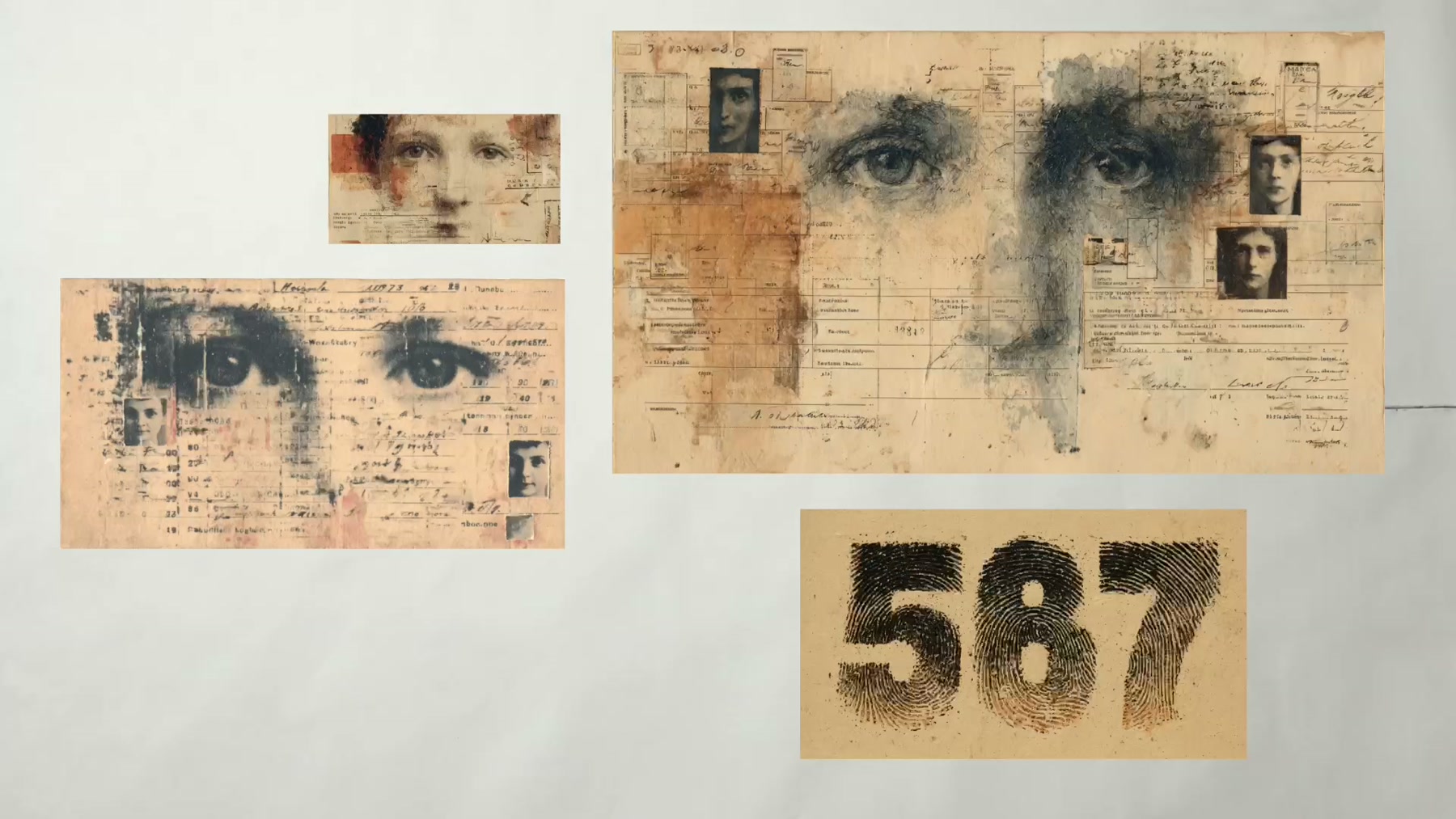
At the end the print gathers into part of a face, and then the face fades. The eyes stay, next to the number. We chose that over a full restoration because it is more honest: the archive does not give the whole person back. But the eyes are certain.
Verena Meier is a historian of the persecution of Roma and Sinti in modern Europe. Her research works through police and criminal-registration archives — among them the Magdeburg files — to recover both the mechanics of persecution and the voices of the people it was aimed at.
Each year the Foundation selects its winners and, with the help of the laureate, chooses the subject of the film they are being honored for. The Foundation’s team, who know that work intimately, help bring it to the page, and we turn it into script, image, register, and motion.
The one thing we keep from them is the film itself. It is made in their honor but held back, so that the first time Verena Meier meets it, in animated form, is the evening of the prize — the very moment they are being celebrated for the work it depicts. That is the part of the project we love: a film that is also a gift, a surprise, revealed in the room where it does its work.
The Dan David films don’t end their life on the evening of the prize. After the ceremony they travel to YouTube and to the Foundation’s own website, where each one sits alongside the committee’s reasoning for choosing the laureate and further material on the research. The winners are interviewed once the films are public, and those interviews are woven into the published versions.
You care about your subject.
So do we.
Client: Dan David Foundation
Subject: Dr. Verena Meier
Direction: Daniella Koffler
Animation: Moofa Animation Team
Year: 2026