The subject
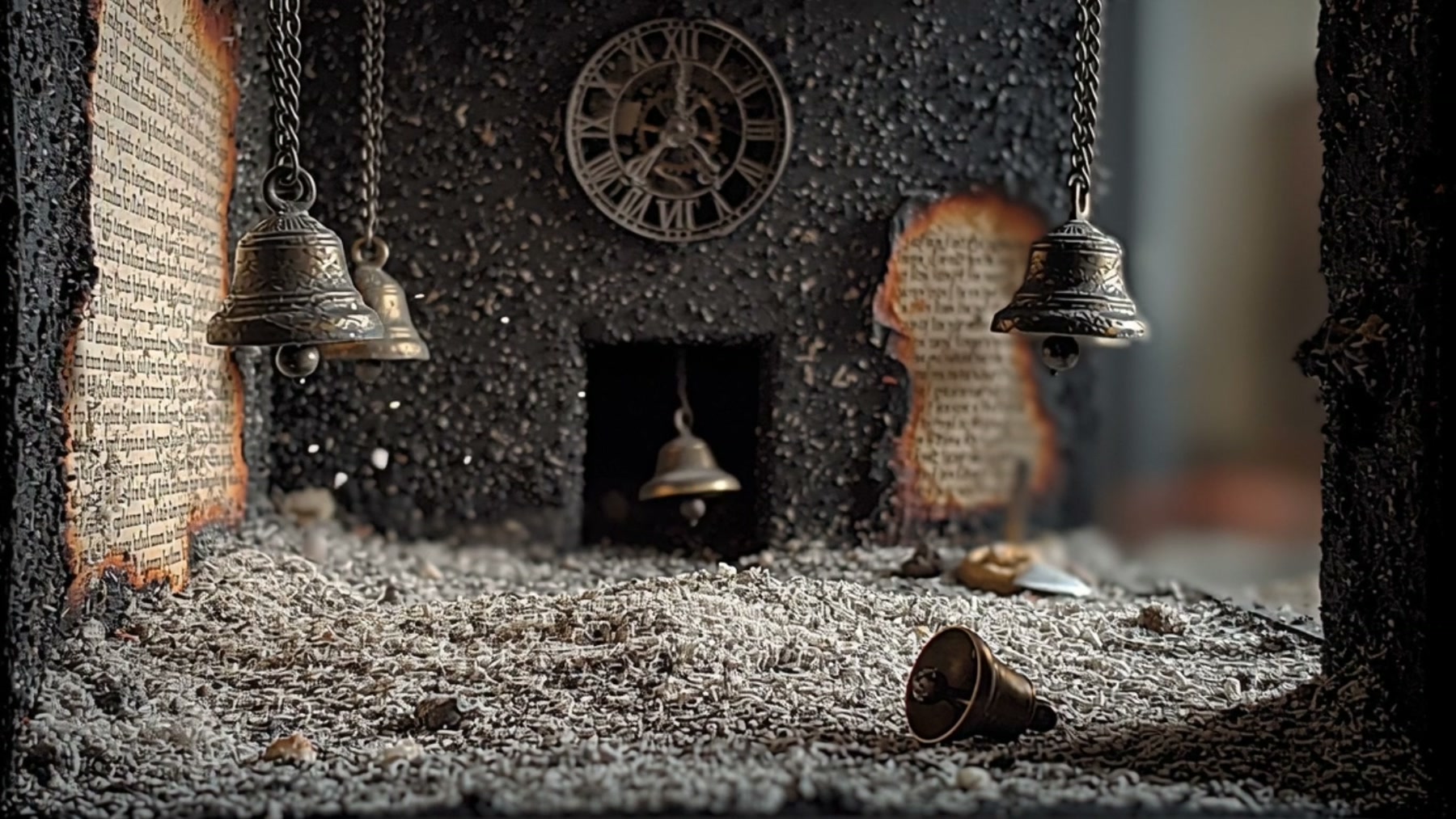
It is the night of Friday 24 October 1499. Thunder is moving over the Abbey of Averbode in the southern Low Countries, and at eleven o’clock — as the bells toll to wake the brothers for Matins — lightning strikes the abbey church. The fire takes bells, relics, stalls, paintings, the organ, a precious bible.
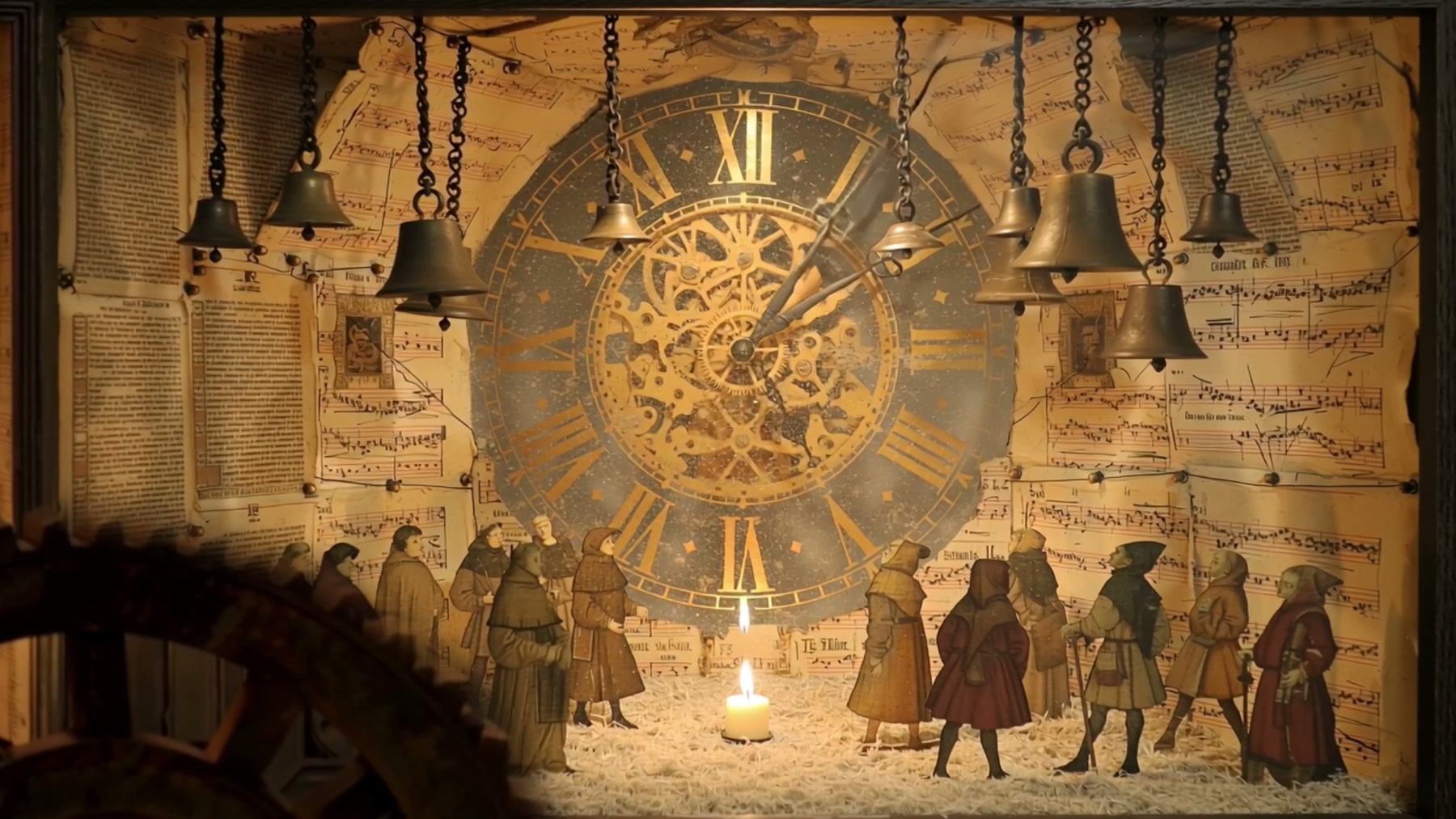
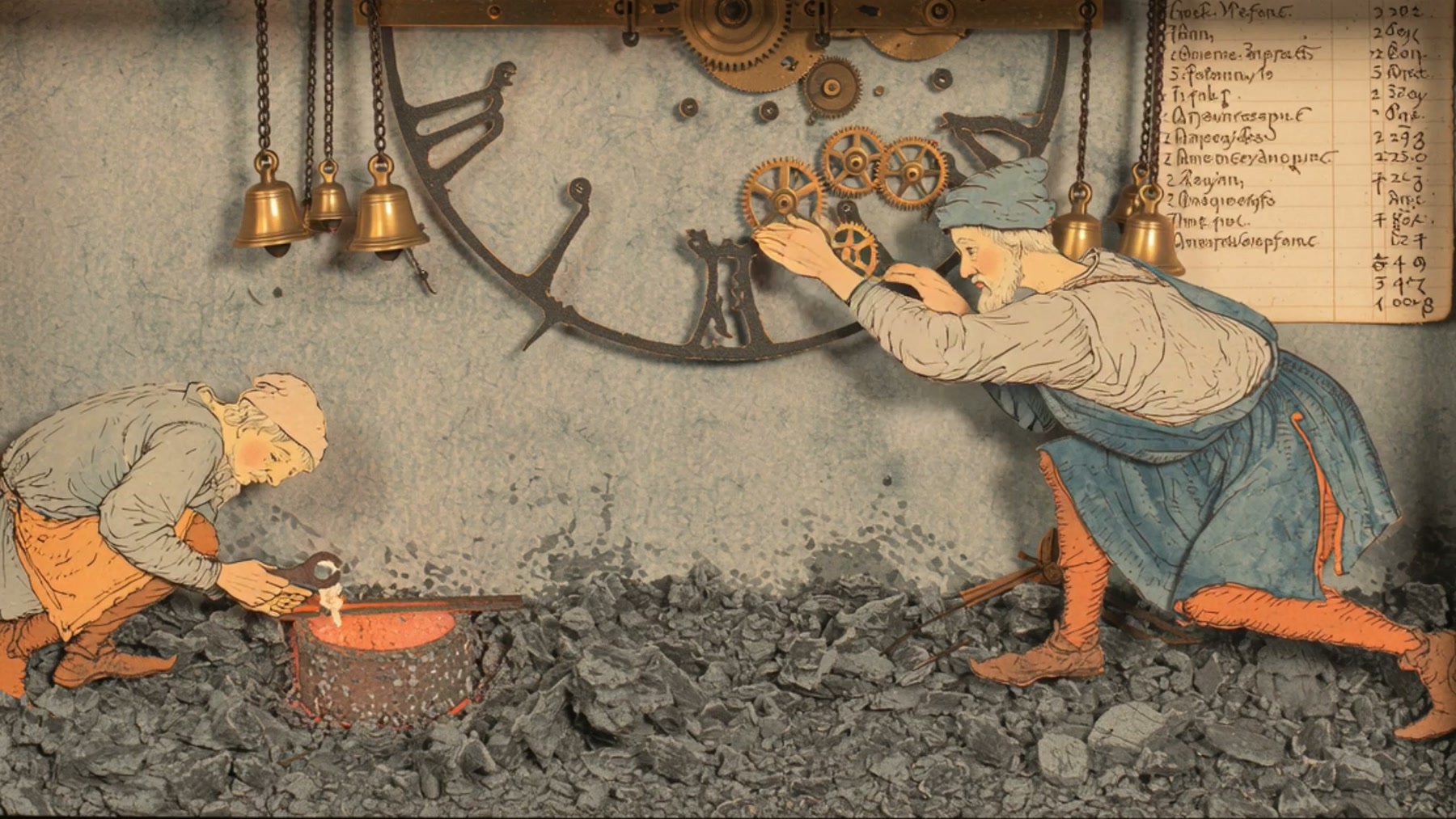
While the ashes are still warm, the abbey begins to rebuild. And among the very first things it pays for is a new clock. The account books survive, and they are specific: payments to bell-founders who sifted the ashes for salvage metal, and to clockmakers who did the repairs. The same records note what the clock played on its bells — on the hour, Sancti spiritus adsit nobis gratia; on the half hour, a chant in honour of the Virgin.
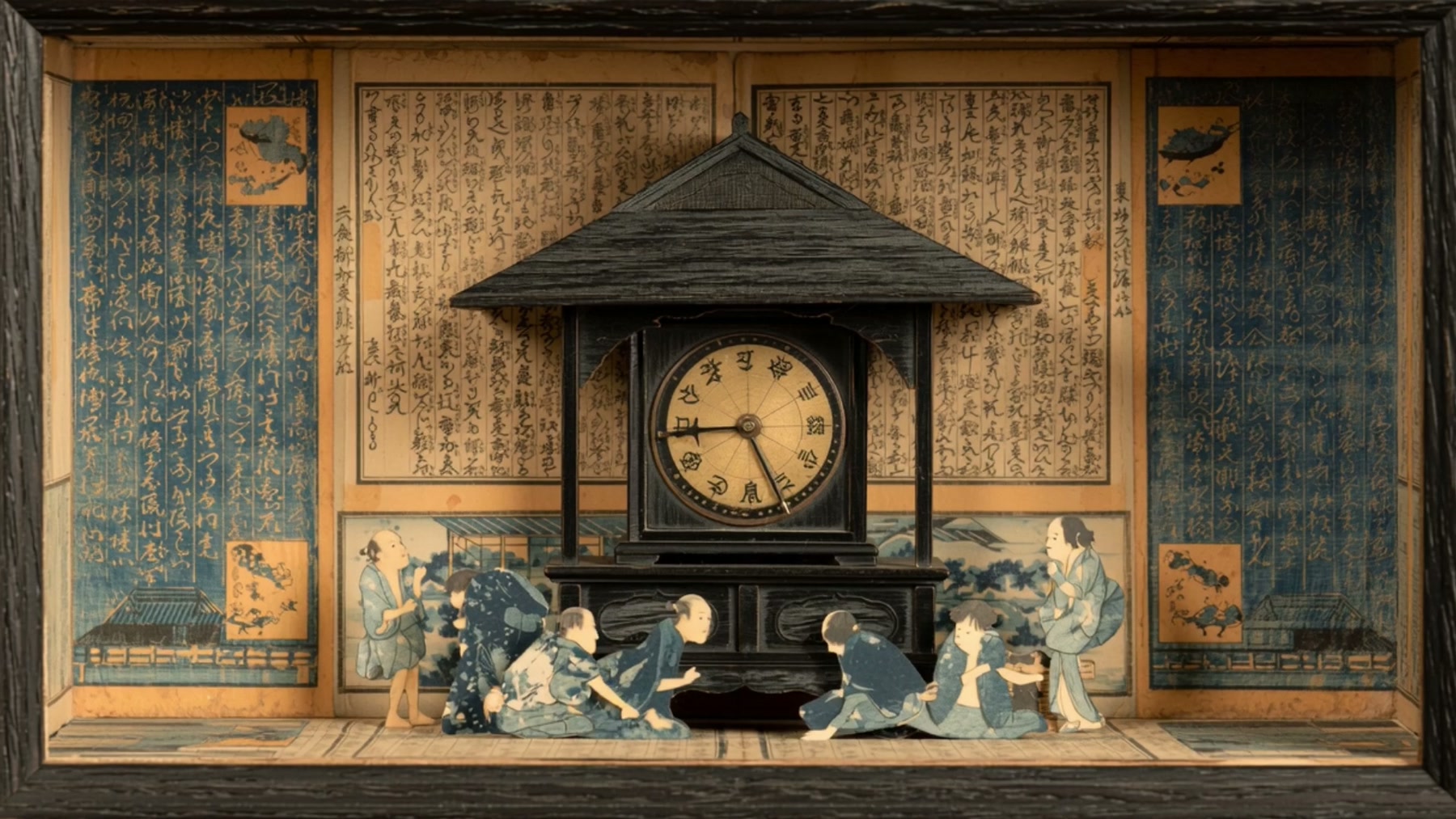
That is Champion’s argument in one object. Medieval and early modern societies are usually described as timeless. They were nothing of the kind. They organised time, measured it, argued about it and paid for it — and mechanical sounding clocks like Averbode’s spread across Europe, through the reformations, across the Atlantic, and into Asia with the missionaries.
A Cornell box, and one rule inside it
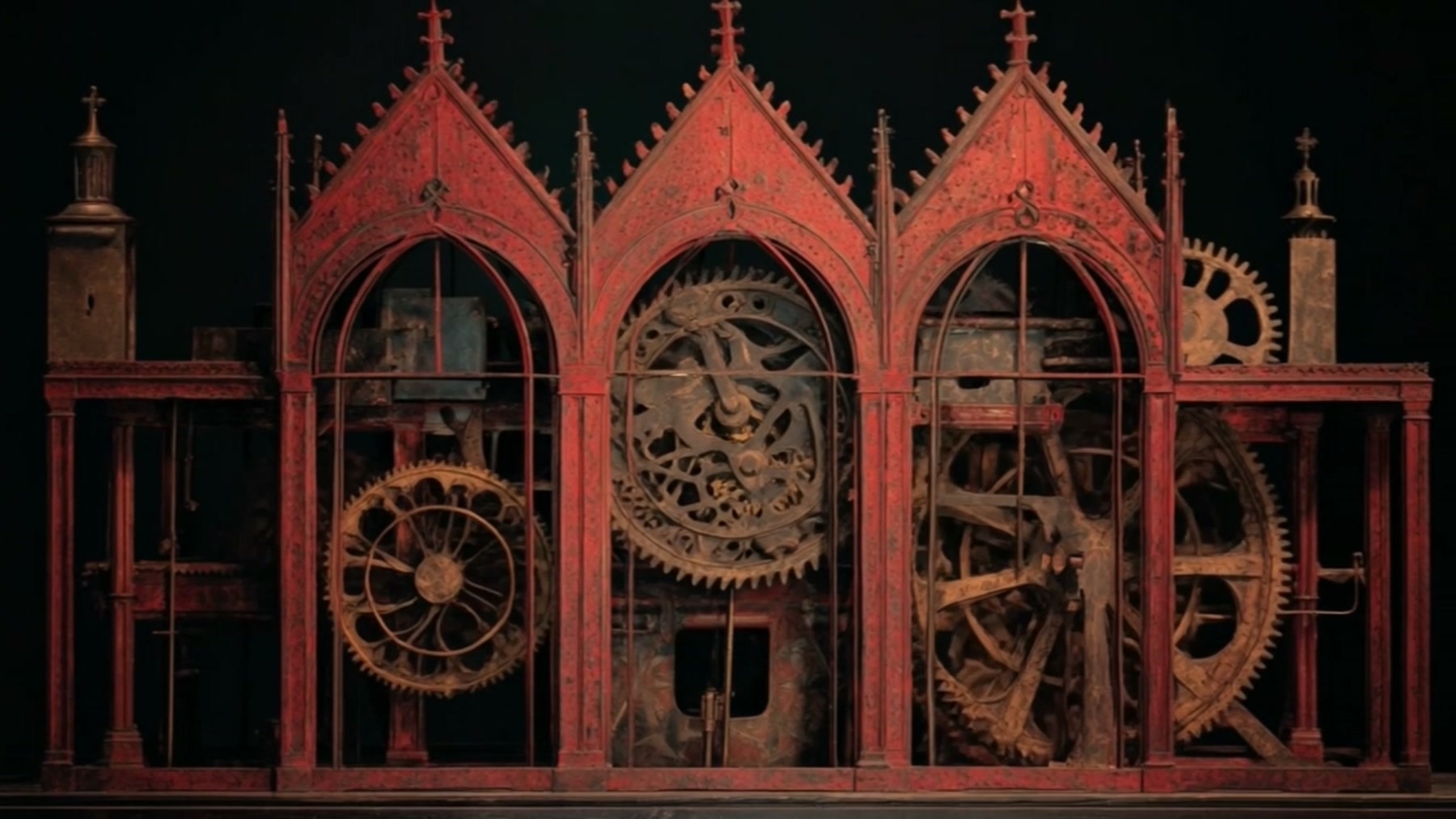
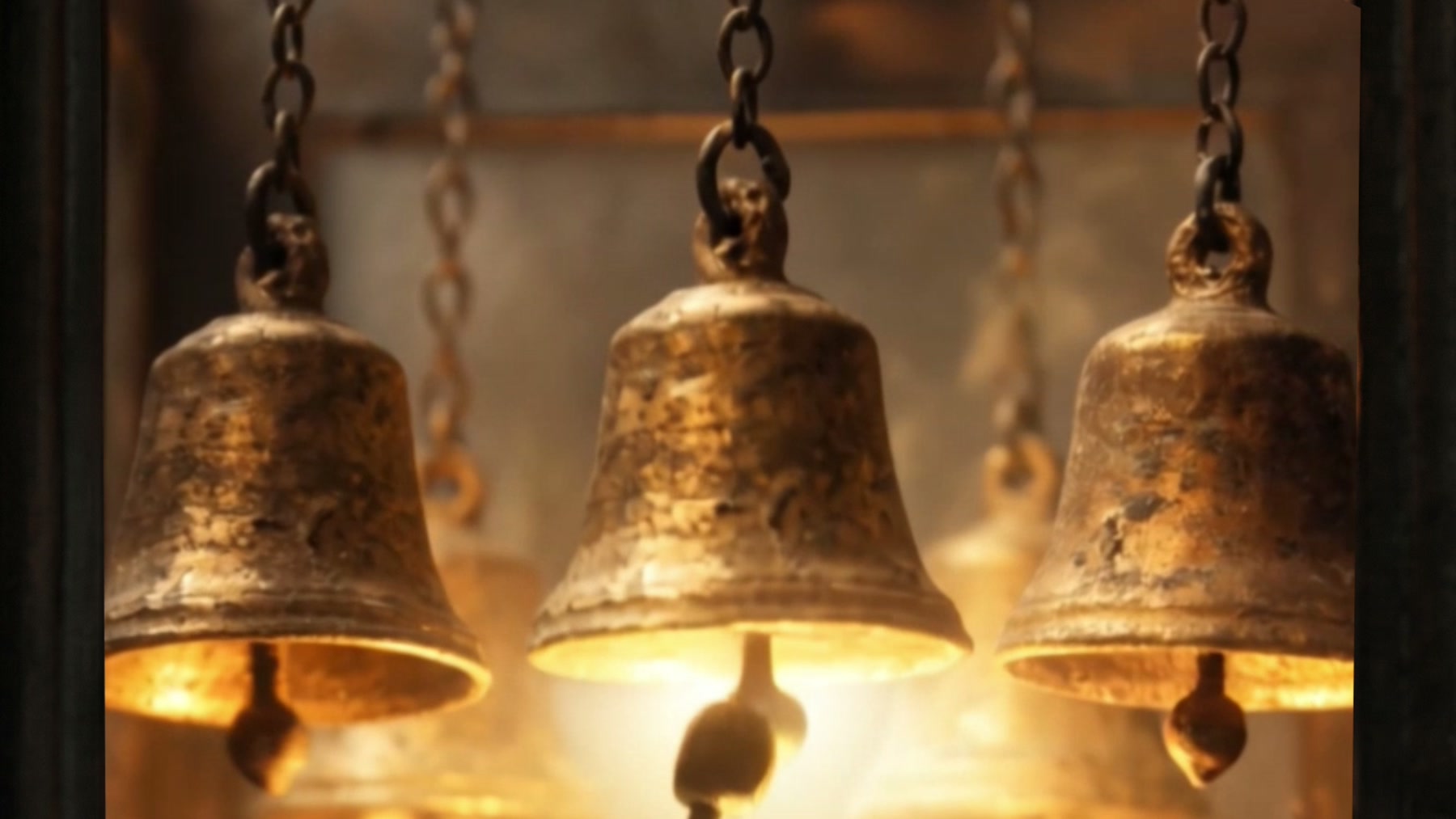
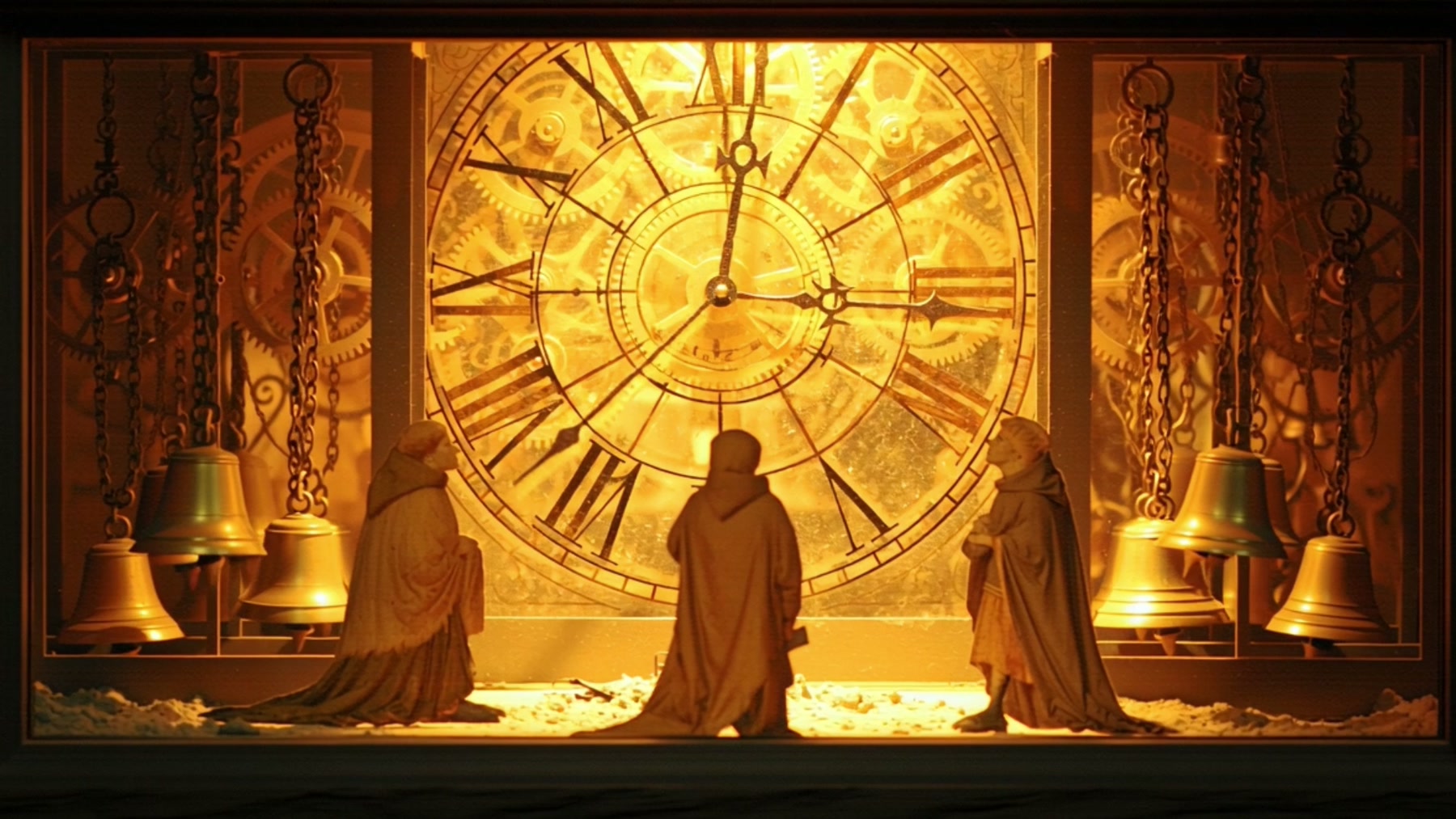
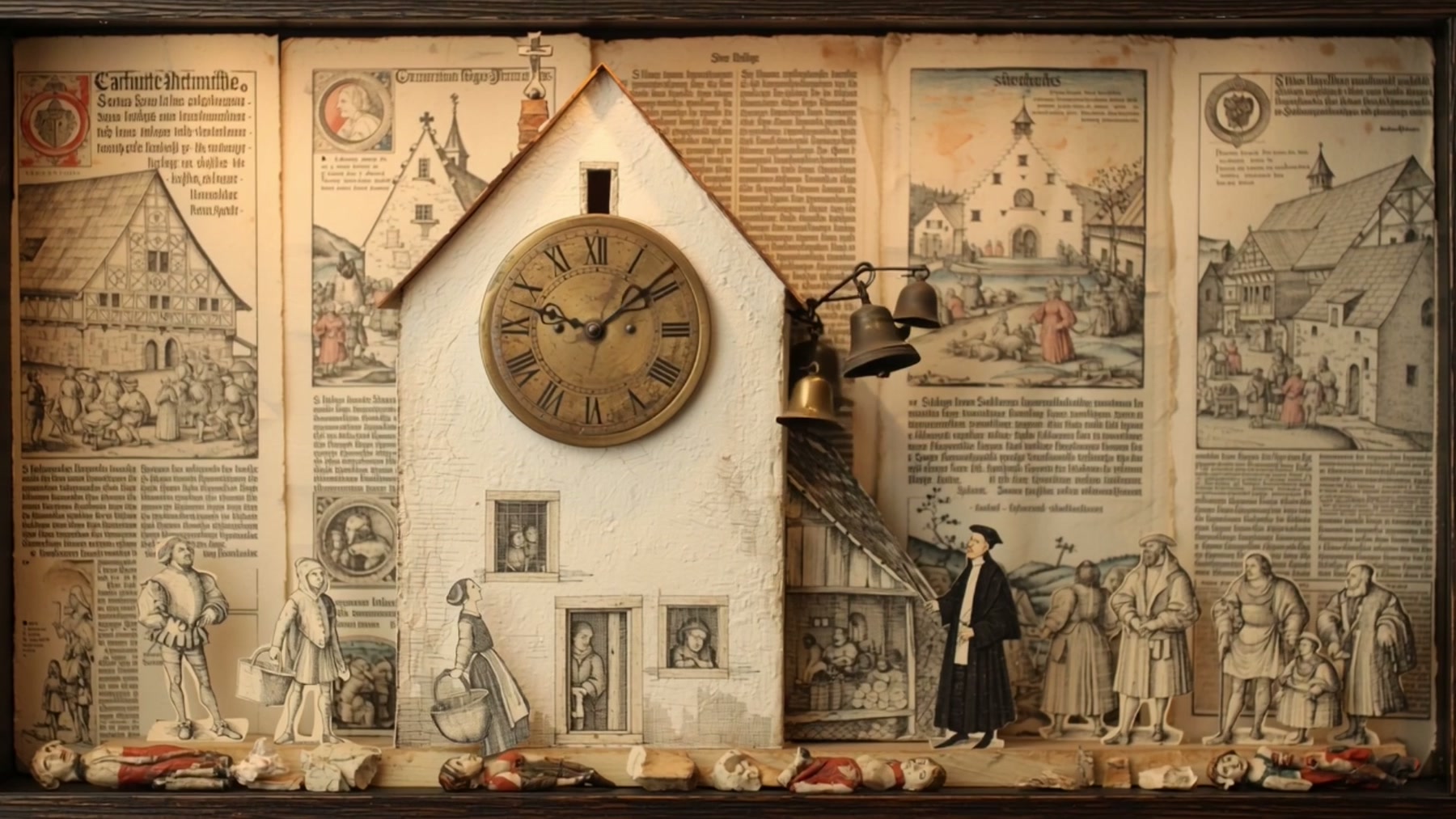
The whole film happens inside a Joseph Cornell shadow box. Everything in it is physically real — the brass bells on their iron chains, the exposed clock mechanism, the manuscript pages pinned to the walls, the ash on the floor, the single candle. Everything except the people. The monks, the bell-founders and the clockmakers are flat paper cut-outs lifted from illuminated manuscripts: hand-coloured, ink-outlined, two-dimensional figures standing in a three-dimensional world.
That contrast is the point. The objects survive and the record survives; the people reach us only as the page drew them. And between scenes the film travels through the mechanism itself — in among the escapement wheels and the hairspring — never past the same gear twice.
About the laureate
Matthew Champion is a historian of premodern temporalities — how people experienced, perceived and shaped time. The Dan David Prize selection committee praised “Champion’s original and imaginative work that demonstrates how time is both given to and shaped by individuals, as well as noting the way he brings his lived experience as a musician to bear on his deep engagement with the sounds of life and the pluralities of time.”
How the film is made
Each year the Foundation selects its winners and, with the help of the laureate, chooses the subject of the film they are being honored for. The Foundation’s team, who know that work intimately, help bring it to the page, and we turn it into script, image, register, and motion.
The one thing we keep from them is the film itself. It is made in their honor but held back, so that the first time Matthew Champion meets it, in animated form, is the evening of the prize — the very moment they are being celebrated for the work it depicts. That is the part of the project we love: a film that is also a gift, a surprise, revealed in the room where it does its work.
Where the films travel
The Dan David films don’t end their life on the evening of the prize. After the ceremony they travel to YouTube and to the Foundation’s own website, where each one sits alongside the committee’s reasoning for choosing the laureate and further material on the research. The winners are interviewed once the films are public, and those interviews are woven into the published versions.
Credits
Client: Dan David Foundation
Subject: Prof. Matthew Champion
Direction: Daniella Koffler
Animation: Moofa Animation Team
Year: 2026
← All work
Start a conversation →